
How long should you hold a yoga pose? It varies greatly! The right time depends on the type of yoga, your skill level, the pose itself, and your personal goals. There’s no single answer that fits everyone or every situation. The duration can range from just a few seconds or breaths in a dynamic flow to several minutes in a slower practice aiming for deep release. Let’s explore the different factors that influence how long you might stay in a pose.
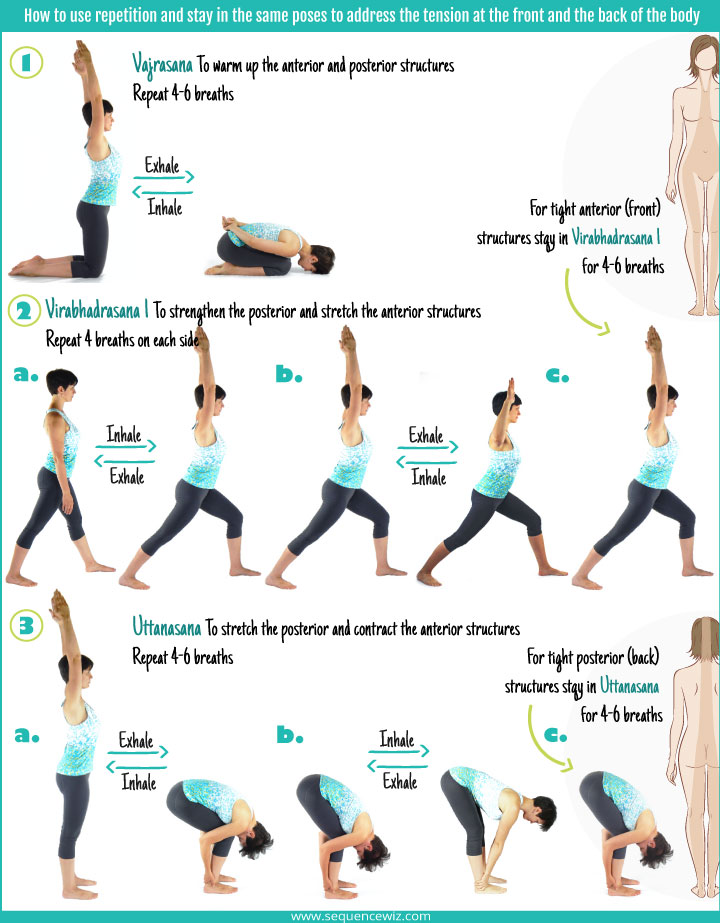
Image Source: sequencewiz.org
Factors Affecting Hold Time
Deciding how long to hold a pose isn’t just a random choice. Several important things guide the answer.
Your Yoga Style
The style of yoga you practice is a big factor. Different styles have different speeds and intentions.
- Vinyasa: This style links movement with breath. Poses often flow quickly from one to the next.
- Hatha: This style is more static. You hold poses for longer than in Vinyasa.
- Yin: This style focuses on deep stretching. Poses are held for very long times.
Your Experience Level
Beginners usually hold poses for shorter times. This helps you focus on getting the shape right. It lets you feel how the pose works in your body. As you practice more, you can try holding poses for longer. You build strength and comfort over time.
What the Pose Does
Some poses are about building strength. Others are for balance or stretching deep tissues.
* Balance poses might be held just long enough to find steadiness.
* Strength poses might be held for shorter times but repeated.
* Stretching poses, especially for flexibility, often need longer holds.
Your Personal Goal
Why are you doing the pose?
* Are you trying to build heat and strength? Shorter, active holds or faster transitions might be key.
* Do you want to increase flexibility? Longer holds are often better.
* Are you seeking relaxation or stress relief? Slower paces and longer, gentle holds work well.
Listening to Your Body
This is perhaps the most important factor. Your body gives you signals.
* Is the sensation a gentle stretch or deep pressure? That’s usually okay.
* Is it sharp, pinching pain? Ease out of the pose right away.
Your body knows best what it needs on any given day.
Hold Times by Yoga Style
Let’s look at how long you might hold poses in popular yoga styles.
Vinyasa: Moving with Breath
In Vinyasa yoga, you usually hold poses for a short time. The focus is on smooth transitions. You move from one pose to the next almost seamlessly. Your breath guides the movement.
* Vinyasa yoga pose holding time is often brief. You might hold a pose for just one or two breaths.
* Sometimes, you hold a pose for 3 to 5 breaths. This happens in peak poses or sequences.
* The goal is flow and building heat. It’s less about staying still for a long time.
Think of Sun Salutations in Vinyasa. You don’t hold Downward Dog for minutes at a time in the middle of the flow. You might be there for 3-5 breaths before moving to the next shape. Even strong poses like Warrior II are part of a moving sequence.
This style builds endurance and links your breath to your actions. It creates a moving meditation. Because the holds are short, you can often try more poses in a Vinyasa class.
Hatha: Finding Stillness
Hatha yoga is often slower than Vinyasa. You still link breath to movement to get into a pose. But once you are there, you stay for a while.
* Hatha yoga pose duration is usually longer than Vinyasa.
* Common hold times are 5 to 10 breaths.
* This might be anywhere from 30 seconds to 1 minute.
Holding poses longer in Hatha allows you to focus on:
* Proper alignment in the pose.
* Deeper breathing while holding the pose.
* Feeling the pose work in your body.
You have time to adjust yourself. You can check your foundation. You can notice where you feel the stretch or strength. This allows for a deeper understanding of each shape. It builds strength and flexibility through sustained effort. It also calms the mind by encouraging stillness.
Classes might explore fewer poses than Vinyasa. But you spend more time benefiting from each one.
Yin: Deep and Slow
Yin yoga is very different. It focuses on stretching connective tissues. This includes fascia, ligaments, and joints. These tissues need sustained pressure to change. So, holds are much longer.
* How long to hold yin yoga poses? Much longer than other styles.
* You typically hold poses for 1 to 5 minutes.
* Some advanced or specialized Yin classes might hold poses for up to 10 or 20 minutes.
Yin poses are often floor-based. You relax your muscles as much as possible. This lets the stretch go deeper into the connective tissue. The long holds can be challenging for the mind. They teach patience and presence.
* You use props like bolsters and blocks for support.
* You find a pose and stay in it, breathing deeply.
* You explore sensations in your body.
The long hold times allow for “creep.” This is a term for how connective tissue slowly lengthens under steady pressure. It’s not about muscle stretching. It’s about gently stressing these deeper tissues to increase range of motion over time. Yin is a quiet, introspective practice.
Hold Times for Specific Goals
Your reason for doing yoga also shapes how long you stay in a pose.
For Building Strength
If your goal is strength, you might focus on poses that require muscle effort. Holding these poses actively works the muscles.
* Holds might be shorter if you are doing repetitions (like lifting and lowering in Chair Pose).
* Or, you might hold a challenging pose for 15-30 seconds. You focus on engaging the right muscles.
* Think of Plank Pose or Warrior III. Holding these for a moderate time builds muscle endurance and strength.
It’s often about quality over extreme duration here. Proper muscle engagement is key.
For Gaining Flexibility
To increase flexibility, longer holds are very effective.
* Yoga pose hold time for flexibility is typically longer.
* For muscle stretching, 30 seconds to 1 minute can be useful.
* For deeper connective tissue changes (like in Yin), holds of 2-5 minutes or more are needed.
Holding a stretch allows your muscles to relax. It tells your nervous system that it’s safe to go deeper. Over time, your body adapts. Your range of motion increases.
Think of a forward fold or a hip opener. Staying in the pose for several breaths or a minute allows gravity and your breath to help you release tension. If your goal is greater flexibility, be prepared to stay in poses longer, especially static stretches after muscles are warm.
Starting Your Yoga Journey
When you are new to yoga, focus on the basics. Don’t worry too much about holding poses for a long time.
* Holding yoga poses for beginners means prioritizing form first.
* Listen to your teacher’s cues carefully.
* Try to find the correct shape of the pose.
* Focus on your breath. Can you breathe smoothly in the pose?
It is perfectly fine for beginners to:
* Hold poses for shorter times than the teacher suggests.
* Come out of a pose early if it feels too intense or painful.
* Rest in Child’s Pose whenever you need to.
Your body is getting used to new movements and sensations. Building strength and flexibility takes time. Don’t push yourself too hard. Aim for consistency in practice rather than extreme holds early on. You can gradually increase hold times as you get stronger and more comfortable.
The Importance of Savasana
Savasana (Corpse Pose) is often the last pose in a yoga class. It might seem simple, just lying down. But it is one of the most important poses. It’s where your body and mind integrate the practice.
* How long to stay in Savasana? Usually, it’s held for 5 to 15 minutes.
* For every hour of active practice, 5-10 minutes of Savasana is a good guideline.
* It’s crucial not to skip this pose or shorten it too much.
Savasana allows your nervous system to calm down. It helps reduce stress. Your muscles relax deeply. Your breath becomes easy. It’s a time for complete rest and letting go. This stillness helps you feel the full benefits of the poses you just did. It prepares you to go back into your day feeling refreshed.
Resist the urge to jump up too soon. Give yourself this time for stillness. It’s a vital part of the yoga practice.
The Power of Your Breath
No matter how long you hold a pose, your breath is your constant companion.
* Breathing while holding yoga poses is essential.
* Your breath connects your mind and body.
* It helps you stay present in the pose.
* Smooth, steady breathing can help you find ease in a challenging hold.
If your breath becomes short, choppy, or held, it’s a sign. It means you might be pushing too hard. It’s better to ease up on the pose a little. Find a position where your breath can flow easily.
* Use your exhale to release tension.
* Use your inhale to find length or space.
Focusing on your breath grounds you. It helps you monitor your body’s state. It makes the hold time meaningful, not just a static position. Breathing deeply helps oxygen reach your muscles and brain. It calms your nervous system, which is key for relaxation and flexibility.
Pausing Between Poses
Often, in yoga, there is a moment or two between poses. This isn’t wasted time.
* Rest time between yoga poses is important.
* It allows you to notice the effects of the pose you just did.
* It gives your body a moment to reset.
* It prepares you for the next pose.
In Vinyasa, this rest might be just a breath or two. In Hatha or Yin, it might be a short time in Child’s Pose or lying flat. Even standing in Mountain Pose (Tadasana) for a few breaths counts as rest.
Taking these short breaks helps prevent fatigue. It allows you to integrate the changes in your body. It makes the practice feel less rushed. Don’t underestimate the value of stillness and rest during your practice. It enhances the overall experience and benefits.
Why Hold Longer? Exploring the Benefits
We’ve seen that different styles and goals mean different hold times. So, why would you choose to hold poses longer sometimes? What are the Benefits of holding yoga poses longer?
- Increased Flexibility: This is one of the main reasons. Longer holds, especially when muscles are relaxed, allow for deeper stretching. This helps lengthen muscles and affects connective tissue. Over time, this increases your range of motion.
- Connective Tissue Health: Yin yoga specifically targets fascia, ligaments, and tendons. These tissues respond best to slow, steady pressure over time. Longer holds help keep these tissues healthy and mobile.
- Building Mental Stamina and Patience: Holding a pose when your body wants to move takes mental discipline. It teaches you to stay present with discomfort (not pain). This builds mental strength, focus, and patience, qualities that extend beyond the mat.
- Deeper Relaxation and Stress Reduction: Holding gentle or restorative poses for several minutes activates your parasympathetic nervous system. This is the “rest and digest” system. It helps calm your mind and body, reducing stress and promoting deep relaxation.
- Better Body Awareness: Staying in a pose for longer gives you more time to feel what is happening in your body. You notice subtle sensations. You learn how your body responds to the shape. This improves your interoception – your sense of your body’s internal state.
- Energy Release: Holding poses can sometimes bring up emotions or stored tension. Staying with the pose and your breath allows this energy to be processed and released.
- Joint Health: Gentle, long-held poses (like in Yin) can promote circulation in the joints. This nourishes the joint tissues. It helps maintain joint mobility.
So, while short holds have their place (building heat, strength, flow), longer holds offer unique benefits, especially for flexibility, mental resilience, and deep relaxation.
Finding Your Own Rhythm
Ultimately, the right hold time for you will vary. It depends on:
* The type of class you are in.
* What the teacher is guiding you to do.
* How your body feels today.
Don’t feel pressured to hold poses for a certain amount of time just because others are or because you think you “should.”
* Listen to your teacher for guidance.
* Listen more closely to your body for wisdom.
Yoga is a practice, not a performance. It’s about meeting yourself where you are each time you come to the mat. Some days you might hold poses longer. Other days, shorter holds feel better. Both are okay. The key is mindful presence in whatever duration you choose.
Typical yoga pose duration is a guideline, not a strict rule. Be present, breathe, and adjust as needed. Your practice will evolve over time, and so will the length of your holds.
Frequently Asked Questions
Here are some common questions about holding yoga poses.
H5 Is it okay to shake when holding a pose?
Light shaking in muscles that are working hard can be normal. It often means the muscle is getting tired or building strength. However, if the shaking feels violent, uncontrollable, or leads to pain, it might mean you are pushing too hard. Ease out of the pose a little or come out completely.
H5 How do I know if I’m pushing too hard?
Signs you might be pushing too hard include:
* Sharp or pinching pain.
* Holding your breath or very strained breathing.
* Feeling dizzy or lightheaded.
* Muscles cramping severely.
* Feeling intense resistance that doesn’t ease with breath.
Listen to these signals. They tell you to back off.
H5 Should I hold symmetrical poses (like Downward Dog) for the same time as asymmetrical poses (like Warrior II)?
Often, yes, within a flow or sequence. However, if you notice a significant imbalance, you might sometimes spend a little extra mindful time on the tighter side in a slower practice. But generally, mirroring holds on both sides is standard practice.
H5 Can holding poses too long be bad?
Yes. Holding poses into sharp pain or ignoring your body’s signals can cause injury. In Yin yoga, holding too long in a pose that puts stress on a vulnerable joint (like the knees or lower back) without proper support can be harmful. It’s about finding the right balance between challenge and safety.
H5 What if my mind wanders during long holds?
It’s normal for your mind to wander! Long holds can bring up thoughts and feelings. When you notice your mind has drifted, gently guide your attention back to your breath or the sensations in your body. This is part of the mental training of yoga. Be patient and kind to yourself.
H5 Should I try to hold every pose for the same length of time?
No, absolutely not. As discussed, hold times vary greatly depending on the pose itself, the style of yoga, and your goals. A Plank will be held differently than a Child’s Pose. Listen to the teacher’s guidance and your body.