
Image Source: cdn.cemah.net
Can Yoga Help Scoliosis? Exploring Benefits & Poses
Yes, yoga can be a helpful part of managing scoliosis for many people. It is not a cure and won’t straighten a structural curve, but it can significantly help with managing scoliosis symptoms, particularly yoga for scoliosis back pain. Yoga can improve posture, build core and back strength, increase flexibility, and enhance body awareness. It can be a valuable complementary tool alongside other scoliosis treatment options like physical therapy scoliosis.
Learning About Scoliosis Basics
Let’s first talk simply about what scoliosis is.
Scoliosis means your spine has an unusual curve. Instead of being straight up and down, it curves to the side. It might look like the letter ‘C’ or ‘S’.
- Spine Shape: A healthy spine is straight from top to bottom. It has natural curves when seen from the side. Scoliosis is a side curve seen from the back.
- Who Gets It: Many people get it as kids while they are growing fast. This is called idiopathic scoliosis. Doctors don’t always know why it happens. Some people are born with it (congenital scoliosis). Others get it because of muscle or nerve problems (neuromuscular scoliosis).
- How Big is the Curve: Doctors measure the curve in degrees.
- Mild: Less than 25 degrees. Often just watched.
- Moderate: 25 to 40-50 degrees. Might need a brace, especially in kids who are still growing.
- Severe: More than 40-50 degrees. Sometimes needs surgery to fix the curve more.
- How it Feels: Some people with scoliosis have no pain or problems. Others have
back pain, muscle tiredness, or feel uneven. How it affects you depends on where the curve is and how big it is.
Yoga is not a standalone treatment for moderate or severe curves that need bracing or surgery. But it can be a great support for spine health yoga, especially for mild curves and for anyone looking to feel better and move easier with scoliosis.
Why Think About Yoga for Scoliosis?
Many people with scoliosis look for ways to feel better in their bodies. This is where yoga comes in. It offers simple, gentle ways to move.
Here are some reasons why yoga is helpful:
- Helps with Back Pain: A common issue for people with scoliosis is pain. Yoga can help ease
yoga for scoliosis back pain. It does this by stretching tight muscles and making weak muscles stronger. This helps your back find better balance. - Better Posture: Scoliosis can make you stand or sit unevenly. Yoga helps you become more aware of your body’s position. It teaches you how to stand taller and straighter. This can make a big difference in how you look and feel.
- More Flexible: Scoliosis can make some parts of your back or sides feel stiff. Yoga includes
yoga stretches for scoliosisthat help open up these tight areas. Moving more freely feels good. - Stronger Muscles: The muscles around your spine, called core muscles, are very important. Yoga has
strengthening exercises scoliosisthat build up these muscles. A strong core helps support your spine better. This is like having a natural brace inside your body. - Body Awareness: Yoga is all about paying attention to your body. You learn where you feel tight or weak. You notice how your body moves. This helps you make smart choices about how you stand, sit, and move in daily life. This is key for
managing scoliosis symptoms. - Better Breathing: Some scoliosis curves can make it harder to breathe fully. Yoga practices include deep breathing exercises. These can help open your chest. They can make breathing easier.
- Less Stress: Living with a health condition can be stressful. Yoga helps calm your mind. The focus on breath and gentle movement can lower stress and make you feel more relaxed. This helps with
managing scoliosis symptomsoverall.
Yoga offers a mix of benefits that work together. It’s not just one thing; it’s a way to care for your body and mind.
Deciphering How Yoga Works for Scoliosis
How does moving and stretching on a mat help a curved spine? It’s not magic, it’s about muscles and awareness.
Think of your spine like the mast of a ship. The muscles around it are like the ropes. If the ropes are not pulled evenly, the mast might lean. With scoliosis, the spine leans and twists. The muscles on one side get tight and short. The muscles on the other side get long and weak.
Yoga helps by trying to balance these “ropes.”
- Stretching the Tight Side: Many poses include
yoga stretches for scoliosis. You gently stretch the muscles that have become stiff on the inside of the curve. This can help relieve tension and pain. - Strengthening the Weak Side: The muscles on the outside of the curve are often weak. Yoga includes
strengthening exercises scoliosisthat target these areas. Making these muscles stronger helps support the spine better. This is a core part ofexercise for scoliosis curve. - Finding Length: Many yoga poses help you imagine making your spine longer. This helps create space between the bones. It helps counteract the compression that can happen on the inside of a curve. Poses that focus on spine extension are good for this.
- Improving Body Awareness: You learn to feel the difference between your right and left sides. You notice where your curve is. This helps you stand straighter in everyday life. It helps you position your body safely during yoga.
- Asymmetrical Work: Because scoliosis curves are not even, yoga for scoliosis is often not even on both sides. A good teacher might have you do a pose differently on one side than the other. This is called asymmetrical practice. It helps balance the specific curve you have. This is a more advanced idea and needs guidance.
Yoga is a way to help the muscles and tissues around the spine work better. It’s a way to support your spine health yoga. It helps your body become more balanced and less painful.
Thinking About Gentle Yoga for Scoliosis
Starting gentle is very important when you have scoliosis. You don’t want to push too hard or do anything that causes pain. Gentle yoga scoliosis focuses on safe, simple movements.
What makes yoga “gentle” and good for scoliosis?
- Slow Pace: Movements are slow and mindful. You have time to feel what your body is doing.
- Listen to Your Body: The main rule is never do anything that hurts. Pain is your body saying “stop” or “change something.”
- Use Props: Blocks, blankets, straps, and chairs are your friends! They help you get into a pose without straining. They can also help you modify poses for your specific curve.
- Focus on Breath: Breathing deeply helps calm the body and mind. It also helps you move into poses smoothly.
- Simple Poses: Gentle yoga uses basic poses. Complex or difficult poses are avoided.
- Modifications: A good teacher will show you how to change a pose to fit your body, especially if you have scoliosis. You might do a pose differently on one side.
- Qualified Teacher: This is key! Finding a yoga teacher who knows about scoliosis is best. They understand the challenges and can guide you safely. They can help you find the
best yoga poses for scoliosisfor your body.
Starting with gentle yoga helps you build strength and flexibility safely. It lets you learn about your body’s needs without risk of injury. It makes yoga feel good, not scary.
Best Yoga Poses for Scoliosis
Finding the best yoga poses for scoliosis depends on your specific curve. What helps one person might not help another. This is why working with a teacher is valuable. However, many poses are often suggested because they help lengthen the spine, strengthen the core/back, and stretch tight areas.
Here are some types of poses and examples that are often helpful. Remember to do these gently and listen to your body. Stop if you feel pain.
Poses for Spine Length and Extension
These poses help create space in the spine.
- Mountain Pose (Tadasana): Stand tall with feet together or hip-width apart. Feel your feet on the ground. Imagine a string pulling you up from the top of your head. Lengthen your spine. This simple pose helps you feel your posture. Modification for Scoliosis: You might notice one side feels longer or shorter. Just notice it without trying to force anything straight at first.
- Child’s Pose (Balasana): Kneel on the floor. Big toes touch. Knees can be together or wide apart. Sit back on your heels. Bend forward, resting your torso on your thighs. Arms can be forward or back by your sides. This pose allows the back to release and lengthen gently.
- Cat-Cow Pose (Marjaryasana-Bitilasana): Get on your hands and knees. As you breathe in, drop your belly and lift your chest and tailbone (Cow). As you breathe out, round your back, tuck your chin and tailbone (Cat). Move slowly with breath. This helps move the whole spine gently. Good
yoga stretches for scoliosisand gentle movement. - Thread the Needle (Urdhva Mukha Pasasana variation): Start on hands and knees. Reach one arm up to the sky, opening your chest. Then thread that arm under your other arm, lowering your shoulder and head to the floor. The other arm can stay put or reach forward. This gently stretches the upper back and shoulders. Modification for Scoliosis: Be very gentle. You might feel more stretch on one side. Only go as far as comfortable.
Poses for Core and Back Strength
Building strength around the spine is key for support. These are strengthening exercises scoliosis.
- Plank Pose: Start on hands and knees. Walk feet back so body is a straight line from head to heels. Hands under shoulders. Engage your belly muscles (core). Don’t let your hips drop or go too high. Hold for a few breaths. This builds whole-body strength, especially core. Modification: Do it on your knees instead of toes.
- Cobra Pose (Bhujangasana) or Sphinx Pose: Lie on your belly. Place hands under shoulders (Cobra) or forearms on the floor, elbows under shoulders (Sphinx). Gently lift your chest off the floor, keeping hips down. Don’t push up too high. Focus on lengthening the spine forward as you lift. This strengthens back muscles.
- Locust Pose (Salabhasana): Lie on your belly. Arms by your sides, palms down. Lift head, chest, arms, and maybe legs off the floor. Keep your neck long. Engage back muscles. This directly strengthens the back extensor muscles, important for support.
- Bird-Dog Pose: Start on hands and knees. Keep your back flat and core engaged. Slowly lift and straighten one arm forward and the opposite leg back. Keep your hips level. Don’t arch your back. Hold, then switch sides. This is great for core stability and balance, working the muscles that support the spine. It’s a fantastic
exercise for scoliosis curveto build stability.
Poses for Stretching Tight Areas (Hips, Shoulders, Sides)
Scoliosis can cause tightness in other parts of the body too.
- Downward-Facing Dog (Adho Mukha Svanasana): Start on hands and knees. Lift hips up and back, making an upside-down ‘V’ shape with your body. Hands shoulder-width, feet hip-width. You can bend your knees. This stretches the backs of legs and shoulders. It also helps lengthen the spine.
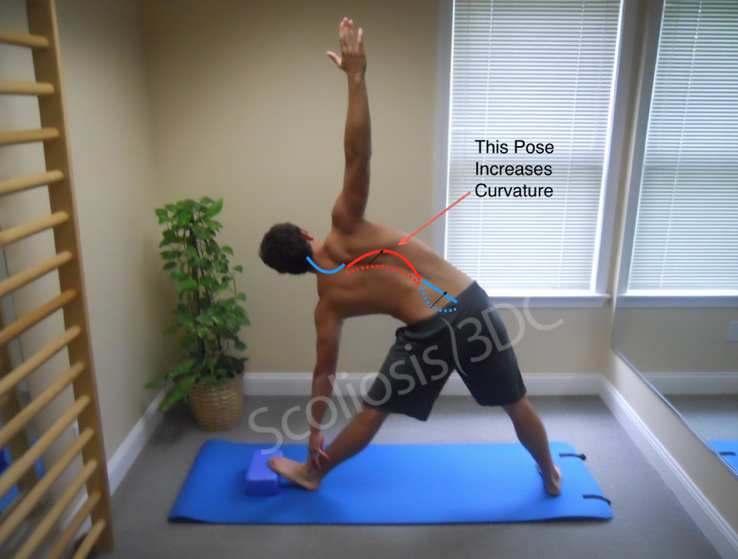
- Triangle Pose (Trikonasana): Stand with feet wide apart. Turn one foot out. Reach both arms out to the sides. Hinge from your hip, not your waist, towards the front foot. Lower front hand to shin, block, or floor. Reach top arm up. Look forward or up. Stretches the sides of the body. Modification for Scoliosis: Be mindful of the side bend. You might feel uneven. Use a block to bring the floor closer. Focus on lengthening both sides of the waist. This is a key pose for
yoga stretches for scoliosis. - Gate Pose (Parighasana): Kneel on the floor. Extend one leg straight out to the side. Foot is flat. Side bend towards the straight leg, resting hand on shin. Reach the other arm up and over your head. Stretches the side body intensely. Modification for Scoliosis: This pose highlights asymmetry. Be extra gentle bending towards the tight side of your curve. Maybe only bend a little, or just focus on the stretch on the side that feels good.
- Supine Spinal Twist (Supta Matsyendrasana): Lie on your back. Bring one knee to your chest, then let it fall across your body to the opposite side. Arms can be out to the sides. Look the opposite way of your knee. Modification for Scoliosis: Twists must be done with care! If your curve is significant, do not force the twist. You might only twist gently to one side, or use props (like a blanket under the knee or shoulder) to make it comfortable. This is where knowing your specific curve pattern helps, often best learned from
physical therapy scoliosisor a scoliosis-aware yoga teacher.
Pose Table Summary
Here is a simple table showing some poses and their benefits for scoliosis.
| Pose Name | Type of Pose | Benefit for Scoliosis | Simple Tip/Modification |
|---|---|---|---|
| Mountain Pose | Standing | Posture awareness, Spine length | Feel grounded, imagine lengthening up |
| Child’s Pose | Restorative/Forward | Gentle spine release & length | Knees together or wide, arms forward or back |
| Cat-Cow Pose | Kneeling/Flow | Gentle spine movement, flexibility | Connect movement to breath, move slowly |
| Thread the Needle | Kneeling/Twist | Stretches upper back & shoulders | Be gentle, stop if pain |
| Plank Pose | Strength | Core & full body strength | Do on knees for less intensity, keep body straight |
| Sphinx or Cobra | Backbend/Strength | Strengthens back muscles, gentle extension | Keep hips down, lift only chest, lengthen forward |
| Locust Pose | Backbend/Strength | Strengthens back muscles more intensely | Lift gently, keep neck long |
| Bird-Dog Pose | Balance/Strength | Core stability, back support, balance | Keep hips level, don’t arch back |
| Downward-Facing Dog | Inversion/Stretch | Lengthens spine, stretches hamstrings/shoulders | Bend knees if needed, focus on spine length |
| Triangle Pose | Side Bend | Stretches side body | Use a block for hand, lengthen both sides of waist |
| Gate Pose | Kneeling Side Bend | Intense side body stretch | Be extra gentle bending to the tight side of the curve |
| Supine Spinal Twist | Twist | Gentle spine rotation/release | Use props, be very careful with severe curves, listen to body |
This table gives a starting point. Remember, personal guidance is best.
Bringing Yoga Together with Other Care
Yoga shouldn’t replace medical advice or treatments like bracing or surgery if your doctor recommends them. It’s a powerful tool to use with other approaches.
- Yoga and Physical Therapy: Yoga and
physical therapy scoliosiswork very well together. A physical therapist gives you exercises for your specific body and curve. They are trained to understand your spine. Yoga can support the work you do in physical therapy. It helps keep your body strong and flexible between PT sessions. Many PT exercises for scoliosis are similar to yoga poses but are more focused on the muscle imbalances of your specific curve. Yoga adds the element of breath, mind-body connection, and overall well-being. Think of them as teammates for yourspine health yoga. - Yoga and Bracing: If you wear a brace, you cannot do yoga while wearing it. But yoga can be very helpful when the brace is off. It helps keep the muscles from getting stiff. It maintains flexibility and strength that might be lost while wearing the brace. It’s also a good way to connect with your body when you’re not restricted by the brace.
- Yoga and Surgery: After surgery, yoga can be part of your recovery, but only with your surgeon’s OK. It would start very gently, focusing on breathing and very simple movements. Later, it can help regain strength and flexibility under careful guidance.
Yoga is one part of a complete plan for scoliosis treatment options. It supports overall health and helps managing scoliosis symptoms like pain and stiffness.
Creating Your Yoga Practice for Scoliosis
Ready to try yoga? Here’s how to start safely and effectively.
- Find the Right Teacher: This is maybe the most important step. Look for a yoga teacher who has experience or special training in working with scoliosis or back care. They understand how to modify poses. They can help you figure out what works for your specific curve. Ask teachers about their experience.
- Start Slow and Gentle: Begin with
gentle yoga scoliosisclasses. Focus on learning basic poses and how they feel in your body. Don’t try advanced poses right away. - Listen to Your Body: This is the golden rule in yoga, especially with scoliosis. If a pose causes pain, stop. It’s okay to skip a pose or change it. Yoga is not about pushing into pain.
- Be Patient: Changes take time. Don’t get discouraged if you don’t see results instantly. Regular, consistent practice is key. Even a few minutes a few times a week can help.
- Use Props: Don’t be shy about using blocks, blankets, straps, or a chair. They help support your body and make poses more accessible and safer.
- Focus on Both Sides (Carefully): While you want to balance your muscles, forcing both sides to look the same in a pose might not be right for a structural curve. A good teacher will help you understand how to work with your curve, sometimes doing poses slightly differently on each side (asymmetrical work) to help bring better balance to your body’s function.
- Consistency is Key: Try to practice regularly, even if it’s just for short periods. A consistent
exercise for scoliosis curveplan is more effective than long, infrequent sessions.
Starting yoga is a journey. It’s about exploring what feels good and helpful for your body. It’s a proactive step in managing scoliosis symptoms and supporting your spine health yoga.
Knowing the Risks and What to Be Careful About
While yoga is generally safe, there are things to be careful about, especially with scoliosis.
- Forcing Twists: Deep, symmetrical twists can put uneven pressure on a curved spine. If your curve involves rotation, forceful twists can potentially cause strain. Work gently, often focusing on lengthening first, and use modifications advised by a scoliosis-aware teacher or PT.
- Deep Backbends: Very deep backbends can compress the spine. Gentle backbends like Cobra or Sphinx are usually fine and helpful for strengthening. But be cautious with intense backbends.
- Extreme Forward Folds: Hanging heavily in forward folds can put strain on the back muscles and ligaments, especially if they are weak. Focus on lengthening the spine in forward folds, perhaps keeping knees bent.
- Ignoring Pain: As mentioned, pain is a signal. If something hurts, stop or change the pose. Pushing through pain can cause injury.
- Comparison: Don’t compare yourself to others in a yoga class. Your body is unique, especially with scoliosis. Focus on what feels right for you.
- Working Without Guidance: Trying complex poses or intense styles without a teacher who understands scoliosis can be risky. Get guidance, at least when starting.
Remember, the goal is to support your spine and feel better, not to achieve perfect-looking poses.
FAQs About Yoga and Scoliosis
Here are some common questions people ask:
H4: Can Yoga Fix My Scoliosis Curve?
No, yoga cannot straighten a structural scoliosis curve, especially in adults. The curve is a change in the bones. Yoga works on the muscles and tissues around the spine. It helps manage symptoms, improve function, and support spine health. It’s not a cure for the curve itself.
H4: Is Hot Yoga Good for Scoliosis?
Hot yoga styles are usually not recommended for people with scoliosis. The heat makes muscles very flexible. While this might seem helpful, it can make it easier to overstretch ligaments that support the spine. This could lead to instability. Plus, the heat can make some people feel dizzy or unwell. Gentle, non-heated yoga is a safer choice.
H4: How Often Should I Do Yoga for Scoliosis?
Consistency is more important than length of practice. Aim for 2-3 times per week, even for short sessions (20-30 minutes). Daily short practices can also be very effective for managing scoliosis symptoms. Listen to your body and find a routine that works for you.
H4: Are There Specific Yoga Styles Best for Scoliosis?
Gentle yoga scoliosis styles like Hatha, basic Vinyasa (if slow and mindful), or specific yoga therapy classes for back care or scoliosis are often best. Restorative yoga can also be helpful for relaxation and gentle stretching. Avoid highly vigorous styles, intense Ashtanga, or hot yoga unless under the guidance of a teacher who specifically understands scoliosis and your body.
H4: Can Yoga Help If I’ve Had Scoliosis Surgery?
Yes, but only with your surgeon’s approval and guidance from a physical therapist or a yoga therapist trained in post-surgical recovery. Yoga can help with regaining strength, flexibility, and body awareness after fusion. It will start very gently and progress slowly.
H4: What’s the Difference Between Yoga and Physical Therapy for Scoliosis?
Physical therapy scoliosis is often very specific, focusing on correcting muscle imbalances and posture patterns directly related to your curve using targeted strengthening exercises scoliosis and stretches. Yoga can support this by improving general strength, flexibility, body awareness, and breathing. Yoga also includes a mind-body element that helps with stress and overall well-being. They complement each other well. PT is often more clinical and corrective; yoga is often more holistic and focused on comfortable movement and awareness.
Summing It Up
Living with scoliosis can be a challenge, but finding ways to care for your body makes a big difference. Yoga offers many real benefits for people with scoliosis. It won’t make the curve disappear, but it can help you move better, feel stronger, and have less pain.
By focusing on gentle yoga scoliosis, learning best yoga poses for scoliosis with modifications, doing yoga stretches for scoliosis and strengthening exercises scoliosis, and working with a qualified teacher, you can use yoga as a powerful tool.
Yoga is a wonderful way to support your spine health yoga. It helps with managing scoliosis symptoms like yoga for scoliosis back pain and stiffness. It can be a great addition to other scoliosis treatment options like physical therapy scoliosis.
Remember to start slow, listen to your body, and seek guidance from healthcare pros and experienced yoga teachers. Yoga can help you feel more comfortable and confident in your body, curves and all.