
How many yoga asanas are there? There is no single, clear answer to this question. The exact total number of yoga poses is not fixed because new variations are created, and different traditions count them in different ways across history. Think of it as a living practice with a very large and growing collection of forms, rather than a simple, countable list.
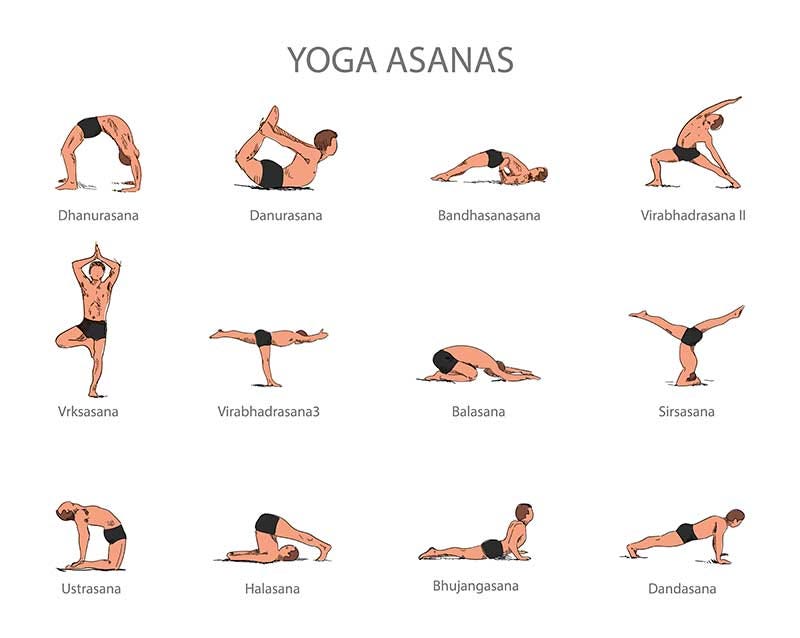
Image Source: miro.medium.com
Grasping What Asana Means
First, let’s talk about what an asana is. The word “asana” comes from Sanskrit. It means “seat.” In the oldest yoga texts, asana simply meant a stable and comfortable seated position. People used this position for meditation.
Patanjali’s Yoga Sutras are a very old and important text about yoga. They were written a long, long time ago. Patanjali talks about asana in just a few verses.
In the Patanjali Yoga Sutras, asanas are defined by how they feel and are, not by how many there are. Patanjali says an asana should be sthira and sukham.
* Sthira means steady, stable, or firm.
* Sukham means comfortable, easy, or peaceful.
So, for Patanjali, any seated posture that you can hold steadily and easily for a long time to meditate is an asana. He did not list many poses.
The Original Number of Yoga Asanas
When we look at the very first yoga teachings, like those in the Patanjali Yoga Sutras, the idea of having hundreds or thousands of poses did not exist. The focus was on getting the body ready to sit still for meditation.
The original number of yoga asanas described in the very old texts was very small. Some say Patanjali might have talked about just one main pose: a comfortable seat. Other early texts might mention a few more, like different ways to sit with crossed legs.
These early poses were not about bending and stretching in complex ways. They were simple seats. They helped the mind become calm and the body stay still. The goal was to prepare for deeper practices like breathing control and meditation.
So, the “original number of yoga asanas” was likely just a handful of seated postures. This is very different from how most people think of yoga poses today.
Interpreting the Shift to Hatha Yoga
Over many centuries, yoga began to change. New practices developed. People started exploring what the body could do more actively. This led to the rise of Hatha Yoga.
Hatha Yoga texts appeared much later than Patanjali’s Sutras. Key Hatha Yoga texts include:
* Hatha Yoga Pradipika (written around the 15th century).
* Gheranda Samhita (written around the 17th century).
* Siva Samhita (also around 15th-17th century).
These books still included seated poses for meditation. But they also described many other physical practices. These included cleansing techniques, breathing exercises, and a number of physical postures beyond simple seats. This marked a big step in the evolution of yoga asanas. The practice became more about working with the physical body itself.
How Many Asanas in Hatha Yoga Texts?
The number of asanas listed in these Hatha Yoga texts is much larger than in Patanjali’s work, but still far fewer than in modern yoga.
- Hatha Yoga Pradipika: This text describes 15 asanas. It says that Shiva, the first yogi, taught 84 main asanas. However, the book itself only describes 15 of them in detail. These include seated poses, but also some early versions of poses we know today, like Cobra Pose (Bhujangasana) and Forward Bend (Paschimottanasana).
- Gheranda Samhita: This text is more focused on asana. It lists and describes 32 asanas. It also says that Shiva taught 84 lakhs of asanas (8.4 million!). This number is clearly symbolic, showing that Shiva taught a huge number of forms. But the book itself only teaches 32. These 32 poses include seated, standing, balancing, and even some inversion-like poses.
So, when people ask “how many asanas in Hatha Yoga,” if they mean the poses described in the main historical Hatha texts, the answer is around 15 to 32. This shows a clear increase from the few mentioned by Patanjali. It shows the beginning of the physical practice of yoga as we know it more today.
Deciphering the Modern Yoga Explosion
The biggest growth in the number of yoga asanas happened in the 20th century. Teachers like Krishnamacharya and his students (B.K.S. Iyengar, K. Pattabhi Jois, T.K.V. Desikachar, and Indra Devi) played a huge role. They developed new ways of practicing yoga. They created many new poses and variations.
This is when the “evolution of yoga asanas” really sped up. Practices moved from mostly seated forms to a dynamic system involving standing poses, inversions, arm balances, and more complex stretches and twists.
Today, modern yoga includes a vast number of forms. The question “how many yoga postures exist” in modern yoga is difficult to answer precisely.
Estimates for the modern yoga poses count vary widely. Some people say there are hundreds of poses. Others say there are thousands. Why the big difference?
Why the Total Number of Yoga Poses is Hard to Count
Counting modern yoga poses is like trying to count leaves on a tree. You can count the main branches, but what about all the smaller branches, the twigs, and the leaves themselves?
Here are some reasons why the total number of yoga poses is not a simple count:
- Variations: Almost every pose has variations. For example, Warrior Pose can be Warrior I, Warrior II, Warrior III, Reverse Warrior, Humble Warrior. Are these all separate poses? Or are they variations of one pose? How about using blocks or straps? Is that a new pose? Most people would say these are variations, but where do you draw the line?
- Modifications: Poses can be made easier or harder. Sitting on a block in a seated pose is a modification. Using a chair is a modification. Are these modifications counted as new poses?
- Transitions: In some yoga styles, like Vinyasa, people move smoothly from one pose to the next. The movements between poses are important. Are these transitional movements counted as poses?
- New Poses: Teachers and students are still creating new ways to move the body. As yoga spreads and evolves, new poses appear. The list is not closed.
- Different Styles: Different yoga styles focus on different sets of poses. Ashtanga Vinyasa has fixed series. Iyengar Yoga has a vast number of detailed poses and variations. Yin Yoga uses fewer poses but holds them for a long time. AcroYoga combines yoga with acrobatics, creating partner poses.
- Naming: Poses can have different names in different traditions or languages. Some poses are named after animals, wise people, or objects. Some might not have widely known names yet.
Because of all this, giving one exact number for the “total number of yoga poses” in modern yoga is impossible.
How Many Asanas in Ashtanga?
Let’s look at a specific style, Ashtanga Vinyasa Yoga. This style is based on fixed sequences of poses. K. Pattabhi Jois taught this method. There are several series in Ashtanga:
* Primary Series
* Intermediate Series
* Advanced Series (A, B, C, D)
The Primary Series has a set number of main poses linked together by movement (vinyasa). The Intermediate and Advanced series introduce more poses.
If you count every single posture held for a breath or more within the entire Ashtanga system, including all advanced series, the number gets into the hundreds. But the core practice for most students involves learning the poses within the first one or two series.
So, while Ashtanga has a large, defined set of poses within its system, it’s still a subset of all the poses practiced in modern yoga globally. It’s not just one number for the whole system.
Common Yoga Asanas List
Even though we can’t count every single pose, there are many poses that are very well known and practiced in yoga classes around the world. These are the “common yoga asanas.”
Here is a short list of some common poses, divided by type:
| Pose Type | Sanskrit Name | English Name |
|---|---|---|
| Standing | Tadasana | Mountain Pose |
| Virabhadrasana II | Warrior II Pose | |
| Trikonasana | Triangle Pose | |
| Uttanasana | Standing Forward Bend | |
| Seated | Sukhasana | Easy Pose |
| Padmasana | Lotus Pose | |
| Paschimottanasana | Seated Forward Bend | |
| Ardha Matsyendrasana | Half Lord of the Fishes Pose (Spinal Twist) | |
| Backbends | Bhujangasana | Cobra Pose |
| Urdhva Mukha Svanasana | Upward-Facing Dog Pose | |
| Setu Bandhasana | Bridge Pose | |
| Dhanurasana | Bow Pose | |
| Inversions | Adho Mukha Svanasana | Downward-Facing Dog Pose |
| Sarvangasana | Shoulder Stand Pose | |
| Sirsasana | Headstand Pose | |
| Arm Balances | Bakasana | Crane/Crow Pose |
| Resting | Balasana | Child’s Pose |
| Savasana | Corpse Pose |
This table lists just a few examples. There are many, many more common poses within each type. A typical beginner class might introduce 20-30 different poses, plus variations. As you practice more, you learn more poses.
Fathoming the Purpose Over the Count
Does the exact number of yoga asanas really matter? For most practitioners, the answer is no. Yoga is not a competition to see who knows the most poses.
The value of asana practice comes from how you practice, not how many poses you know. The goal is to find stability and ease in your body and mind. This helps you feel better. It prepares you for deeper inner work, just as Patanjali intended.
Focusing on hundreds or thousands of poses can be distracting. It’s often more helpful to learn a smaller number of poses well. Learn how they feel in your own body. Learn how to adapt them. Learn how to hold them steadily and easily.
The evolution of yoga asanas has given us a rich set of tools to work with the physical body. These tools can help:
* Make the body stronger.
* Make the body more flexible.
* Improve balance.
* Calm the nervous system.
* Improve focus.
Whether you practice 10 poses or 100, the important thing is the quality of your attention and breath while you are in the pose. Are you steady? Are you comfortable? Are you present?
The Continual Evolution of Yoga Asanas
Yoga is not a dead practice from the past. It continues to grow and change. New styles appear. Teachers create new sequences. People adapt poses for different bodies and needs.
This ongoing evolution means the “total number of yoga poses” will likely continue to increase. What counts as an asana can also shift. Some modern practices might include movements that older texts would not have called asana.
This shows the living nature of yoga. It adapts to new times and new people. But the core idea of asana as a stable and easy shape remains.
In Summary: No Simple Count
To wrap up, how many yoga asanas are there?
- In the very old texts like Patanjali’s Yoga Sutras, the number was very small, maybe just one or two seated poses. This is the original number of yoga asanas.
- In historical Hatha Yoga texts, the number grew to about 15 to 32 poses.
- In modern yoga, the number of distinct poses and variations is much, much larger. The modern yoga poses count is in the hundreds, possibly thousands, depending on how you count. The total number of yoga poses is not a fixed number.
The question “how many yoga postures exist” does not have one simple answer because yoga is a rich, diverse, and evolving practice.
Instead of focusing on the exact number, think about the purpose of the poses. Think about how they help you feel steady and at ease. Practice helps you connect with your body and mind. That is the true heart of asana.
Frequently Asked Questions (FAQ)
Q: So, there is no official list of all yoga asanas?
A: No, there is no single, official list that includes every yoga pose ever created or practiced across all traditions and history. Different styles and traditions have their own sets of poses they focus on.
Q: How many poses do beginners usually learn?
A: A beginner yoga class usually introduces about 20-30 common yoga asanas. These are often basic standing poses, seated poses, and simple stretches. You learn more poses as you continue practicing.
Q: Do people still create new yoga poses today?
A: Yes, yoga is a living practice. Teachers and practitioners sometimes create new poses or variations. They might combine elements of existing poses or find new ways to move the body. The evolution of yoga asanas continues.
Q: Are there different types of yoga poses?
A: Yes, yoga poses are often grouped into types based on their shape or action. Common types of yoga poses include standing poses, seated poses, forward bends, backbends, twists, inversions, arm balances, and reclining poses.
Q: Does knowing more poses make you a better yogi?
A: Not necessarily. Knowing many poses might show you have practiced for a while or explored different styles. But being a “better” yogi is more about the quality of your practice. It’s about presence, breath, consistency, and applying yoga principles to your life. Doing a few poses with focus is often more valuable than doing many without attention.
Q: What does “84 lakh asanas” mean in some texts?
A: The number 84 lakh (which is 8.4 million) mentioned in texts like Gheranda Samhita is seen as symbolic. It means a vast, countless number. It suggests that the potential forms the body can take, and thus the potential number of asanas, is huge. It is not meant to be a literal count of poses described or practiced.