
Becoming a certified yoga instructor is a fulfilling journey. It asks for time, effort, and a real love for yoga. It’s more than just doing poses. It’s about learning how yoga works, why we do it, and how to share it safely and well with others.
So, what is a Registered Yoga Teacher (RYT)? An RYT is a yoga teacher who has finished training with a school registered with Yoga Alliance and met their rules. Can anyone teach yoga? While no law stops you from teaching, most studios and gyms need you to have a formal certification from a recognized yoga teacher training program. How long does it take? The most common starting point is a 200-hour yoga teacher training. This usually takes from three weeks (for a full-time course) to several months (for a part-time course done on weekends or evenings). This guide will walk you through how to get there.
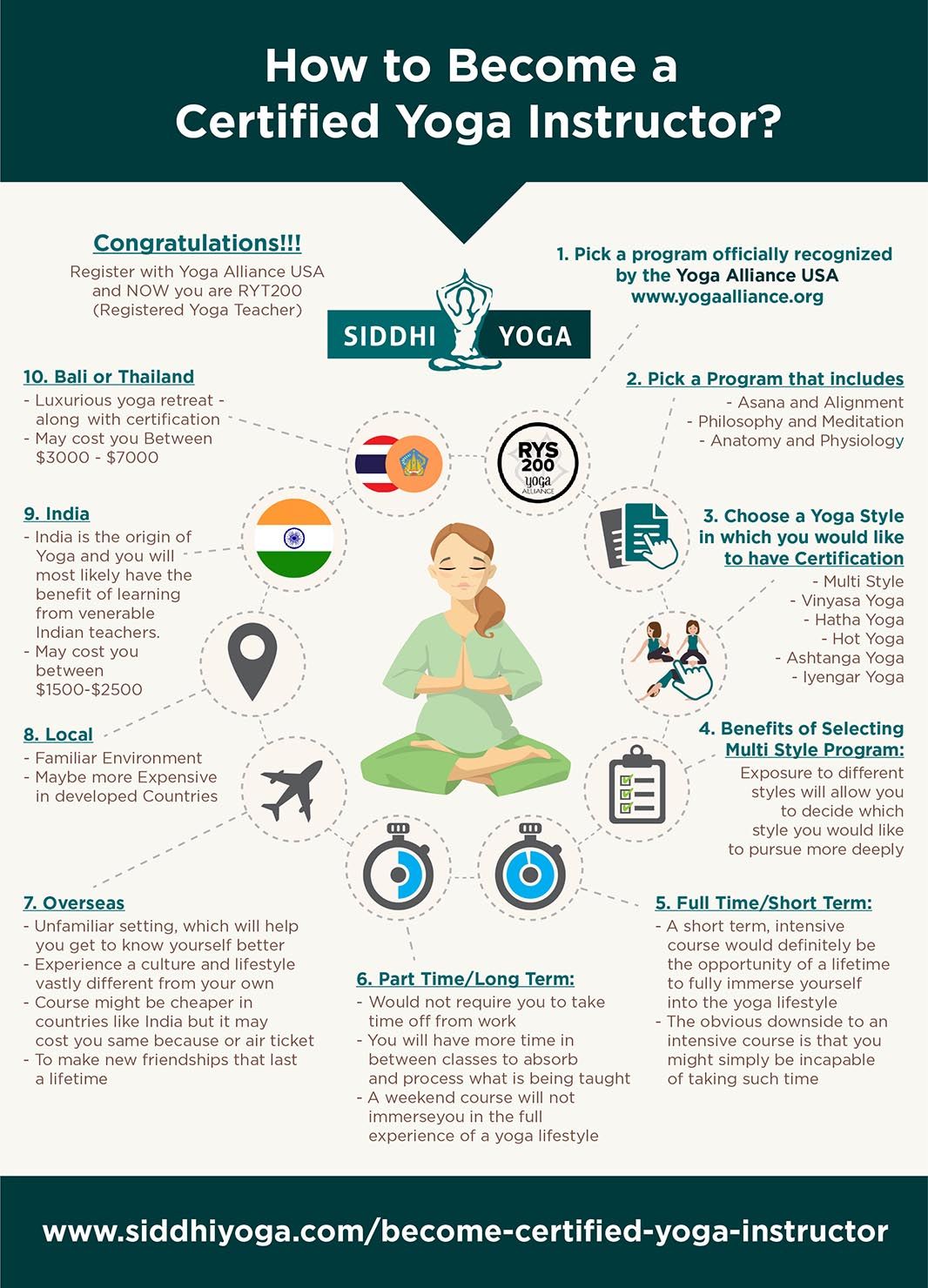
Image Source: www.siddhiyoga.com
Getting Started: Your First Steps
Thinking about teaching yoga? That’s great! The first step is usually finding a yoga instructor certification program. These programs teach you the deep parts of yoga, not just how to do the poses better. They show you how to lead others safely.
Many programs follow standards set by Yoga Alliance, a big group in the yoga world. When you finish a program that meets their rules, you can register with them and become a Registered Yoga Teacher (RYT). This tells people you have a certain level of training.
The most common first step is doing a 200-hour yoga teacher training. This is seen as the basic standard to teach general yoga classes.
Figuring Out the Right Training Path
To become an official Registered Yoga Teacher (RYT) through Yoga Alliance, you need to complete training from a Registered Yoga School (RYS). Yoga Alliance has specific Yoga Alliance requirements for these schools and the programs they offer.
The main path starts with the 200-hour yoga teacher training. Think of this as your solid base. It gives you what you need to teach general public classes safely.
After your 200-hour training, you can teach. If you want to learn more or teach special groups, you can take more training. The next step often is a 300-hour training. Adding a 200-hour and a 300-hour training lets you register as an RYT 500. This shows you have a much deeper level of study.
Yoga Alliance also has special add-on trainings you can take, like for teaching kids or people who are pregnant.
Picking Your Yoga Teacher Training Program
Choosing the right yoga instructor certification program is a big deal. There are many options out there. You need to find one that fits your needs, your goals, and your wallet. This is where you look for the best yoga certification programs for you.
Factors to Think About
When you look at different yoga teacher training programs, here are some things to consider:
- The Style of Yoga: What kind of yoga do you love? Hatha, Vinyasa, Ashtanga, Yin, Restorative? Many 200-hour programs teach a mix or focus on a popular style like Vinyasa or Hatha. Make sure the program teaches the style you want to learn and share.
- The Teachers: Who will be teaching you? Look into their backgrounds, their experience, and their own yoga journey. Do they seem like people you want to learn from?
- The Curriculum: What exactly will you learn? Every program covers the basics required by Yoga Alliance, but some schools offer more on certain topics. We’ll talk more about the yoga teacher training curriculum soon.
- The Schedule: Can you commit to the dates and times? Programs can be intensive (like a few weeks straight) or spread out (weekends over several months).
- The Location: Is it close by? Or is it a retreat in a faraway place? Both can be great, but they mean different things for your life and your yoga certification cost.
- The Price: Yoga certification cost varies a lot. Set a budget. See what’s included (books, meals, etc.). Don’t just pick the cheapest option, but find value for your money.
- Reviews and Reputation: What do past students say? Look for reviews online or ask people who have taken the training. This helps you find the best yoga certification programs.
- Online vs. In-Person: The world changed, and online yoga teacher training became popular and accepted by Yoga Alliance for a time. Think about if learning from home works for you or if you need the energy of being in a room with others.
Checking if a School is Registered
If you want to become a Registered Yoga Teacher (RYT), make sure the school you choose is a Registered Yoga School (RYS) with Yoga Alliance. You can usually check this on the school’s website or on the Yoga Alliance website. This is key to meeting the Yoga Alliance requirements for registration later.
Grasping What You Will Learn
A good yoga teacher training curriculum covers many parts of yoga. It’s not just about doing poses. Here’s what you will typically study in a 200-hour yoga teacher training:
-
Techniques, Training, and Practice: This is the biggest part.
- Asana: You’ll study yoga poses deeply. How to do them, how to teach them, how to change them for different bodies, and the risks. You learn the names (often in Sanskrit, the old yoga language) and how to move into and out of poses safely.
- Pranayama: Breathing exercises. You learn different ways to breathe and how these practices affect the body and mind. You learn how to teach them.
- Meditation: Learning different ways to meditate and how to guide others in quiet time.
- Subtle Body: Ideas like chakras (energy centers) and nadis (energy paths). How energy flows in the body in yoga.
-
Anatomy and Physiology: Learning how the body works.
- Physical Anatomy: Bones, muscles, joints, and key body systems. How yoga poses affect these parts. How to avoid injuries.
- Energetic Anatomy: The subtle body ideas mentioned above, but often looked at through a lens of health and well-being.
-
Yoga Philosophy, Lifestyle, and Ethics: The deeper meaning of yoga.
- Texts: Studying old yoga books like the Yoga Sutras of Patanjali or the Bhagavad Gita. Learning the ideas behind yoga, not just the physical poses.
- Lifestyle: How to live a yoga life off the mat. Ideas like non-violence, truthfulness, simple living.
- Ethics: Rules for yoga teachers. How to act with students, how to set limits, being professional. Yoga Alliance requirements include ethics.
-
Teaching Methodology: How to actually teach a class.
- Sequencing: How to put poses together in a safe and smart way for a class.
- Assisting and Adjusting: How to help students in poses using your hands or just words. Many programs teach careful, hands-off ways to help students now.
- Cueing: The words you use to guide students into and out of poses. Making your words clear and helpful.
- Voice and Presence: Using your voice well and feeling confident in front of a class.
- Teaching different levels: How to teach beginners, advanced students, or mixed groups in one class.
-
Practicum: Getting real teaching experience.
- Practice Teaching: Leading parts of classes or full classes with your classmates or teacher watching. Getting feedback.
- Observing: Watching experienced teachers lead classes.
A good yoga teacher training curriculum is balanced across these areas. It prepares you not just to lead poses, but to share the whole practice of yoga thoughtfully and safely.
Deciphering Yoga Certification Cost
The price of yoga instructor certification programs can be quite different. It depends on the school, the location, the length of the program, and if it’s in-person or online yoga teacher training.
Typical Costs
-
In-Person Programs: These often cost more than online ones.
- Local Programs: Can range from \$2,000 to \$4,000 or even \$5,000 in big cities.
- Retreat-Style Programs: These are often in nice locations and might include food and housing. They can cost from \$3,000 to \$6,000 or more. The higher cost includes the stay and meals.
-
Online Programs: Online yoga teacher training programs are often less expensive.
- Prices can range from \$300 to \$1,500 or \$2,000. They save the school money on space and the teacher’s travel, so they can charge less.
Extra Costs to Think About
Besides the main program fee, you might have other costs:
- Books and Materials: Some programs include these, some don’t. Budget a bit for textbooks.
- Yoga Gear: You might need a good mat, props like blocks and straps.
- Travel and Housing: If your program isn’t close to home, add costs for getting there and where you’ll stay (unless it’s a retreat price that includes housing).
- Food: If meals aren’t included, remember to budget for food.
- Yoga Alliance Fees: After you finish your training, there’s a fee to register with Yoga Alliance to become an RYT. There’s an application fee and a yearly fee. Check their website for the latest numbers.
- Continued Learning: Once you’re certified, you’ll likely want to take workshops or more training to keep learning. This is an ongoing cost in your yoga teaching career.
Looking at the total yoga certification cost, including these extra things, helps you plan your budget.
The Time Commitment for Training
A 200-hour yoga teacher training needs 200 hours of study and practice. How fast you finish those hours depends on the program’s structure.
Different Program Schedules
- Intensive Programs: These pack the 200 hours into a short time, often 3-4 weeks. You train almost all day, every day. This is like a full-time job plus homework. It’s fast but needs you to clear your schedule completely.
- Part-Time Programs: These spread the hours out over several months, maybe 2 to 6 months. They often meet on weekends (like Friday evening, all day Saturday and Sunday) or a few evenings a week. This is good if you work or have family duties. It gives you more time between sessions to practice what you learn.
- Online Programs: Online yoga teacher training can be flexible. Some have live classes at set times. Others let you watch recordings and do tasks on your own time within a timeframe (like 3 or 6 months to finish). This offers the most flexibility but needs strong self-drive.
Think about your life now. Which type of schedule fits best? Do you learn better quickly and deeply, or with time between lessons to let ideas sink in?
Exploring Online Yoga Teacher Training
Before 2020, getting your RYT 200 mostly meant being in person. But things changed. Yoga Alliance made temporary rules that allowed schools to offer their 200-hour training online. Many schools quickly created online yoga teacher training programs.
Pros of Learning Online
- Flexibility: You can often study when it works for you, especially with programs that use recorded videos.
- Convenience: You can learn from your home, saving travel time and costs.
- Cost: Online yoga teacher training is often less expensive than in-person programs.
- Access: You can train with teachers or schools anywhere in the world, not just near you.
Cons of Learning Online
- Less Hands-On Help: Teachers can’t physically help you in poses or see your body in 3D as easily. They rely more on you sending videos or showing them on screen.
- Missing the Group Energy: Being with others in person, practicing, talking, and learning together, creates a special bond that’s harder to get online.
- Needs Self-Discipline: You must be good at managing your time and keeping yourself on track without someone watching you in person.
- Tech Issues: You need reliable internet and a device to watch videos and join calls.
Yoga Alliance’s temporary rule for online RYT 200 trainings was set to end, but they have made adjustments allowing online components to remain. If you plan to register with Yoga Alliance after an online training, double-check their current rules to make sure the program you choose meets their requirements. Many good schools now offer great online yoga teacher training options.
Finishing Your Training and Becoming Certified
Once you complete your yoga teacher training program, the school will give you a certificate. This certificate shows you met their requirements for the 200-hour yoga teacher training (or whatever level you completed).
Getting the school’s certificate is the first step to being “certified” by that school. The next step, if you want it, is becoming a Registered Yoga Teacher (RYT) with Yoga Alliance.
Registering with Yoga Alliance
To become an RYT 200, you need to:
- Finish a 200-hour program with a Registered Yoga School (RYS).
- Apply on the Yoga Alliance website.
- Pay their fees (an application fee the first year and yearly renewal fees).
Once you are registered, you can use the RYT mark. This is seen by many students and studios as a sign of a certain standard of training. It tells people you meet the Yoga Alliance requirements.
Being a Registered Yoga Teacher is voluntary. You don’t have to register with Yoga Alliance to teach yoga. However, many places that hire yoga teachers prefer or require it. It can help you get jobs and shows you are serious about your yoga teaching career.
Starting Your Yoga Teaching Career
Getting your certification is a big step. Now you might wonder, “Where can I teach?”
Places to Teach Yoga
- Yoga Studios: This is a common place to start. You can teach group classes.
- Gyms and Health Clubs: Many gyms offer yoga classes.
- Community Centers: Local centers often look for yoga teachers.
- Corporate Offices: Some companies hire teachers to lead classes for employees.
- Private Lessons: Teaching one-on-one or small groups. You can set your own schedule and prices.
- Online Classes: You can teach live classes using video calls or create pre-recorded classes.
- Workshops and Retreats: As you gain experience, you might lead special events focusing on certain types of yoga or themes.
- Schools and Universities: Some educational places offer yoga.
Building Experience
Your first teaching chances might not be paid. Some teachers start by:
- Offering free classes for friends or family.
- Teaching at community events.
- Helping out an experienced teacher.
- Teaching at places like senior centers or shelters for free or a small fee to get practice.
Getting experience builds your skills and your confidence. It also helps you figure out what kind of teaching you love most. Your yoga teaching career starts with small steps.
Looking at Best Yoga Certification Programs
How do you find the best yoga certification programs when there are so many? “Best” is different for everyone, but here are ways to find a high-quality program:
- Talk to Current or Past Students: Ask people who have done the training at schools you’re looking at. What did they like? What did they not like?
- Talk to the Lead Teachers: Reach out to the main teachers of the program. Ask them about their teaching style, their background, and why they teach this training.
- Visit the School/Studio: If possible, visit the place where the training happens. Get a feel for the space and the people there.
- Look at the Schedule and Curriculum Carefully: Does the schedule work for you? Does the yoga teacher training curriculum cover everything you want to learn? Is there enough time for each subject?
- Ask About Ongoing Support: Does the school offer help after the training is over? Do they offer chances to practice teaching or help you find jobs?
- Compare Costs AND Value: As we talked about with yoga certification cost, look beyond the price tag. What value do you get for the money? What are the teachers like? How deep is the learning?
Finding the best yoga certification programs for you means doing your homework and finding a place that feels right for your own path.
Continuing Your Learning Journey
Getting your 200-hour certification is just the start of your yoga teaching career. Yoga is a deep practice, and there is always more to learn.
Why Keep Learning?
- Improve Your Skills: Learn new poses, better ways to teach, and how to help different people.
- Teach Special Groups: Take programs to teach kids, seniors, pregnant people, or people with injuries. This needs extra knowledge.
- Deepen Your Own Practice: Learning more about yoga helps your own journey on and off the mat.
- Meet Yoga Alliance Rules: If you are a Registered Yoga Teacher (RYT), Yoga Alliance requires you to do continuing education every few years to keep your registration active. These are called Continuing Education Units (CEUs).
Ways to Keep Learning
- Workshops: Attend shorter events (a few hours or a weekend) focused on specific topics like handstands, restorative yoga, or yoga history.
- Advanced Training: Take a 300-hour training to become an RYT 500. This goes much deeper into all areas of the yoga teacher training curriculum.
- Reading: Read books about yoga philosophy, anatomy, and teaching.
- Mentorship: Find an experienced teacher who can guide you in your teaching.
- Taking Classes: Keep taking classes from different teachers yourself. You learn by being a student.
Continuing education is a key part of having a long and successful yoga teaching career.
Making Your Yoga Teaching Career Happen
Becoming a certified yoga instructor takes effort, but it opens doors to a rewarding path. You get to share something you love, help others feel better, and keep learning yourself.
Here’s a simple look at the steps:
- Choose Your Path: Decide if you want to train to meet Yoga Alliance requirements (start with 200 hours).
- Find a Program: Research yoga instructor certification programs. Look at the style, teachers, yoga teacher training curriculum, schedule, yoga certification cost, and decide between in-person and online yoga teacher training. Try to find the best yoga certification programs that fit you.
- Complete the Training: Put in the work during your yoga teacher training. Learn, practice, ask questions.
- Get Certified: Receive your certificate from the school.
- Register (Optional but Recommended): Apply to be a Registered Yoga Teacher (RYT) with Yoga Alliance if you want to.
- Start Teaching: Find chances to teach. Build your experience slowly.
- Keep Learning: Continue taking workshops and classes to grow as a teacher and student.
It’s a process, but each step brings you closer to sharing the gifts of yoga with others.
Frequently Asked Questions (FAQ)
These are common questions people ask about becoming a certified yoga teacher.
H4 How much does yoga teacher training cost?
The yoga certification cost for a 200-hour program usually ranges from \$1,500 to \$4,000 or more for in-person training. Online yoga teacher training can be \$300 to \$2,000. Extra costs for books, travel, and gear can add more.
H4 How long does a 200-hour yoga teacher training take?
It takes 200 hours of study. This can happen fast in an intensive program (like 3-4 weeks training daily) or over many months in a part-time program (like weekends over 3-6 months). Online yoga teacher training might give you a set time (like 6 months) to finish the hours at your own speed.
H4 Do I need to be good at yoga poses to start yoga teacher training?
No, you don’t need to be able to do hard poses. You should have a regular yoga practice and know the basics. The training is about learning to teach and understanding yoga deeply, not just being flexible. You will improve your own practice, but the focus is on teaching skills and knowledge.
H4 What is the difference between RYT and CYT?
- RYT stands for Registered Yoga Teacher. This means you have completed training at a school registered with Yoga Alliance (RYS) and you have registered with Yoga Alliance.
- CYT usually stands for Certified Yoga Teacher. This means you got a certificate from a specific yoga instructor certification program or school. The school “certified” you. CYT is not linked to Yoga Alliance. Many people are CYT from their school and then also become RYT by registering with Yoga Alliance.
H4 Are online yoga teacher training programs accepted?
For a time, Yoga Alliance allowed RYS schools to offer their full 200-hour training online due to world events. While those exact temporary rules changed, many schools now offer programs that have a mix of online and in-person parts, or fully online options that still meet Yoga Alliance requirements for registration. Always check the school’s status and the latest Yoga Alliance rules if RYT status is your goal.
H4 What is covered in the yoga teacher training curriculum?
A standard yoga teacher training curriculum includes learning yoga poses (asana), breathing (pranayama), meditation, how the body works (anatomy), yoga ideas and history (philosophy), how to teach a class (methodology), and getting practice teaching (practicum).
H4 Is becoming a yoga teacher a good yoga teaching career?
It can be a very rewarding career, but it takes time and effort to build. Income can vary a lot depending on where you teach, how much you teach, and if you build your own business (like private classes or online). Many people teach part-time while doing other work.
H4 How do I find the best yoga certification programs?
Look for programs with experienced teachers, a clear yoga teacher training curriculum, good reviews from past students, and a style of yoga that you connect with. Consider the yoga certification cost, the schedule, and if it’s in-person or online yoga teacher training. Talking to schools and past students helps a lot.
Becoming a certified yoga instructor is a meaningful path. It needs dedication to learning and a true wish to share yoga with others. With the right training and ongoing learning, you can build a fulfilling yoga teaching career.