
How do you become a yoga teacher? What is an RYT? Becoming a yoga teacher, often known as a Registered Yoga Teacher (RYT), begins with finding good yoga teacher training programs. It’s a path that blends your love for yoga with learning how to share it with others. This journey involves getting a yoga instructor certification, usually through a 200 hour yoga teacher training program. It often includes Yoga Alliance registration after you finish. It’s a rewarding step on your yoga teaching career path.
Becoming a yoga teacher is more than just doing yoga poses. It’s about learning the full practice and how to guide others safely and well. It takes time, study, and lots of practice.
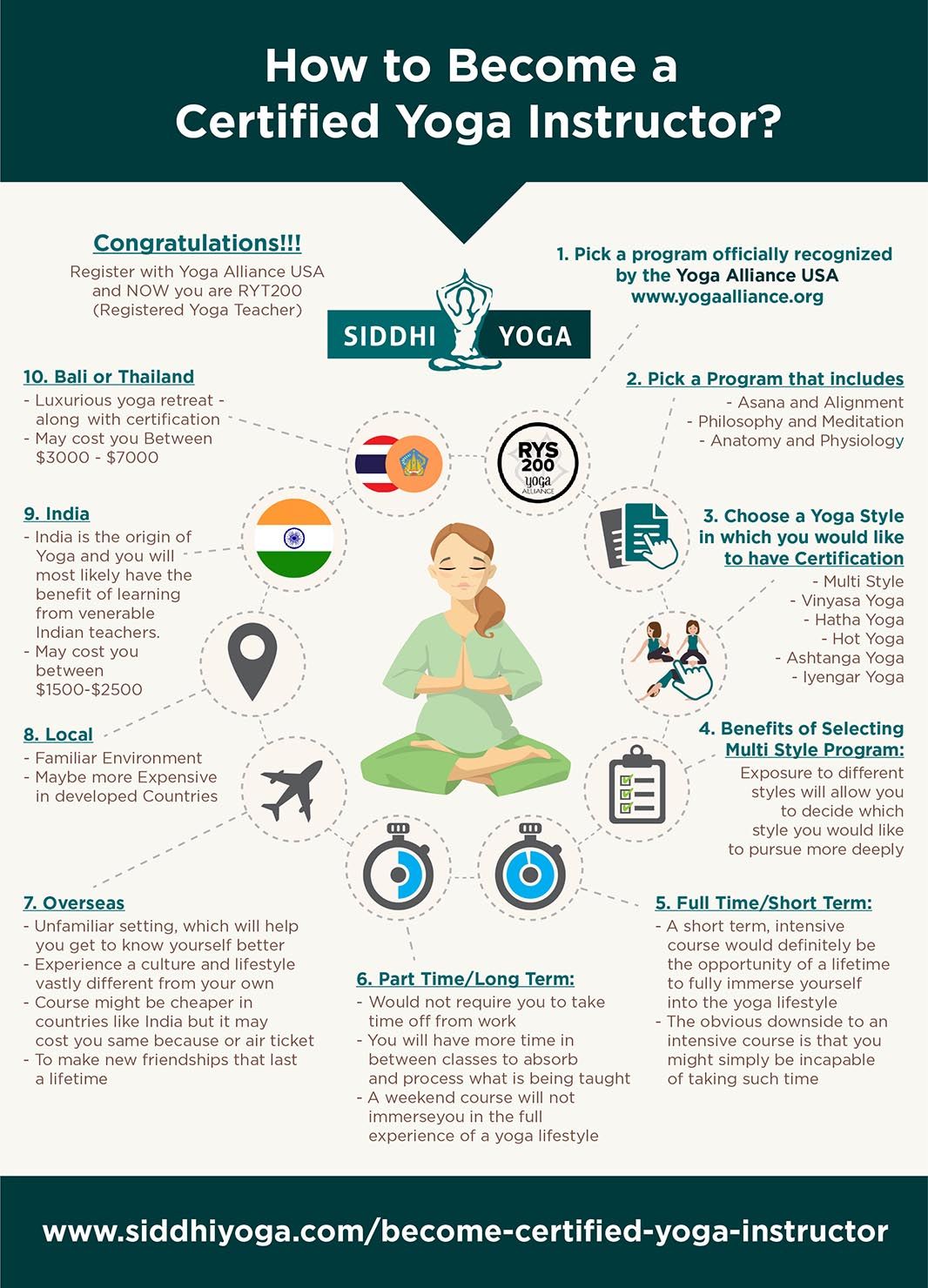
Image Source: www.siddhiyoga.com
The First Steps: Your Personal Yoga Practice
Before you teach yoga, you must first live it. A strong personal practice is the heart of becoming a teacher. This means doing yoga regularly. It’s where you learn the poses in your own body. You feel how they work. You find out what feels good and what is hard.
Doing yoga often helps you build a deep bond with the practice. You start to see how yoga changes you, both inside and out. This personal feeling is key. It helps you speak from real life when you teach.
Think about these things for your practice:
* Do yoga often, maybe a few times a week.
* Try different styles of yoga.
* Go to classes with different teachers. See how they teach.
* Practice at home too.
Your own mat time is your lab. You learn about your body. You learn about your mind. This builds the base you need to teach others. Without this base, teaching is just showing poses. With it, teaching becomes sharing something you truly know and love.
Choosing Your Path: Yoga Teacher Training Programs
The next big step is picking the right training. Yoga teacher training programs are the formal way to learn how to teach. There are many types and places to choose from. The most common start is a 200 hour yoga teacher training. This number, 200 hours, is a widely known standard. It gives you a solid base in teaching yoga.
These programs teach you more than just poses. They cover many parts of yoga. You learn how to guide a class. You learn about the body. You learn about yoga history and ideas.
There are different ways to do a 200 hour yoga teacher training:
* Full-time training: You study yoga every day for a few weeks. This is like a deep dive.
* Part-time training: You study on weekends or evenings over a few months. This lets you keep your job.
* Online training: You learn from home using videos and calls. This is flexible.
Each type has good points and not so good points. Think about your life. Think about how you learn best. This helps you choose the right program for you.
Picking a yoga teacher training program is a big choice. Do your homework. Look at different schools. Read reviews. Talk to people who have done the training.
Finding Your Fit: Choosing a Yoga School
Picking the right choosing a yoga school is very important. The school shapes how you learn to teach. It gives you the tools you need. Not all schools are the same. They have different styles. They have different teachers.
Here are things to think about when you are choosing a yoga school:
* What style of yoga do they teach? Do you love flow yoga? Or maybe slower, calm yoga? Make sure the school matches your interest.
* Who are the teachers? Look up the main teachers. What is their background? How long have they taught?
* What is the school’s feeling? Visit the school if you can. Does it feel like a good place for you? Do you feel welcome?
* What is the group size? Smaller groups might mean more personal help. Bigger groups might offer more viewpoints.
* What is the daily plan? What do you do each day? How much practice versus study?
* What support do they give after training? Do they help you find teaching jobs? Do they have ways to keep learning?
Ask questions. Don’t be afraid to call or email the school. A good school wants you to feel right about your choice. Choosing a yoga school is a personal process. Trust your gut feeling.
Grasping What You Will Learn: Curriculum
A good 200 hour yoga teacher training program covers many topics. It’s not just about doing poses. It gives you a full view of yoga. Here are some key areas you will study:
h4. Yoga Poses and How to Teach Them
You learn the names of poses. You learn how to do them safely. You learn how to help others do them. This includes how to use props like blocks or straps. You learn how to change poses for different bodies or needs. This is a big part of yoga teaching methodology. You learn how to guide people into and out of poses smoothly.
h4. Deciphering Yoga Anatomy and Physiology
This is a very important part. You learn about the body. You learn about bones, muscles, and joints. You learn how the body moves. Yoga anatomy and physiology helps you understand why poses feel the way they do. It helps you teach safely. You learn how to avoid hurting yourself or your students. You study how breathing affects the body. You learn how different body parts work together during yoga. This knowledge is vital for good teaching. It helps you know when a pose might be hard for someone. It helps you offer safe changes.
h4. Interpreting Yoga History and Ideas
Yoga is old. It has a rich history and many ideas. You learn where yoga came from. You learn about old yoga books like the Yoga Sutras. You learn about the path of yoga. This gives your teaching depth. It’s not just fitness. It’s a way of life. You study different paths of yoga, like Karma Yoga (service) or Bhakti Yoga (love).
h4. Fathoming Yoga Teaching Methodology
This is where you learn how to teach. You learn how to plan a class. How long should it be? What poses should you include? In what order? You learn how to talk to students. How to use your voice. How to see what students need. You learn how to give hands-on help (adjustments). You learn how to make your classes flow well. Yoga teaching methodology covers how to be a good guide and leader in the yoga space. It includes how to handle different levels of students in one class.
h4. Learning About Breathwork (Pranayama)
Breath is key in yoga. You learn different ways to breathe. You learn how to teach these ways. Breathing helps calm the mind and bring energy to the body. You study how to guide people through breath practices safely.
h4. Studying Meditation and Stillness
Yoga is not just movement. It’s also about the mind. You learn how to meditate. You learn different ways to meditate. You learn how to guide others into quiet time. This part helps you teach students how to find calm inside themselves.
h4. Exploring Energy (Chakras and Nadis)
Some programs look at the body’s energy system. You might learn about chakras (energy centers) and nadis (energy paths). This is a more subtle part of yoga study.
h4. Learning About Living a Yoga Life
Many programs talk about living yoga off the mat. This can include ideas about diet, ethics, and how you act in the world. This helps you live in line with yoga ideas.
A good 200 hour yoga teacher training covers all these areas. It gives you a strong base. It gets you ready to teach with care and knowledge.
The Investment: Cost of Yoga Teacher Training
Training to be a yoga teacher costs money. The cost of yoga teacher training can change a lot. It depends on the school, where it is, and if it’s full-time, part-time, or online.
Here is a general idea of the cost of yoga teacher training:
| Training Type | Average Cost Range | What Might Be Included |
|---|---|---|
| Local Studio (Part-time) | $2,000 – $3,500 | Training, maybe some books |
| Full-time Immersion | $3,000 – $6,000+ | Training, sometimes food/stay |
| Online Training | $300 – $1,500+ | Course content, online help |
These are just ideas. Some programs cost more. Some cost less.
What makes the cost of yoga teacher training higher or lower?
* Where it is: Training in big cities or popular places might cost more.
* How long it is: Longer training usually costs more.
* If it includes food and stay: If you live at the school, the cost goes up.
* Who the teachers are: Well-known teachers might charge more.
* What the program includes: Does it have lots of extra books or support?
Think about what you get for the money. Does the school seem good? Do the teachers seem skilled? Will this training help you reach your goals? The cost of yoga teacher training is a real cost. But it’s an investment in yourself and your future. Some schools offer payment plans. Some offer early bird prices. Look into these ways to make it easier to pay.
Getting Your Credentials: Yoga Instructor Certification
When you finish your 200 hour yoga teacher training, you get a certificate. This is your yoga instructor certification. It shows you finished the program. It proves you learned what the school taught.
Your yoga instructor certification is your first step. It shows you have met the basic standard for teaching yoga. Most places that hire yoga teachers will ask for this certification.
The certificate usually comes from the school where you trained. It will say you completed their yoga teacher training program. It will often mention the hours completed (like 200 hours).
This yoga instructor certification is important. It’s your key to the next step: maybe registering with an organization like Yoga Alliance.
The Next Step: Registration (Registered Yoga Teacher – RYT)
After you get your yoga instructor certification, you might want to register with Yoga Alliance. Yoga Alliance is a non-profit group. They have standards for yoga teacher training programs and teachers.
When you finish a training program that meets Yoga Alliance standards (a “Registered Yoga School” or RYS) and meet their other rules, you can become a registered yoga teacher (RYT). The most common level is RYT 200. This means you finished a 200-hour training at an RYS.
Yoga Alliance registration is not required by law. You don’t have to register to teach yoga. But it is widely known in the yoga world. Many yoga studios look for teachers who are registered yoga teacher (RYT). It shows you trained at a school that meets certain standards.
To get Yoga Alliance registration, you usually need to:
1. Finish a training at a Registered Yoga School (RYS).
2. Apply on the Yoga Alliance website.
3. Pay a fee.
Being a registered yoga teacher (RYT) can help you stand out. It can make it easier to find teaching jobs. It also connects you to a larger group of teachers. Yoga Alliance also asks teachers to do more training over time. This helps teachers keep learning and getting better. This is called Continuing Education.
Building Your Path: Yoga Teaching Career Path
Getting your certification and becoming a registered yoga teacher (RYT) is a big step. Now you can start your yoga teaching career path. What does this look like? There are many ways to teach yoga.
h4. Teaching at Yoga Studios
Many teachers start here. Studios hire new teachers for different classes. This is a great way to get practice. You teach real people. You learn how to manage a class. You see how studios work.
h4. Teaching at Gyms or Fitness Centers
Gyms often have yoga classes. These classes might be more focused on fitness. They can be a good place to find work.
h4. Teaching Private Lessons
You can teach yoga to one person or a small group. This can be in their home or a quiet space. Private lessons let you tailor the class to the student’s exact needs. This can be very rewarding. It can also pay more per hour than group classes.
h4. Teaching at Other Places
Think outside the box! You can teach yoga at:
* Schools
* Businesses (for staff wellness)
* Hospitals or clinics (yoga for health)
* Community centers
* Retirement homes
* Parks (outdoor yoga)
h4. Starting Your Own Classes or Studio
Some teachers create their own classes. They might rent a space. Or they might teach online. Later, some might open their own yoga studio. This takes business skills too, not just teaching skills.
h4. Teaching Online
With the internet, you can teach yoga online. You can teach live classes. Or you can make videos that people watch anytime. This lets you reach people anywhere in the world.
Your yoga teaching career path might start with one type of teaching. Then it might change over time. You might teach at a studio. Then add private lessons. Then maybe teach workshops on special topics.
To build your yoga teaching career path, think about:
* What kind of students do you want to teach? Kids? Older adults? People with injuries?
* What kind of yoga do you love to teach? Fast flow? Slow stretch? Calm meditation?
* Where do you want to teach? Studio? Gym? Online?
Getting jobs takes effort. Send out resumes. Talk to people at studios. Let everyone know you are a teacher. Offer to teach a trial class. Be ready to keep learning. Go to workshops. Get more training (like a 300-hour training later).
Getting Deeper: Beyond 200 Hours
A 200 hour yoga teacher training is a great start. But it is just that – a start. Many teachers want to learn more. They might do a 300-hour or 500-hour training.
A 300-hour training adds to your 200 hours. It makes you a RYT 500 (200 + 300 = 500 total hours). These higher trainings go deeper. They might focus on special areas like:
* Yoga therapy
* Advanced poses
* Teaching people with injuries or health issues
* Specific yoga styles
* More in-depth yoga anatomy and physiology
* More on yoga teaching methodology for different groups
Going further with yoga teacher training programs helps you grow as a teacher. It lets you teach more types of classes. It can also help your yoga teaching career path.
The Journey Continues: Lifelong Learning
Being a yoga teacher means always learning. The best teachers keep studying. They take classes. They go to workshops. They read books. They learn from their students.
Yoga is a vast subject. There is always more to explore. Keeping up your own practice is key too. Your own journey on the mat feeds your teaching.
Think of your yoga teaching career path as a river. It keeps flowing. It changes direction sometimes. It gets wider in some places. It’s a path of growth, for yourself and for those you guide.
Making Your Teaching Shine
What makes a good yoga teacher?
* Clear Guidance: You speak clearly. People know what to do.
* Safety First: You watch students. You offer changes for different bodies. You know yoga anatomy and physiology.
* Real Feeling: You teach from your heart. You share your own love for yoga.
* Seeing Students: You notice who is in your class. You meet them where they are.
* Planning: Your classes make sense. They flow well. This is part of yoga teaching methodology.
* Kindness: You create a warm, safe space. People feel good in your class.
Your training gives you the tools. But your own style comes from you. It comes from your practice. It comes from your life. It comes from teaching often.
Common Questions About Becoming a Yoga Teacher
Here are some things people often ask:
h5. How long does it take to become a yoga teacher?
A 200 hour yoga teacher training is the main step. It takes about 3-4 weeks full-time, or 3-6 months part-time. Add time for finding the right school and maybe getting Yoga Alliance registration. So, it can take from a month to half a year to get your first certification.
h5. Do I have to be good at all yoga poses to teach?
No! You don’t need to do every hard pose. You need to know the poses well. You need to do them safely in your own body. You need to know how to teach them to others. Your own practice is key, but it’s about knowing the poses, not doing fancy ones.
h5. What is Yoga Alliance? Do I have to register?
Yoga Alliance is a large group that sets standards for yoga teacher training programs and teachers. Yoga Alliance registration is not required by law to teach yoga. But it is well-known. Many studios prefer to hire teachers who are a registered yoga teacher (RYT). It can help your yoga teaching career path.
h5. What is the difference between RYT and RYS?
RYT means Registered Yoga Teacher. This is a person who finished a training at a school that meets Yoga Alliance standards and registered with them. RYS means Registered Yoga School. This is a school whose yoga teacher training programs meet Yoga Alliance standards.
h5. What is a 200-hour training?
A 200 hour yoga teacher training is the basic level of training. It covers the main things you need to know to teach yoga safely. It usually includes poses, breathing, anatomy, history, and how to teach. It’s the most common starting point for a yoga instructor certification.
h5. Is online yoga teacher training okay?
Yes, many people do online yoga teacher training programs now. It can be more flexible and cost less. Look for a program that is from a known school. Make sure it feels right for you. Some online programs can also lead to Yoga Alliance registration.
h5. How much money can a yoga teacher make?
Pay changes a lot. It depends on where you teach (studio, gym, private). It depends on your area. It depends on how many classes you teach. Some teachers teach part-time for extra money. Some teach full-time as their main job. Private lessons often pay more per hour than group classes.
h5. What is the most important thing to teach well?
Many things matter. Knowing yoga anatomy and physiology helps you teach safely. Good yoga teaching methodology helps you guide a class well. But maybe the most important is teaching from your own practice and heart. Share your love and knowledge truly.
Starting Your Path
Becoming a yoga teacher is a rich path. It asks you to keep learning and growing. Your yoga teacher training programs give you the map. Your yoga instructor certification is like your first key. Becoming a registered yoga teacher (RYT) can open doors. Learning yoga anatomy and physiology keeps students safe. Grasping yoga teaching methodology helps you lead a class. Understanding the cost of yoga teacher training helps you plan. Choosing a yoga school sets your learning path. Building your yoga teaching career path takes time and work.
It starts with your love for yoga. If you feel the call to share yoga, take the first step. Find a good training program. Learn all you can. Practice, practice, practice. And get ready to share the power of yoga with others. Your journey starts now.