
Starting yoga at home is easy. You can begin right now with just a little space and some simple steps. Find a quiet spot in your home, maybe get a yoga mat, and try out some easy movements. Watch a beginner video online or use an app to guide you. Listen to your body and do what feels good. You can build an easy yoga routine home that fits your day.
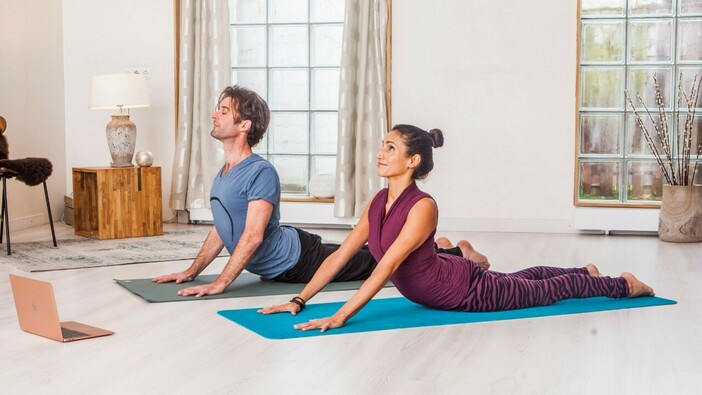
Image Source: cdn.yogaeasy.de
Why Doing Yoga At Home Is Good
Yoga is an old way to move your body and calm your mind. Doing yoga at home has many good points. Here are some benefits of practicing yoga at home:
- It saves you time. You do not need to go anywhere. Just step onto your mat whenever you have a few free minutes.
- It saves you money. No need to pay for classes at a studio.
- You feel more comfortable. You can wear what you want and not worry about what others think.
- You can go at your own speed. Hold poses longer, rest when you need to, or skip poses you do not like.
- You can make it just for you. Do yoga that helps you that day. Maybe you need energy, or maybe you need to feel calm.
- It is easy to fit in. Five minutes in the morning? Ten minutes before bed? You decide.
- It helps you learn your body. You pay more attention to how you feel without looking at others.
Doing yoga at home makes it simple to start and keep doing it.
Getting Your Space Ready
You do not need a big fancy room to do yoga at home. A small corner is just fine. How to create a home yoga space is mostly about finding a place that feels calm and safe.
Finding Your Yoga Spot
Look for a place in your home that:
- Has enough room for you to stretch out fully. Try lying down and stretching your arms and legs wide. Can you do that without hitting things?
- Is quiet. Pick a time and place where you will not be stopped a lot.
- Feels good to you. Maybe near a window, or in a cozy corner.
- Has a floor that is not too hard or too soft.
Clear away anything you might bump into. Move small tables, toys, or other things out of the way. You want to feel free to move. This simple home yoga setup makes starting easy.
What You Might Need
You do not need many things to start yoga at home. Here are some yoga essentials for beginners:
- A yoga mat: This helps you not slip. It also makes poses easier on your knees, hands, and back. Mats come in different sizes and thicknesses. Get one that feels good to you.
- Comfy clothes: Wear clothes you can move freely in. T-shirts, leggings, shorts – anything that lets you stretch without feeling tight.
- Water: Keep some water near by, especially as you get better and do more active yoga.
That’s really it to start! You can add things later if you want, like:
- Yoga blocks: These can help bring the floor closer to you in some poses. They make poses easier when you are still learning.
- A yoga strap: This helps you hold onto your feet or hands in stretches you cannot quite reach yet.
- A blanket: A folded blanket can make sitting or kneeling more comfy.
- A pillow or bolster: Good for relaxing poses.
Do not feel like you need all these things now. Start with just a mat and your comfy clothes.
Learning Simple Movements
Yoga uses different body shapes called poses. It is good to start with simple yoga for beginners at home. These poses help you feel how your body moves and build strength and balance.
Here are some basic beginner yoga poses home to try:
Mountain Pose (Tadasana)
- Stand up tall.
- Put your feet together or a little apart.
- Let your arms hang down by your sides.
- Stand strong like a mountain.
- Feel your feet on the ground.
- Imagine a string pulling you up from the top of your head.
- Breathe in and out slowly.
This pose seems simple, but it helps you feel your body and how you stand.
Child’s Pose (Balasana)
- Kneel on the floor.
- Touch your big toes together.
- Open your knees wide apart (or keep them closer).
- Lean your body forward over your thighs.
- Let your forehead rest on the floor.
- You can stretch your arms out in front of you or bring them back by your sides.
- Let your whole body relax.
- Breathe deeply into your back.
This is a resting pose. It feels good for your back and hips.
Downward-Facing Dog (Adho Mukha Svanasana)
- Start on your hands and knees.
- Put your hands a little bit in front of your shoulders.
- Push your hands into the mat.
- Lift your hips up towards the sky.
- Make your body look like an upside-down ‘V’.
- Keep a small bend in your knees if your legs feel tight.
- Let your head hang loose.
- Push your heels gently towards the floor (they do not need to touch).
- Breathe here.
This pose stretches your whole body – your arms, shoulders, back, and legs.
Cat-Cow Pose (Marjaryasana to Bitilasana)
- Start on your hands and knees.
- Put your hands under your shoulders and your knees under your hips.
- As you breathe in (Cow): Drop your belly towards the floor. Look up.
- As you breathe out (Cat): Round your back up towards the sky like a cat. Pull your belly button towards your spine. Let your head drop down.
- Move back and forth between these two shapes with your breath.
This movement is great for making your spine feel good and warm.
Cobra Pose (Bhujangasana)
- Lie flat on your belly.
- Put your hands flat on the floor under your shoulders.
- Keep your elbows close to your body.
- As you breathe in: Gently lift your chest off the floor. Use your back muscles more than your hands.
- Keep your hips on the floor.
- Look straight ahead or a little up.
- As you breathe out: Lower back down slowly.
This pose helps open your chest and makes your back stronger.
Forward Fold (Uttanasana)
- Stand tall with feet together or hip-width apart.
- As you breathe out: Bend from your hips.
- Let your upper body hang down towards your legs.
- Keep your knees straight, or bend them a little if your legs feel tight.
- Let your head hang heavy.
- You can grab opposite elbows.
- As you breathe in: Lift up halfway, making your back flat.
- As you breathe out: Fold down again.
- To come up: Bend your knees a little and roll or push your way up slowly, with a straight back if possible.
This pose stretches your back and the back of your legs.
Bridge Pose (Setu Bandhasana)
- Lie on your back.
- Bend your knees and put your feet flat on the floor, hip-width apart. Feet should be close to your hips.
- Let your arms rest by your sides, palms down.
- As you breathe in: Push into your feet and lift your hips off the floor.
- Squeeze your bottom muscles.
- Keep your knees pointing straight ahead, not falling out.
- You can keep your arms flat or link your hands together under your back and tuck your shoulders under.
- Breathe here.
- As you breathe out: Gently lower your hips back down.
This pose strengthens your back, legs, and bottom. It also helps open your chest.
Seated Twist (Ardha Matsyendrasana variation)
- Sit on the floor with your legs straight out in front of you.
- Bend your right knee and put your right foot flat on the floor outside your left knee. (Or keep the left leg straight).
- Put your right hand on the floor behind you.
- Hook your left elbow outside your right knee, or hug your right knee with your left arm.
- Sit up tall as you breathe in.
- As you breathe out: Gently twist your body to the right. Look over your right shoulder.
- Stay tall and keep breathing.
- To come out: Breathe in and turn back to the front.
- Do the same thing on the other side.
Twists help make your spine feel good and can help your belly feel better.
Practice these poses slowly. It is not about how deep you go into the pose, but how you feel in it.
Putting Poses Together
Once you know a few simple poses, you can link them together to make an easy yoga routine home. This is sometimes called a flow or a home yoga sequence for beginners.
Here is a simple example:
- Start in Child’s Pose (Balasana) for a few breaths to feel calm.
- Move to Cat-Cow (Marjaryasana to Bitilasana) for 5-10 rounds to warm your spine.
- Go to Downward-Facing Dog (Adho Mukha Svanasana) and stay for 5 breaths.
- Walk your hands back to your feet and come into a Forward Fold (Uttanasana). Stay for 5 breaths.
- Slowly roll or rise up to stand in Mountain Pose (Tadasana). Stay for 3 breaths.
- Repeat steps 3-5 maybe 1-2 more times if you like.
- Finish by lying on your back in a relaxed pose for a few minutes.
This is just one idea. You can mix and match the simple poses you learned.
Making Your Own Routine
To build your own simple easy yoga routine home:
- Start with a pose that helps you feel centered (like sitting tall or Mountain Pose).
- Add some movements to warm up your body (like Cat-Cow).
- Do a few standing poses for strength and balance (like Mountain Pose or maybe try a simple standing forward fold).
- Add some floor poses for stretching (like Seated Twist).
- Finish with a resting pose (like Child’s Pose or lying flat on your back).
Keep it short at first, maybe 10-15 minutes. You can add more time and poses as you feel stronger and more comfortable. The goal is to move your body gently and breathe.
Finding Help and Learning More
You do not have to figure everything out by yourself. There are many ways to get guidance for simple yoga for beginners at home.
Videos and Apps
One of the best ways to learn poses and routines is by following someone else. There are tons of free yoga videos online (like on YouTube) and many apps made for beginners.
Some of the best yoga apps for beginners are:
- Down Dog: You can set the time, level (beginner!), type of yoga, and what you want to focus on. It creates a new class for you each time.
- Yoga for Beginners | Simply Yoga: This app has set routines that are good for people just starting. It shows you pictures or videos of the poses.
- Glo (formerly YogaGlo): This has lots of high-quality classes. You can pick beginner classes. It costs money after a trial, but the teachers are great.
- Peloton App: Known for bikes, but has lots of yoga classes too, including many for beginners. It needs a paid membership.
- Yoga with Adriene (YouTube): A very popular free option. She has many beginner videos and challenges, and people love her friendly style.
When using a video or app, try to watch how the teacher does the pose. Listen to their words. They will tell you how to move your body safely. This is a great way to learn home yoga sequence for beginners and get comfortable with poses.
Listening to Your Body
As you follow along with a video or do your own routine, the most important rule is to listen to your body.
- Yoga should not hurt in a bad way. You might feel a stretch, but sharp pain means stop.
- Do not try to do poses exactly like the person on the screen. Everyone’s body is different.
- Use props like blocks or blankets if they help you feel better in a pose.
- Take rests in Child’s Pose or just lie flat whenever you need to.
Yoga is a journey, not a race. Be kind to yourself.
Helpful Tips for Starting
Starting something new can feel a little hard. Here are some yoga beginner tips home to help you keep going:
- Start small: Even 5-10 minutes a day is a great start. Do not feel like you need to do an hour.
- Be regular: Try to do yoga at the same time each day or a few times a week. This helps make it a habit.
- Do not compare: Your yoga will look different than others. That is okay! Focus on how it makes you feel.
- Breathe: Pay attention to your breath. It is a very important part of yoga. Try to breathe in and out through your nose.
- Be patient: Getting better takes time. Some poses might feel hard at first. Just keep trying gently.
- Have fun: Yoga should feel good. If you are not enjoying it, try a different type of yoga or a different video.
- Make it part of your day: Link it to something you already do, like before breakfast or after work.
Using these yoga beginner tips home can help you stick with your practice and enjoy the benefits of practicing yoga at home.
What’s Next After The Basics?
Once you feel good with simple yoga for beginners at home and have a regular easy yoga routine home, you might want to try new things.
- Try different types of yoga: There are many kinds! Hatha, Vinyasa, Restorative, Yin. Apps and videos can show you these.
- Learn more poses: Look up other beginner yoga poses home.
- Make your routine longer: Add more time as you feel ready.
- Use props: Start using blocks or straps to help you get deeper into stretches safely.
- Learn about breathing exercises: Yoga has special ways of breathing that can help you feel calm or energized.
Remember, it is all about finding what feels good for you and your body today.
In Review: Getting Started At Home
Starting yoga at home is easy and rewarding. Find a little space for your home yoga setup. Grab a mat if you have one, or just use a soft floor. Learn some beginner yoga poses home like Mountain Pose, Child’s Pose, Cat-Cow, and Downward Dog. Put them together for a home yoga sequence for beginners or an easy yoga routine home. Use best yoga apps for beginners or free online videos to guide you. Remember the yoga beginner tips home: start small, be regular, listen to your body, and breathe. Enjoy the many benefits of practicing yoga at home, like saving time, feeling comfy, and making it your own. Simple yoga for beginners at home is a great way to feel stronger, more flexible, and calmer.
Frequently Asked Questions (FAQ)
Here are answers to some common questions about starting yoga at home.
h4: Do I Need A Yoga Mat To Start?
No, you do not absolutely need a yoga mat to start. You can use a carpeted floor, a towel, or just a comfortable patch of floor. However, a yoga mat can help you not slip and makes some poses softer on your joints (knees, hands). It’s one of the most helpful yoga essentials for beginners if you plan to keep doing yoga.
h4: How Often Should I Do Yoga At Home?
Even a few times a week is great! Doing yoga for 10-15 minutes regularly is better than doing a long practice just once in a while. Find what works for your schedule. Three times a week is a good goal for many people, but daily practice, even short, is wonderful too.
h4: How Long Should A Beginner Yoga Session Be At Home?
Start short, maybe 10-15 minutes. As you feel more comfortable and have more time, you can do longer sessions like 20, 30, or even 45 minutes. An easy yoga routine home for beginners does not need to be long to be helpful.
h4: What If I Can’t Do All The Poses In A Video?
That is totally normal! Everyone is different. Do what you can. Skip poses that do not feel right or hurt. Use the pose options for beginners that the teacher shows. It is okay to rest in Child’s Pose whenever you need a break. Your body will get stronger and more open over time.
h4: What Kind Of Clothes Are Best For Home Yoga?
Wear clothes that let you move freely. Stretchy pants or shorts and a comfortable top are good choices. You should be able to bend and stretch without your clothes feeling tight or falling in your face.
h4: Is Yoga Good If I Have Back Pain?
Yoga can be very good for back pain, but it is important to be careful. Start with very gentle poses like Cat-Cow or Child’s Pose. Avoid poses that make your pain worse. Look for “gentle yoga” or “yoga for back pain” videos made by teachers who know a lot about bodies. If your pain is bad, talk to a doctor before starting.
h4: Can I Eat Before Doing Yoga?
It’s usually best not to eat a big meal right before yoga. A full stomach can make some poses feel uncomfortable, especially bends and twists. If you are hungry, have a small snack like a piece of fruit about an hour before you practice.
h4: How Can I Stay Motivated To Do Yoga At Home?
- Set a regular time for your practice.
- Make your home yoga space a nice place to be.
- Try different videos or apps to keep it interesting.
- Think about how good you feel after doing yoga.
- Ask a friend to do yoga at home with you (at the same time in their own home, maybe on a video call!).
These yoga beginner tips home can help you keep the practice going.