
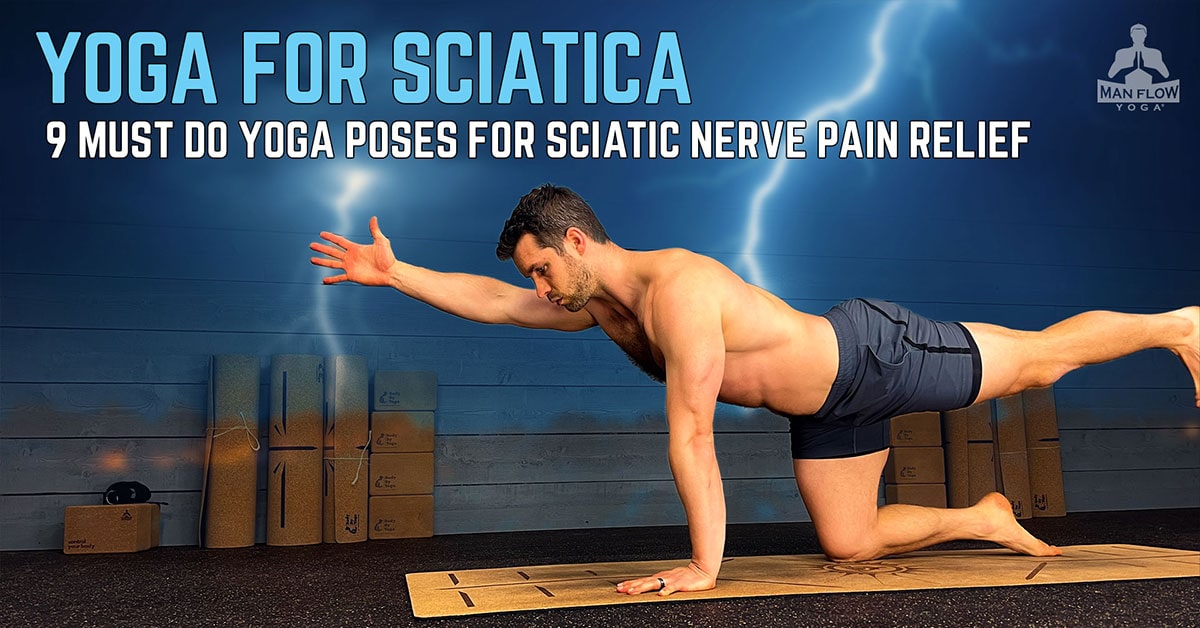
Image Source: manflowyoga.com
Effective Ways: Can Yoga Help Sciatica Pain Relief?
Yes, yoga can often help relieve sciatica pain. Sciatica is pain that travels along the path of the sciatic nerve, which runs from your lower back through your hips and buttocks and down each leg. This pain happens when the nerve is pinched or pressed, often by a herniated disc or bone spur in the spine, or sometimes by a tight muscle like the piriformis. Gentle, specific yoga poses can stretch and strengthen the muscles in the lower back, hips, and legs. This can ease pressure on the sciatic nerve and bring much-needed sciatic nerve pain relief.
Grasping Sciatica
Sciatica is not a problem on its own. It is a sign of another issue. It happens when something presses on the sciatic nerve. The sciatic nerve is the body’s longest and thickest nerve. It starts in the lower back. It goes down through the buttocks and legs. It reaches the feet.
Pain, numbness, or tingling can happen anywhere along this path. It usually affects only one side of the body. The pain can feel like a mild ache. It can also be a sharp, burning feeling. Sometimes, it feels like a jolt or electric shock. Sitting for long times can make it worse. Moving or walking might make it better for some people.
Common reasons for sciatica include:
- Herniated Discs: The soft cushion between back bones bulges out. It can press on the nerve.
- Bone Spurs: Extra bone grows on the spine. This can also push on the nerve.
- Spinal Stenosis: The space around the spinal cord gets narrow. This can squeeze the nerves.
- Piriformis Syndrome: The piriformis muscle is in the buttock. It can squeeze the sciatic nerve if it gets tight or goes into spasm.
- Injury: Falling or hitting the back or hip can hurt the nerve.
Finding the exact reason for the pain is important. A doctor can help find the cause. Knowing the cause helps choose the best way to get sciatica pain relief.
Interpreting How Yoga Helps Sciatica
Yoga is an old practice. It links the body, breath, and mind. For sciatica, yoga helps in many ways. It does more than just stretch. It works on the root causes of the pain.
Yoga therapy for nerve pain uses gentle moves. These moves aim to fix muscle issues. They also help with problems in the joints and spine. Yoga can ease pressure on the sciatic nerve.
Here is how yoga can offer sciatica relief through yoga:
- Stretching Tight Muscles: Tight muscles in the hips, buttocks, and hamstrings can press on the sciatic nerve. Yoga has many poses that stretch these areas. Piriformis stretch yoga poses are very helpful. They loosen the piriformis muscle. This muscle is close to the sciatic nerve. Stretching for sciatica is key.
- Strengthening Core Muscles: Strong core muscles help the spine. They support the lower back. This takes pressure off the sciatic nerve. Yoga builds core strength. It does this through various poses.
- Improving Posture: Poor posture can put extra stress on the spine and nerves. Yoga helps you become more aware of your body. It teaches good posture. Good posture helps keep the spine in line. This reduces pressure on the sciatic nerve.
- Reducing Inflammation: Sciatica pain often comes with swelling around the nerve. Gentle movement and breathing in yoga can help reduce swelling.
- Increasing Blood Flow: Moving the body gently increases blood flow. This brings healing nutrients to the area. It helps clear away waste. Better blood flow can help nerve tissues heal.
- Calming the Mind: Chronic pain can cause stress and anxiety. Yoga includes breathing methods and stillness. These help calm the nervous system. They reduce stress. This can lower pain levels.
Using yoga as sciatica pain exercises is a soft way to move. It is not like hard exercise. The focus is on gentle movement and ease.
Key Principles for Practicing Yoga with Sciatica
Doing yoga for sciatica needs care. You must listen to your body. Not all yoga is right for sciatica. Gentle yoga for sciatica is best.
Here are important rules to follow:
- Talk to Your Doctor First: Always talk to your doctor before starting any new exercise program. This is very true if you have sciatica. Your doctor can make sure yoga is safe for you. They can tell you if any moves should be avoided.
- Find a Qualified Teacher: If you can, find a yoga teacher who knows about injuries or yoga therapy. They can guide you. They can show you how to change poses for your body.
- Listen to Your Body: This is the most important rule. Yoga should not make your pain worse. If a pose hurts, stop. Or change the pose to make it easier. Pain is your body telling you something is wrong. Do not push through sharp pain.
- Start Slowly: Begin with simple poses. Hold them for short times. As your body gets stronger and less stiff, you can do more. Do not try hard poses too soon.
- Use Props: Yoga props like blocks, blankets, and straps can help. They make poses easier. They help you get the stretch without straining.
- Focus on Breath: Breathing deeply helps your muscles relax. It also calms your mind. Pay attention to your breath during your practice. Breathe into areas of tightness.
- Be Consistent: Doing yoga a little bit often is better than doing a lot rarely. Try to do gentle stretches most days. Even 10-15 minutes can help.
Remember, the goal is not to do perfect poses. The goal is to feel better. The goal is to reduce pain and move more freely.
Safe Yoga Poses for Sciatica
Many yoga poses can help with sciatica. They stretch key areas like the hips, hamstrings, and lower back. These are often the source of the pressure on the sciatic nerve. Here are some helpful yoga poses for sciatica.
Important Note: Do these poses slowly and gently. If you feel pain, stop.
h4: Reclined Pigeon Pose (Sucirandhrasana)
This is a great piriformis stretch yoga pose. It is done while lying on your back. This makes it gentle.
-
How to do it:
- Lie on your back. Bend your knees. Keep your feet flat on the floor.
- Lift your right leg. Cross your right ankle over your left thigh.
- Flex your right foot (point toes toward your knee). This protects your knee.
- Reach your hands around your left thigh. Gently pull your left leg towards your chest.
- You will feel a stretch in your right hip and buttock. This is the piriformis muscle area.
- Keep your head and shoulders relaxed on the floor.
- Hold for 30 seconds to a minute. Breathe deeply.
- Slowly release. Lower your left leg. Uncross your right leg.
- Repeat on the other side.
-
Why it helps: This pose directly stretches the piriformis muscle. A tight piriformis can squeeze the sciatic nerve. Loosening it can bring significant relief. It is a very effective stretching for sciatica pose.
h4: Knee-to-Chest Pose (Apanasana)
This pose gently stretches the lower back and hips. It is simple and soothing.
-
How to do it:
- Lie on your back. Keep your legs straight.
- Bend one knee. Bring it towards your chest.
- Clasp your hands around the knee or behind the thigh.
- Gently pull the knee closer. Keep the other leg long or bent with the foot flat.
- Keep your lower back pressed gently towards the floor. Avoid lifting your hips.
- Hold for 30 seconds to a minute.
- Release and switch legs.
- You can also bring both knees to the chest for a deeper stretch on the lower back.
-
Why it helps: This is a good lower back stretches for sciatica pose. It releases tension in the lower back muscles. It also offers a mild stretch to the hips. This can help decompress the lower spine slightly.
h4: Supine Spinal Twist (Supta Matsyendrasana Variation)
Gentle twists can help release tension in the back and hips. This pose is done on the back. This makes it safe.
-
How to do it:
- Lie on your back. Extend your arms out to the sides at shoulder height. Make a ‘T’ shape with your body.
- Bend both knees. Bring them towards your chest slightly.
- Let both knees fall slowly to one side (e.g., to the right). Keep your knees stacked or slightly offset if that feels better.
- Turn your head to the opposite side (e.g., to the left).
- Try to keep both shoulders on the floor. It’s okay if the opposite shoulder lifts a little. Do not force it down.
- Hold for 30 seconds to a minute. Feel the stretch in your back and hip.
- Bring your knees back to the center slowly.
- Repeat on the other side.
-
Why it helps: This twist gently stretches the back muscles and glutes. It can help free up tight areas that might be affecting the sciatic nerve. It is a safe way to twist for sciatica pain exercises.
h4: Cat-Cow Pose (Marjaryasana-Bitilasana)
This is a gentle flow between two poses. It warms up the spine. It improves flexibility.
-
How to do it:
- Start on your hands and knees. Your hands should be under your shoulders. Your knees should be under your hips.
- As you breathe in (inhale), drop your belly towards the floor. Lift your chest and tailbone towards the ceiling. Look slightly up (Cow pose).
- As you breathe out (exhale), round your spine towards the ceiling. Pull your belly button towards your spine. Tuck your chin to your chest (Cat pose).
- Move slowly between these two poses. Link your breath with your movement.
- Do this 5-10 times.
-
Why it helps: This movement makes the spine more mobile. It stretches the back muscles. It helps blood flow in the area. It is a foundational movement in gentle yoga for sciatica.
h4: Child’s Pose (Balasana)
This is a resting pose. It can help release tension in the back and hips.
-
How to do it:
- Start on your hands and knees.
- Bring your big toes together. Widen your knees to the edges of the mat.
- Send your hips back towards your heels.
- Rest your belly between your thighs. Lower your forehead to the floor.
- You can stretch your arms forward or bring them back along your sides.
- Allow your back and hips to relax.
- Hold for as long as feels good.
-
Why it helps: This pose gently stretches the lower back and hips. It is calming. It helps the body relax, which can ease muscle tension around the sciatic nerve.
h4: Standing Forward Bend Variation (Uttanasana Variation)
Standing folds can stretch the hamstrings. Tight hamstrings can pull on the pelvis. This can affect the lower back and sciatic nerve. A gentle version is important.
-
How to do it:
- Stand with your feet hip-width apart.
- Place your hands on your hips.
- Bend your knees a lot. This is very important for sciatica.
- Fold forward from your hips. Let your chest rest on your thighs.
- Let your head hang heavy.
- You can hold opposite elbows. Or let your hands rest on the floor, blocks, or your shins.
- Keep your knees bent as much as you need to avoid pain. You should feel the stretch in the back of your thighs (hamstrings), not your back.
- Hold for 30 seconds.
- To come up, press your feet down. Keep your knees bent. Roll up slowly, one back bone at a time. Or place hands on hips and come up with a flat back.
-
Why it helps: This helps with stretching for sciatica by targeting the hamstrings. Tight hamstrings can make lower back pain worse. Bending the knees protects the lower back and makes the stretch safer.
h4: Gentle Hamstring Stretch (using a strap)
Directly stretching the hamstring can be helpful. Doing it lying down is gentle.
-
How to do it:
- Lie on your back. Keep one leg straight or bent with the foot flat.
- Loop a yoga strap, towel, or belt around the ball of your other foot.
- Gently lift that leg towards the ceiling. Keep a slight bend in your knee. Do not lock the knee.
- Hold the ends of the strap. Gently pull the leg closer towards you. Stop when you feel a stretch in the back of your thigh. Do not pull into pain.
- Keep your lower back pressed gently towards the floor.
- Hold for 30 seconds to a minute. Breathe deeply.
- Lower the leg slowly.
- Repeat on the other side.
-
Why it helps: This is another way to get a good hamstring stretch. It helps reduce the pull on the pelvis and lower back caused by tight hamstrings. This supports sciatica relief through yoga.
h4: Supported Bridge Pose (Setu Bandhasana Variation)
This pose is a gentle backbend. Using a block makes it resting and supportive. It can help release the front of the hips.
-
How to do it:
- Lie on your back. Bend your knees. Keep your feet flat on the floor, hip-width apart. Your heels should be close to your sitting bones.
- Press into your feet. Lift your hips off the floor a little.
- Slide a yoga block under your lower back/sacrum area. Place it at a height that feels supportive and comfortable. It should not be too high. The low or medium height is usually best.
- Rest your weight onto the block. Let your hips be fully supported.
- You can rest your arms by your sides or stretch them overhead.
- Stay here for 1-5 minutes, breathing deeply.
- To come out, press into your feet. Lift your hips just enough to slide the block out. Lower your hips slowly back to the floor.
-
Why it helps: This pose gently opens the front of the hips. It allows the lower back to lengthen and relax over the block. This can help ease compression in the lower spine. It is a good gentle yoga for sciatica pose for overall back release.
h4: Sphynx Pose (Salamba Bhujangasana)
This is a very mild backbend done on the belly. It helps strengthen the lower back.
-
How to do it:
- Lie on your belly. Place your elbows under your shoulders. Keep your forearms parallel on the floor. Your hands are forward.
- Press your forearms and hands down. Lift your chest off the floor slightly.
- Keep your hips and legs heavy on the floor. Do not push up too high.
- Look straight ahead or slightly down to keep your neck long.
- You should feel a gentle curve in your lower back. Stop if you feel any sharp pain.
- Hold for 30 seconds to a minute. Breathe.
- Release by lowering your chest to the floor.
-
Why it helps: This gentle backbend helps strengthen the muscles that support the lower back. Strong back muscles can help stabilize the spine. This can reduce nerve pressure. It is one of the useful sciatica pain exercises.
h4: Pigeon Pose Modification (Eka Pada Rajakapotasana Modification)
Full Pigeon Pose can be too much for sciatica. A modified version, often done on the back (like Reclined Pigeon) or using props, is safer. The goal is to stretch the hip external rotators and piriformis muscle.
-
How to do it (Using a chair or table):
- Sit on a chair. Keep your feet flat on the floor.
- Lift your right leg. Cross your right ankle over your left thigh, just above the knee.
- Sit up tall. Keep your back straight.
- Gently lean forward from your hips. Do not round your back. Lean only until you feel a stretch in your right hip/buttock.
- Hold for 30 seconds to a minute.
- Sit up slowly. Uncross your leg.
- Repeat on the other side.
-
Why it helps: Like Reclined Pigeon, this targets the hip muscles, especially the piriformis. This can directly ease pressure on the sciatic nerve. It’s a good way to get piriformis stretch yoga benefits while sitting.
Poses to Avoid with Sciatica
Some yoga poses can make sciatica worse. It’s important to know which ones. Avoid poses that cause sharp or increased pain.
Generally, be careful with:
- Deep Forward Folds: Especially standing ones where the back rounds. These can strain the lower back. Example: Paschimottanasana (Seated Forward Bend) if done with a rounded back. Uttanasana (Standing Forward Bend) without bent knees.
- Deep Twists: Twists where you push hard into the pose can put too much stress on the spine. Example: Ardha Matsyendrasana (Half Lord of the Fishes Pose) if done forcefully. Stick to gentle twists like the supine one mentioned earlier.
- Strong Backbends: Deep backbends can compress the lower spine. Example: Dhanurasana (Bow Pose), Ustrasana (Camel Pose). Sphynx or gentle Cobra are usually safer.
- Leg Lifts: Lifting straight legs, especially both legs at once, can strain the lower back.
- Poses that involve strong, sudden movements.
- Full Pigeon Pose on the floor can sometimes be too intense for an irritated sciatic nerve. Use the reclined or chair version instead.
- Inversions (like headstand, handstand) might put unusual pressure on the spine, especially if the core isn’t strong.
Always listen to your body. If a pose feels wrong or causes pain, stop. There are many ways to modify poses. Or you can skip a pose and do something else gentle.
Building a Sciatica-Friendly Yoga Routine
Creating a regular yoga practice can help manage sciatica pain over time. Here is a simple plan.
- Frequency: Aim for 3-5 times a week. Even short sessions (15-20 minutes) help.
- Timing: Choose a time when you can practice without rush. Mornings can help reduce stiffness. Evenings can help relax before bed.
- Warm-up: Start with 5 minutes of gentle movement. Cat-Cow, gentle knee-to-chest, or just lying on your back and swaying the knees side to side.
- Pose Selection: Focus on poses that stretch the hips, hamstrings, and gently mobilize the lower back. Use the safe poses listed above. Include piriformis stretch yoga.
- Hold Time: Hold poses for 30 seconds to 1 minute. Breathe deeply in each pose.
- Cool-down: End with a few minutes of Child’s Pose or lying flat on your back (Savasana). Let your body completely relax.
Here is an example routine using sciatica pain exercises:
- Lie on back, knees bent, feet flat (1 min) – gentle check-in.
- Reclined Knee-to-Chest Pose (1 min each leg)
- Reclined Pigeon Pose (1 min each side) – piriformis stretch yoga
- Supine Spinal Twist (1 min each side)
- Gentle Hamstring Stretch with strap (1 min each leg) – stretching for sciatica
- Move to hands and knees. Cat-Cow (5-10 rounds).
- Child’s Pose (2-3 minutes).
- Lie on belly. Sphynx Pose (1 minute).
- Lie on back. Supported Bridge Pose (using a block) (2-3 minutes).
- Lie flat on back (Savasana) (5 minutes).
This routine includes many beneficial yoga poses for sciatica. It focuses on gentle movements and stretches for sciatic nerve pain relief. Remember to modify any pose that doesn’t feel right. This is your journey towards sciatica relief through yoga.
Yoga Poses for Sciatica at a Glance
Here is a table summarizing some key poses for sciatica:
| Pose Name (English/Sanskrit) | Focus Area | Key Benefit | Notes |
|---|---|---|---|
| Reclined Pigeon (Sucirandhrasana) | Hips, Piriformis | Stretches piriformis muscle, eases nerve pressure | Done on back, gentle, good piriformis stretch yoga |
| Knee-to-Chest (Apanasana) | Lower Back, Hips | Releases lower back tension | Simple, gentle, lower back stretches for sciatica |
| Supine Spinal Twist (Supta Matsyendrasana Var) | Back, Hips, Glutes | Gentle back & hip release | Done on back, safe twist for sciatica |
| Cat-Cow (Marjaryasana-Bitilasana) | Spine, Back Muscles | Warms up spine, improves flexibility | Gentle flow, foundational sciatica pain exercises |
| Child’s Pose (Balasana) | Lower Back, Hips | Resting pose, gentle stretch and release | Calming, good for between poses or cool down |
| Standing Forward Bend Var. (Uttanasana Var) | Hamstrings | Stretches hamstrings (with bent knees) | Crucial to bend knees, good for stretching sciatica |
| Gentle Hamstring Stretch (with strap) | Hamstrings | Targeted hamstring release | Done on back, gentle, part of sciatica exercises |
| Supported Bridge (Setu Bandhasana Var) | Lower Back, Hip Flexors | Gentle backbend, releases front of hips | Use a block for support, part of gentle yoga |
| Sphynx Pose (Salamba Bhujangasana) | Lower Back | Gentle back strength, mild backbend | Done on belly, good sciatica pain exercises |
| Chair Pigeon Pose | Hips, Piriformis | Stretches piriformis while seated | Good for workplace or if lying down is hard |
This table highlights effective yoga poses for sciatica. They target the areas most likely to contribute to sciatic nerve pain relief.
Other Factors for Sciatica Relief
Yoga is a powerful tool, but it works best with other healthy habits.
- Good Posture: Pay attention to how you sit, stand, and walk. Avoid slouching. Use support for your lower back when sitting.
- Proper Lifting: Lift with your legs, not your back. Keep the object close to your body.
- Avoid Long Sitting: Get up and move around often. Sitting for long periods can make sciatica worse.
- Heat and Cold: Some people find heat packs help relax tight muscles. Cold packs can help reduce swelling. See what works for you.
- Stay Active: Regular, gentle movement (like walking or swimming) can keep muscles strong and flexible.
- Healthy Weight: Extra weight can put more stress on the spine.
- Talk to Professionals: Combine yoga with advice from your doctor, physical therapist, or chiropractor. They can give you specific guidance for your situation, including herniated disc stretches if that is the cause.
Combining Yoga with Other Treatments
Yoga for sciatica is often most helpful as part of a larger plan.
- Medical Doctor: They can diagnose the cause of your sciatica. They can suggest treatments like medicine or injections if needed. They ensure there are no serious issues.
- Physical Therapist: They are experts in movement. They can give you specific exercises and stretches for sciatica. They can also teach you proper body mechanics. Yoga can complement physical therapy exercises. Herniated disc stretches given by a physical therapist can be very specific and work well with gentle yoga poses.
- Chiropractor: Some people find adjustments help align the spine and pelvis.
Think of yoga as one important piece of your puzzle for sciatica relief. It is a great tool for managing pain and improving how you move.
Consistency is Key
You will likely not get rid of sciatica pain with just one yoga session. The benefits come from regular practice. Doing gentle yoga poses for sciatica a few times a week builds muscle strength, improves flexibility, and calms the nervous system over time. Make it a regular part of your week. Even short, mindful sessions are helpful. Sciatica relief through yoga is a journey, not a quick fix.
Frequently Asked Questions (FAQ)
h4: Can yoga cure sciatica completely?
Yoga cannot cure the underlying cause of sciatica, like a herniated disc. But it can greatly help manage the pain and improve your ability to move. It addresses muscle tightness and weakness that press on the nerve. It is a powerful tool for relief, not a magic cure.
h4: How long until I feel better doing yoga for sciatica?
This is different for everyone. Some people feel a little better after just one session. For others, it might take a few weeks of regular practice. Be patient and consistent. Pay attention to how your body feels over time.
h4: Can I do yoga if my sciatica pain is very bad?
If your pain is very bad, it is best to rest first and see a doctor. When the sharp pain lessens, you can start with very gentle movements. Lying on your back and doing simple knee movements or supported stretches might be okay. Avoid any movement that makes the pain worse. Focus on gentle yoga for sciatica when the pain is less severe.
h4: Are there specific yoga poses for sciatica due to a herniated disc?
Yes. If a herniated disc is the cause, you need to be extra careful. Avoid deep forward bends and strong twists. Gentle backbends like Sphynx pose can sometimes help. Poses that create space in the spine are good. Herniated disc stretches in yoga usually focus on gentle decompression and stretches that don’t increase pressure on the disc. Always follow a doctor’s or physical therapist’s advice.
h4: What is the best type of yoga for sciatica?
Gentle styles like Hatha, Yin, or restorative yoga are often best when you have sciatica. Avoid fast-paced or intense styles like Vinyasa or Ashtanga at first. Look for classes described as “gentle,” “beginner,” or “therapeutic.” Gentle yoga for sciatica emphasizes slow movements and longer holds in supported poses.
h4: Is Reclined Pigeon Pose the best stretch for sciatica?
Reclined Pigeon is often very effective for many people with sciatica because it targets the piriformis muscle, which can be a major cause of nerve pressure. However, it’s not the only helpful pose. A mix of poses that stretch the hips, hamstrings, and lower back is usually the most helpful approach for overall sciatica relief through yoga.
h4: Should I feel a deep stretch in every pose?
No. With sciatica, the goal is gentle release, not deep stretching. You should feel a stretch, but it should be comfortable and not cause pain. Pain means you are pushing too hard or the pose is not right for you right now.
Conclusion
Yoga can be a very effective way to find sciatica pain relief. By doing gentle yoga poses for sciatica regularly, you can stretch tight muscles, make your core stronger, improve posture, and calm your nervous system. Focus on poses like Reclined Pigeon, Knee-to-Chest, and gentle twists. Avoid moves that make your pain worse. Always start slowly and listen to your body. Combining yoga with advice from doctors and therapists offers the best path to sciatica relief through yoga. Be patient, be gentle with yourself, and practice often.