
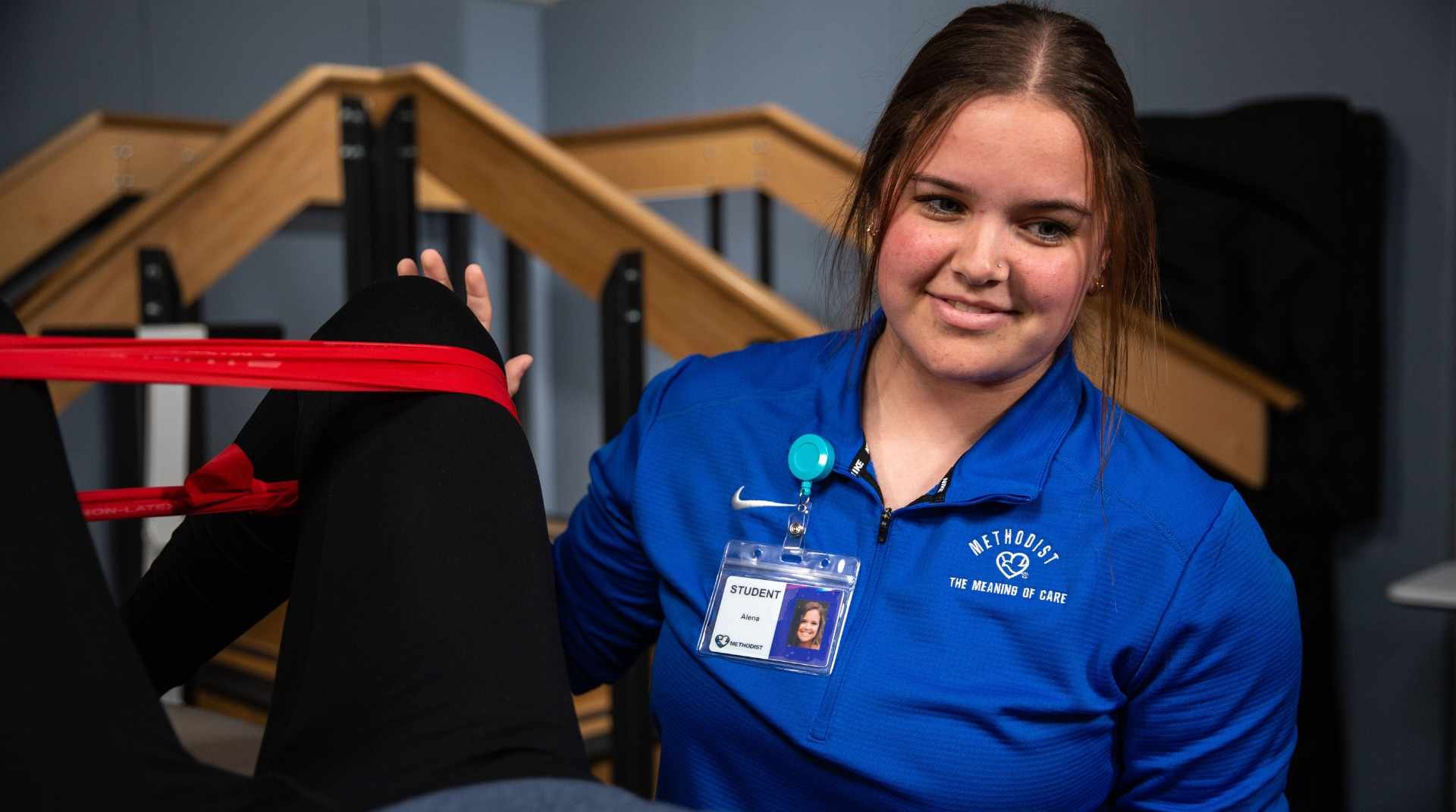
Image Source: blog.methodistcollege.edu
Can You Be A Pta With An Exercise Science Degree? Learn How
Can you become a Physical Therapist Assistant with an Exercise Science degree? Yes! You absolutely can. Many people with an Exercise Science degree choose this path. But it is not a simple switch. You must go back to school to become a PTA. This blog post will tell you how. We will explain the steps. We will show you what you need to do.
Why Your Exercise Science Degree Helps
Your Bachelor of Science in Exercise Science gives you a good start. You already learned many things. These things are important for being a PTA. You studied how the body moves. You learned how muscles work. You know how exercise helps people get stronger.
Here are some key areas where your degree gives you an edge:
- Anatomy: You know where body parts are. You know names of bones and muscles. PTAs need this knowledge every day.
- Physiology: You learned how the body works. How blood flows. How muscles use energy. This helps you grasp why therapies work.
- Kinesiology: You studied body movement. How people walk. How they lift things. This is crucial for helping patients move better.
- Biomechanics: You looked at the forces on the body. How joints handle weight. This helps you understand why injuries happen. It helps you plan safe exercises.
- Exercise Principles: You know how to create exercise plans. How to make them harder over time. This is a main task for a PTA.
Your degree builds a strong base. It shows you know about health and movement. But an Exercise Science degree is not the same as a PTA degree. It is a good first step. It helps you get into PTA school.
Steps to Become a PTA
Becoming a PTA is a clear path. You need specific training. An Exercise Science degree helps with the first step: getting into a PTA program.
The main steps are:
- Finish your Exercise Science degree.
- Find accredited PTA programs.
- Check their admission rules.
- Complete any missing classes (prerequisites).
- Apply to PTA school.
- Finish the PTA program (usually 2 years).
- Pass the national licensing exam.
- Get your state license.
- Start working as a PTA.
We will look at these steps closely.
Finding a PTA Program
PTA programs are offered at colleges. They are usually two-year programs. They lead to an Associate of Applied Science degree. It is very important that the program is accredited. Look for programs accredited by CAPTE. This stands for the Commission on Accreditation in Physical Therapy Education. This is key. Only graduates from accredited programs can take the national exam.
You can find accredited programs online. The CAPTE website has a list. Look at programs near you. Look at their start dates and schedules.
Meeting Program Rules
Every PTA program has rules for who they let in. These are called admission requirements. They often include:
- Having a high school diploma or GED.
- Having finished certain college classes (prerequisites).
- Having a minimum GPA (grade point average).
- Writing a personal essay.
- Getting letters of recommendation.
- Completing observation hours in a physical therapy setting.
- Sometimes, passing an entrance exam.
Your Exercise Science degree helps with some of these. You already have a college degree. You likely have a good GPA. You probably have experience writing essays and getting recommendations.
Prerequisite Classes for PTA Programs
This is where your Exercise Science degree is very helpful but might not cover everything. PTA programs need specific classes before you can apply. These are called prerequisite courses. (LSI: PTA program prerequisites, physical therapist assistant school requirements, prerequisite courses for PTA programs).
Common prerequisite classes include:
- Anatomy and Physiology (A&P): Often a two-part series with labs. This is almost always required. Your Exercise Science A&P might count.
- Biology: Sometimes one or two general biology classes.
- Physics: Often one or two classes. This can be a class many Exercise Science programs don’t require.
- Psychology: Often one or two general psychology classes.
- Math: College-level math like algebra or statistics.
- English/Writing: Basic composition classes.
- Communication/Speech: Public speaking or similar.
- Medical Terminology: A class focused on health words.
(LSI: PTA program prerequisites, physical therapist assistant school requirements, prerequisite courses for PTA programs, PTA program admission requirements)
Looking at Your Past Classes
Can exercise science credits transfer to PTA program? (LSI: can exercise science credits transfer to PTA program) This is a big question. The answer is: maybe some, but maybe not all.
Here’s why:
- Course Match: Does your Exercise Science class match the PTA program’s required class? For example, did your A&P class cover the same topics and have labs?
- School Rules: Each school has its own rules about accepting credits from other colleges.
- Time Limit: Some schools will not accept credits for classes taken many years ago (e.g., more than 5-7 years).
- Grade: You often need a specific minimum grade (like a B or C) in prerequisite classes for them to count.
Classes like Anatomy, Physiology, Biology, Psychology, and Math from your Exercise Science degree are most likely to count. Classes like Physics, Medical Terminology, or specific advanced Exercise Science classes might not count.
What to do:
- Get your college transcripts.
- Look at the prerequisite list for each PTA program you like.
- Compare your classes to their list.
- Contact the admission office at each school. Ask them to look at your transcripts. They will tell you exactly which of your classes count. They will tell you which classes you still need to take.
You might need to take a few extra classes at a local college before you can apply. This is common.
Here is a simple table showing common prerequisites and if an Exercise Science class might count:
| Prerequisite Class | Often Required? | Likely Covered in Ex Sci? | Might Count? | Things to Check |
|---|---|---|---|---|
| Anatomy & Physiology | Yes | Yes | High | Labs included? Content match? Time limit? |
| Biology | Yes | Yes | High | Specific type required (e.g., General Bio)? |
| Physics | Yes | Sometimes | Low to Medium | Does your program require it? How in-depth was it? |
| Psychology | Yes | Yes | High | General Psychology usually needed. |
| College Math (Algebra) | Yes | Yes | High | Level required? |
| Statistics | Often | Yes | High | Is it the right kind of stats? |
| English/Writing | Yes | Yes | High | Basic composition usually counts. |
| Communication/Speech | Often | Sometimes | Medium | Does your program require a specific type? |
| Medical Terminology | Often | No | Low | Rarely covered in standard Ex Sci. |
| Exercise Physiology | Sometimes | Yes | Low to Medium | Usually need PTA-specific content. |
| Kinesiology/Biomechanics | Sometimes | Yes | Low to Medium | Usually need PTA-specific content. |
Important: Do not guess if your classes count. Ask the school!
Getting Experience
Most PTA programs require observation hours. You need to spend time watching PTs and PTAs work. This helps you see what the job is like. It shows the school you are serious.
- How many hours? It varies. Often 20-50 hours or more.
- Where? In different settings if possible. Like a hospital, an outpatient clinic, or a nursing home.
- What to do? Contact local physical therapy clinics. Ask if you can shadow or volunteer. Explain you are applying to PTA school.
Your Exercise Science background might make this easier. You already know some terms. You understand exercise. But observation hours are about seeing the patient care side. You see how PTAs work with people. You see how they help with recovery. (LSI: becoming a physical therapist assistant)
Applying to PTA School
Once you have finished your prerequisites and observation hours, you apply. The application process is like applying to college. You fill out forms. You send your transcripts. You write your essay. You get letters of recommendation.
In your essay and interviews, talk about:
- Why you want to be a PTA.
- How your Exercise Science background helps you.
- What you learned from your observation hours.
- Your passion for helping people.
Your Exercise Science degree shows you can handle college-level science. It shows you are interested in movement and health. This makes you a strong candidate. (LSI: PTA program admission requirements)
What You Learn in PTA School
PTA school is focused training. It is usually an Associate’s degree program. It takes about two years if you go full-time.
You will take classes like:
- More in-depth Anatomy and Physiology: Focused on physical therapy.
- Clinical Kinesiology: How the body moves in therapy.
- Patient Care Skills: How to safely move and help patients.
- Therapeutic Exercise: Specific exercises for different problems.
- Therapeutic Modalities: Using heat, cold, electricity, etc.
- Pathology: Learning about diseases and injuries.
- Medical Ethics: Doing the right thing in patient care.
- Data Collection: How to check a patient’s progress.
- PTA Roles and Responsibilities: Learning what a PTA can and cannot do.
A big part of the program is clinical training. You work in real clinics. You work with real patients. You are supervised by licensed PTs or PTAs. This hands-on learning is essential. Your Exercise Science background will help you with the exercise part. But you will learn many new clinical skills.
Finishing Up: License and Work
After you finish your PTA program, you must get licensed. (LSI: becoming a physical therapist assistant)
Getting Your License
First, you take a national exam. It is called the National Physical Therapy Examination (NPTE) for PTAs. You must pass this test. It shows you have the knowledge to be a safe PTA.
Second, you apply for a license in the state where you want to work. Each state has its own rules. They check your education and test results. They might do a background check.
Once you have your state license, you can legally work as a Physical Therapist Assistant.
Starting Your Career
As a licensed PTA, you work under the direction of a licensed Physical Therapist (PT). You carry out the treatment plan the PT creates. This includes:
- Guiding patients through exercises.
- Teaching patients how to use equipment (like crutches).
- Using hands-on techniques (like massage).
- Using equipment (like ultrasound).
- Tracking patient progress.
- Talking with the PT about the patient.
You work directly with patients every day. You help them regain movement. You help them reduce pain. You help them improve their lives. This is different from some jobs you can do with just an Exercise Science degree.
Different Career Paths
An Exercise Science degree opens many doors. You can become a personal trainer. You can work in corporate wellness. You can be a strength and conditioning coach. You can work in community fitness centers. These are good jobs. (LSI: careers related to exercise science)
Being a PTA is also a great job. But it is different.
Here is a simple look at some differences:
| Feature | Typical Exercise Science Career (Trainer, Wellness) | Physical Therapist Assistant (PTA) |
|---|---|---|
| Education | Bachelor’s degree (sometimes Master’s) | Associate’s degree (after Bachelor’s if needed) |
| Focus | Fitness, performance, general wellness, prevention | Rehabilitation, recovery from injury/illness |
| Work Setting | Gyms, wellness centers, schools, sports teams | Hospitals, clinics, nursing homes, home health |
| Patient Type | Healthy people, athletes, general population | People with injuries, illnesses, disabilities |
| Goal | Improve fitness, reach fitness goals, stay healthy | Restore function, reduce pain, regain movement |
| Supervision | Often work independently or under gym manager | Works under a licensed Physical Therapist (PT) |
| Clinical Depth | Less focus on medical conditions and rehab theory | Deep focus on medical conditions and rehab |
| Licensing | Often requires certifications (ACE, ACSM, etc.) | Requires specific state license after exam |
Many people with Exercise Science degrees like helping others with movement. They find that PTA work allows them to help people in a deeper way. They help people get back to doing things they love after being sick or hurt. This direct impact on recovery is very rewarding. (LSI: careers related to exercise science, becoming a physical therapist assistant)
Making the Change Smoothly
If you have an Exercise Science degree and want to become a PTA, here are tips: (LSI: exercise science degree PTA pathway, exercise science major to PTA)
- Review Prerequisites Early: Do not wait. Look at the requirements for PTA programs now. See which classes you are missing. Plan to take them at a community college.
- Talk to Admissions Counselors: Reach out to the schools you are interested in. Ask them about your specific situation. Ask them to review your transcripts. This is the best way to know what you need. (LSI: PTA program prerequisites, physical therapist assistant school requirements, can exercise science credits transfer to PTA program)
- Get Observation Hours: Start getting your observation hours early. Find different places to observe. This helps you see the variety of PTA work. It also looks good on your application. It shows you understand the job.
- Highlight Relevant Skills: In your application and essay, talk about how your Exercise Science skills help you. Mention your knowledge of anatomy, exercise, and working with people. Connect it to why you want to be a PTA.
- Show Your Passion: Let your passion for helping people shine through. Talk about why rehabilitation is important to you.
Your Exercise Science background is a strong foundation. It shows you are ready for the science and movement aspects of PTA school. You just need to make sure you meet the specific entry requirements for the programs you want to attend.
Is There a Special Bridge Program?
People sometimes ask if there is a “bridge program” from Exercise Science to PTA. (LSI: bridge program for PTA from exercise science)
Generally, no. There are no special, fast-track bridge programs designed just for people with Exercise Science degrees to become PTAs.
Bridge programs sometimes exist to help licensed PTAs go back to school to become Physical Therapists (PTs). That is a different path.
If you have an Exercise Science degree and want to be a PTA, you will apply to a regular, accredited PTA Associate’s degree program. Your prior degree helps you meet prerequisites faster and makes you a good applicant. But you still need to complete the full PTA curriculum and clinical training.
Think of your Exercise Science degree as giving you a head start on prerequisites and knowledge, not as skipping the PTA program itself. (LSI: exercise science degree PTA pathway)
Frequently Asked Questions (FAQ)
Here are answers to common questions about this path:
Q: Do I need another Bachelor’s degree?
A: No. To become a PTA, you need an Associate’s degree from a CAPTE-accredited PTA program. Your Exercise Science Bachelor’s degree is more education than needed for entry but does not replace the required Associate’s degree in Physical Therapist Assistant. (LSI: becoming a physical therapist assistant)
Q: Will my Exercise Science classes count towards the PTA program?
A: Some may, especially prerequisite classes like Anatomy & Physiology, Biology, or Psychology, if they match the program’s requirements and meet their standards (like grade and time limit). Classes specifically about exercise programming or advanced exercise science topics are less likely to count towards the core PTA curriculum credits. You must ask the specific schools. (LSI: can exercise science credits transfer to PTA program, prerequisite courses for PTA programs)
Q: What are the most common missing prerequisites for Exercise Science grads?
A: Often, Physics, Medical Terminology, or maybe a specific type of Anatomy & Physiology or Biology class that is more focused on a clinical/healthcare setting than your previous course. (LSI: prerequisite courses for PTA programs, PTA program prerequisites)
Q: How long does it take to become a PTA if I already have an Exercise Science degree?
A: The accredited PTA program is typically 2 years (4-5 semesters) if you go full-time. The time to complete prerequisites before applying varies. If you only need a few classes, it might add a semester or two. If you need many, it could take longer. Plan for at least 2.5 to 3 years total from starting prerequisites to finishing the PTA program. (LSI: becoming a physical therapist assistant)
Q: Is becoming a PTA a good career move from Exercise Science?
A: It can be, depending on your goals. It offers a direct clinical role, working with patients recovering from injury or illness. It often has a stable job market. If you want to work in healthcare helping people regain function, it is a strong option. Compare it to other careers related to exercise science to see if it fits your interests. (LSI: careers related to exercise science, becoming a physical therapist assistant)
Q: How hard is it to get into PTA school with an Exercise Science degree?
A: Your degree makes you a good candidate academically. You already know college science. But admission is competitive. You still need to meet all admission requirements. This includes getting good grades in prerequisites, having strong observation hours, and writing a good application. Your degree is a plus, but you still need to meet all the other rules. (LSI: physical therapist assistant school requirements, PTA program admission requirements)
Q: Do I need to take the GRE or other tests?
A: Most PTA programs do not require the GRE (Graduate Record Examination). Some might have their own entrance exam or assessment. Check the specific requirements for each program you are interested in. (LSI: PTA program admission requirements)
Conclusion
Yes, you can become a Physical Therapist Assistant if you have an Exercise Science degree. Your degree gives you a helpful background in movement, anatomy, and exercise.
But you must complete a specific, accredited Physical Therapist Assistant program. This usually means earning an Associate’s degree. You will likely need to take specific prerequisite classes first, even if some of your Exercise Science classes count.
This path requires going back to school for about two years of focused study and clinical work. It is not a direct jump or a quick bridge program.
If you love helping people recover from injury and illness, and you enjoy hands-on clinical work, becoming a PTA from an Exercise Science background is a great goal. Plan carefully, check school requirements, get your observation hours, and prepare for dedicated study. Your Exercise Science knowledge will be a valuable asset on your journey to becoming a PTA.