
Image Source: cdn.yogaeasy.de
How Can I Start Doing Yoga At Home: A Beginner’s Guide
You can start doing yoga at home easily, even with no past experience. It needs little space, a basic mat, and a willingness to try simple moves. Starting yoga without experience is very possible and brings many good things for your body and mind. The benefits of home yoga practice include feeling calmer, getting stronger, and moving more freely.
Why Start Yoga At Home?
Doing yoga where you live is simple and handy. You do not need to go to a class. You save time and money. You can pick any time that works for you. You can wear what you want. You can stop and rest when you need to. It makes yoga feel less scary for new people. You learn at your speed. You can try different styles. You find what feels good for you. Home yoga helps you build a new, healthy habit without big pressure. It is a calm way to begin your yoga path.
Getting Your Space Ready
You need a small spot in your home. Make sure you have room to stretch your arms wide. You should have space to lie down. Pick a place that feels calm. Maybe near a window or away from noise.
What Little You Need
You do not need much stuff to start.
- A Yoga Mat: This is the most helpful thing. A yoga mat for beginners gives you grip. It stops your hands and feet from slipping. It also puts a little cushion under you. This makes poses feel better on your knees or back. Mats come in different types. A basic, sticky mat is great to start. You do not need a thick one. A standard size is good. Pick a color you like. This makes you happy to use it.
- Comfy Clothes: Wear clothes you can move in easily. Stretchy pants or shorts and a simple top are fine. Make sure nothing feels tight. You should be able to lift your arms and bend your legs with ease.
- Maybe Some Props: You do not need props right away. But things like a yoga block or a strap can help in some poses. They help you reach or keep balance. You can use things from home too. A thick book can be a block. A belt can be a strap. Start without them. See if you need them later.
Your First Moves: Basic Yoga Stretches
Before trying real poses, do some simple warm-up moves. This helps your body get ready. It makes your muscles warm. It helps stop hurts. These are basic yoga stretches at home you can do.
- Neck Rolls: Sit or stand tall. Let your head drop softly to one side. Circle it slowly down and up to the other side. Do this a few times each way. This lets go of tightness in your neck.
- Shoulder Rolls: Sit or stand. Move your shoulders up to your ears. Roll them back and down. Do this a few times. Then roll them forward and down. This makes your shoulders feel loose.
- Arm Circles: Stand or sit. Move your arms in big circles. Go forward first. Then go back. This warms up your shoulder joints.
- Spinal Twists: Sit on the floor with legs crossed. Put your right hand on your left knee. Put your left hand on the floor behind you. Softly twist your body to the left. Look over your left shoulder. Hold for a few breaths. Come back to the middle. Do the other side. This helps your back feel more open.
- Cat-Cow Stretch: Get on your hands and knees. Hands under shoulders, knees under hips. As you breathe in, let your belly drop. Look up. This is Cow pose. As you breathe out, round your back. Pull your belly button in. Tuck your chin to your chest. This is Cat pose. Move between these two shapes with your breath. This warms your spine.
Do these simple moves for a few minutes. Feel your body waking up.
Simple Steps: Beginner Yoga Poses
Now you are warm. You can try some basic shapes. These are beginner yoga poses at home that are good to start with. Do not worry about doing them perfectly. Just try to feel the stretch. Breathe slow and deep in each pose.
A Few Key Poses to Start
Here are some poses to put in your first routine:
- Mountain Pose (Tadasana):
- Stand tall. Put your feet together or a little apart.
- Press your feet into the floor.
- Let your arms hang by your sides. Turn your palms to face forward.
- Stand up straight. Pull your shoulders back a little. Lift the top of your head to the sky.
- Breathe steady. Feel strong like a mountain. This pose helps you stand straighter.
- Chair Pose (Utkatasana – Easy Version):
- Start in Mountain Pose.
- Bend your knees like you are sitting in a chair.
- Keep your back straight. Do not lean too far forward.
- Lift your arms up by your ears. Or keep hands at your chest.
- Hold for a few breaths. Feel your legs getting strong.
- Downward-Facing Dog (Adho Mukha Svanasana – Beginner Way):
- Start on your hands and knees. Hands a bit in front of your shoulders. Fingers spread wide.
- Tuck your toes under.
- Push your hips up and back. Make your body like an upside-down V shape.
- It is okay to bend your knees a lot here. Let your belly rest on your thighs.
- Reach your hips high. Let your head hang down.
- Push the floor away with your hands.
- You can walk your feet in place. Bend one knee then the other.
- This stretch helps your legs and shoulders.
- Plank Pose (Easy Version):
- From Downward Dog, move forward. Stack your shoulders over your wrists.
- Make a straight line from your head to your heels.
- If this feels too hard, drop your knees to the floor. Keep a straight line from head to knees.
- Pull your belly button in.
- Hold for a few breaths. This builds strength in your center.
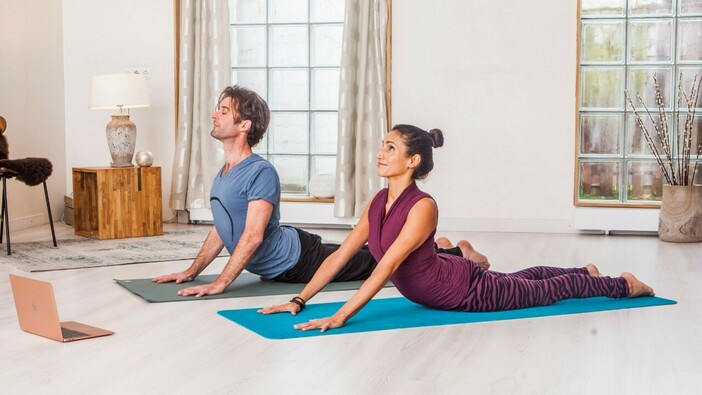
- Cobra Pose (Bhujangasana – Low Cobra):
- Lie on your belly. Put your hands under your shoulders.
- Keep your legs straight behind you. Press the tops of your feet down.
- As you breathe in, gently lift your chest off the floor. Use your back muscles more than your hands.
- Keep your elbows close to your body. Your hips stay on the floor.
- Look a little bit forward. Do not crunch your neck back.
- Breathe out and lower down. This is a gentle backbend.
- Child’s Pose (Balasana):
- Come back to your hands and knees.
- Bring your big toes to touch. Open your knees wide or keep them close.
- Send your hips back to rest on your heels.
- Lower your upper body down between your thighs.
- Let your forehead rest on the floor.
- Reach your arms out in front of you or let them rest by your sides.
- This is a rest pose. It feels good for your back and hips. Stay here as long as you like.
- Corpse Pose (Savasana):
- Lie flat on your back.
- Let your legs be straight. Let your feet fall open.
- Let your arms rest by your sides. Turn your palms up.
- Close your eyes softly.
- Let your whole body be heavy. Do not try to do anything. Just breathe easy.
- Stay here for 5 to 10 minutes. This pose helps your body and mind rest after practice.
Building Your First Easy Yoga Routine
Putting poses together makes an easy yoga routine for beginners. You can start with a few poses. Do them in a simple order. This is a yoga sequence for home practice you can try.
Sample Simple Routine (15-20 minutes)
- Start in a comfy seated position: Breathe deeply for 2-3 minutes. Let your body calm down.
- Simple Warm-up: Do Neck Rolls, Shoulder Rolls, and Cat-Cow Stretch for 5-7 minutes. Move slowly with your breath.
- Moving Through Poses:
- Mountain Pose (3-5 breaths)
- Gentle forward bend (bend knees a lot, hang your head) (5-7 breaths)
- Come back to standing slowly.
- Downward-Facing Dog (Beginner way, knees bent) (5-7 breaths). Maybe walk your feet.
- Move forward to Plank Pose (Easy version on knees) (3-5 breaths)
- Lower gently to your belly.
- Low Cobra Pose (Hold for 3 breaths, do 2 times)
- Push back to Child’s Pose (Rest for 5-7 breaths)
- Final Rest: Lie on your back in Corpse Pose (Savasana) for 5 minutes. Let your body take in all you did.
This routine is short. It touches on standing, bending, a little backbend, and rest. As you feel stronger, you can stay in poses longer. You can add more poses.
Finding Help: Online Yoga Resources
You do not have to figure it all out alone. There are many ways to get help. You can find online yoga classes free. You can also use apps.
Where to Find Free Help
- YouTube: Many yoga teachers share free videos. Search for “beginner yoga,” “yoga for newbies,” or “gentle yoga at home.” Look for videos that are short (15-30 minutes) and say they are for beginners. Watch a little bit first to see if you like the teacher’s style.
- Yoga Websites: Some yoga sites offer free lessons or trial periods. Doing online yoga classes free helps you try different teachers and types of yoga.
- Community Centers: Sometimes local places offer free or low-cost beginner classes online. Check their websites.
The Best Yoga Apps for Beginners
Using a yoga app can be very handy. The best yoga apps for beginners are easy to use. They offer many classes. They can help you make a plan.
- Apps with Beginner Programs: Look for apps that have a “beginner program” or a “yoga basics” series. These often teach you one pose at a time. Then they put them into simple flows.
- Apps with Short Classes: Find apps that offer classes that are 10, 15, or 20 minutes long. It is easier to fit these into your day.
- Apps with Clear Guides: The best apps show you the poses clearly. They tell you what to do with your body. Some let you pick music you like. Some track how often you practice.
Look at reviews before you pick an app. Many offer a free trial. Try one out to see if you like it.
Useful Information: Yoga Tips for Beginners at Home
Here are some helpful hints to make starting yoga at home easier and safer. These are simple yoga tips for beginners at home.
- Listen to Your Body: This is the most important tip. Yoga is not about pushing hard or feeling pain. It is about moving kindly. If a pose hurts, stop. Or try a simpler version. Your body will tell you what it needs.
- Breathe Deeply: Your breath is a big part of yoga. Try to breathe in and out through your nose. Make your breaths smooth and deep. Let your breath guide your movement. If you hold your breath, you are trying too hard.
- Do Not Compare: Your yoga is your yoga. Do not worry about how it looks. Do not wish you could do what someone else can do. Just focus on what you feel in your body.
- Be Consistent: It is better to do 15 minutes of yoga a few times a week than one long session every great while. Try to do yoga at the same time each day or week. This helps build a habit.
- Use Props if Needed: Remember the block or strap? If a pose feels far away, use a prop to bring the floor closer or help you reach. Props help you find the right shape for your body today.
- Find a Calm Time: Try to do yoga when you will not be stopped. Turn off your phone. Tell others you need quiet time. This helps you focus inward.
- End with Rest (Savasana): Do not skip the last rest pose. This quiet time is when your body and mind take in all the good from your practice. It is key for feeling the full benefits.
- Stay Hydrated: Drink water before or after your practice.
- Be Patient: You will not be able to do every pose right away. That is okay. Yoga is a path, not a race. Enjoy learning and seeing small changes over time.
Making it Stick: Building a Yoga Habit
You have tried some poses. You have a simple routine. How do you keep going?
- Start Small: Do not plan for an hour if you only have 15 minutes. A short practice is better than no practice.
- Put it on Your List: Write your yoga time in your day or week plan. Treat it like any other meeting.
- Pick a Place: Use the same spot in your home if you can. This tells your brain it is yoga time when you go there.
- Be Kind to Yourself: If you miss a day (or a week!), it is okay. Just start again the next day. Do not feel bad. Yoga is meant to help, not make you feel guilty.
- Think About How You Feel: After yoga, notice how your body feels. How does your mind feel? Remembering these good feelings can help you want to come back to the mat.
- Try Different Things: If your routine feels boring, try new poses or a different online video. Keep it fresh.
What Comes Next? Exploring More
As you get more used to your home practice, you might want to try new things.
- Try New Poses: Look up other beginner poses. Learn how to do them safely.
- Longer Routines: Make your practice time a little longer. Add more poses to your sequence.
- Different Styles: Yoga has many styles. Hatha, Vinyasa, Restorative. Read about them. Try a beginner class in a new style online.
- Learn About Breath: There are many yoga breathing practices. They can help calm your mind. Look up simple breath exercises for beginners.
- Yoga Books: Some books teach you about yoga poses and ideas.
Remember, home yoga is your chance to learn about yourself. Move in ways that feel good. Breathe deeply. Enjoy the peace you find.
Why Home Yoga Practice Helps So Much
Let’s look again at the good things that come from doing yoga at home. The benefits of home yoga practice are many.
- Stronger Body: Your muscles get stronger. Your bones get stronger too.
- More Flex: Your body can bend and move more easily. Tight muscles start to relax.
- Less Stress: Moving and breathing calms your nervous system. You feel less worried.
- Better Sleep: Yoga can help you relax before bed. This helps you sleep better.
- More Energy: Even though it is movement, yoga can give you more energy.
- Better Focus: Paying attention to your body and breath helps you focus better in other parts of your life.
- Know Your Body: You learn how your body feels. You learn what feels good and what does not.
- Your Own Time: You practice on your own time, at your own speed. No rush.
These good things happen bit by bit. Just keep showing up on your mat.
Bringing It All Together
Starting yoga at home is a kind gift you give yourself. You do not need to be bendy or strong. You just need to start. Get a simple yoga mat for beginners. Find a quiet spot. Try some basic yoga stretches at home to warm up. Learn a few beginner yoga poses at home. Put them into an easy yoga routine for beginners. Use online yoga classes free or best yoga apps for beginners to help you learn. Listen to yoga tips for beginners at home like listening to your body and breathing deep. Remember the benefits of home yoga practice like feeling calmer and stronger. Starting yoga without experience is the first step on a path that can bring much good to your life. Roll out your mat today. Your body and mind will thank you.
Frequently Asked Questions (FAQ)
How long should a beginner practice be?
Start with 10-20 minutes. This is a good amount of time to get your body moving and feel some calm. You can make it longer as you feel ready.
How often should a beginner do yoga?
Try for 2-3 times a week. Even 15 minutes a few times a week is very good. Doing it often helps you build strength and flexibility faster than doing it once a week for a long time.
What if a pose feels too hard or hurts?
Do not do the pose if it hurts. Pain is a sign to stop. If it feels hard but does not hurt, try a simpler version. For example, in Downward Dog, bend your knees a lot. In Plank, drop your knees to the floor. Yoga is not about pushing into pain.
Do I need special clothes or gear other than a mat?
Comfy clothes you can move in are enough. A mat is very helpful for grip and cushion. Other gear like blocks or straps can help, but you can start without them. You can use things like books or a belt instead.
Can I do yoga if I am not flexible?
Yes! Yoga is for everyone. You do not need to be flexible to start. Yoga helps you become more flexible over time. Just do what you can today. Do not force anything.
Is it okay to do yoga every day?
Yes, you can do yoga every day if you want. But make sure some days are gentle practice or just simple stretches. Your body needs rest sometimes. Listening to your body is key.
What is the best time of day to do yoga?
The best time is when you can do it without being stopped. Some people like the morning to feel ready for the day. Some like the evening to wind down. Try different times and see what feels best for you.
How do I know if I am doing a pose right?
In online videos or apps, the teacher will give tips on how your body should be. Pay attention to these tips. Focus on how the pose feels in your body, not how it looks. If you feel a gentle stretch where you should, you are likely doing okay. If you feel sharp pain, stop or change the pose.