
How can you start yoga at home? It’s easy! You can begin with just a small space, comfy clothes, and a desire to move. You don’t need fancy gear or past experience. Simple yoga poses for beginners are easy to learn. You can try a few moves and see how they feel. This guide helps you get started today, right where you are.
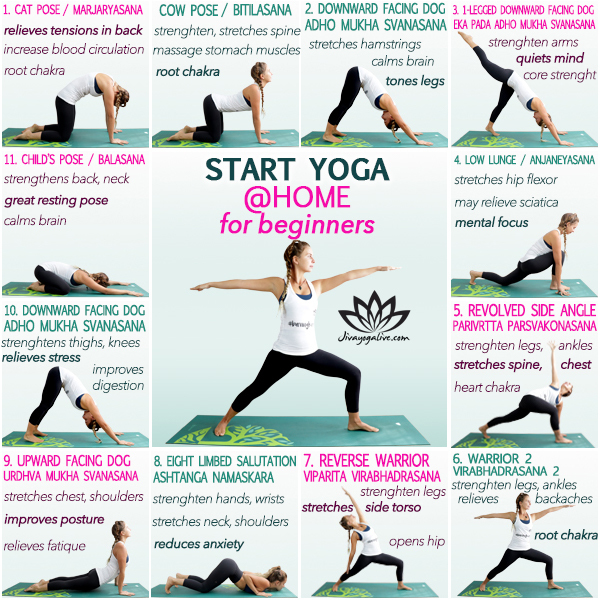
Image Source: jivayogalive.com
Grasping the Benefits of Home Yoga
Doing yoga at home brings many good things. The benefits of home yoga practice are great for your body and mind.
Physical Perks
- More Flexible: Yoga helps your body stretch. You get more bendy over time.
- Stronger Body: Holding poses builds muscle. You feel stronger in your daily life.
- Better Balance: Many poses make you steady. This helps prevent falls.
- Good for Your Back: Gentle moves can ease back pain. They make your spine feel better.
- Healthy Inside: Yoga can help blood flow and digestion. It’s good for your whole body.
Mental and Emotional Perks
- Less Stress: Yoga calms your mind. It helps you feel peaceful.
- Clearer Thinking: Moving and breathing helps focus your thoughts.
- Better Mood: Exercise releases happy chemicals. Yoga makes you feel good.
- More Aware: You learn about your body. You notice how you feel.
- Feel Good About You: As you get better, you feel proud. It builds confidence.
Doing yoga at home means you can get these good things easily. You don’t need to go anywhere. You save time and money too.
Creating Your Yoga Space at Home
Finding your perfect yoga space at home is important. It doesn’t need to be big. A small spot is fine.
Picking Your Spot
- Quiet Place: Find a corner that is calm. Away from noise is best.
- Enough Room: You need space to stretch. Make sure you can reach your arms and legs out.
- Flat Floor: A level floor is safer. Clear away bumps or toys.
- Fresh Air: Open a window if you can. Fresh air feels nice.
- Good Light: Soft, natural light is calming. Avoid harsh bright lights.
Think about a living room corner, a bedroom area, or even a quiet hallway. It just needs to be yours for a little while.
Gathering Simple Yoga Equipment for Beginners at Home
What yoga equipment for beginners at home do you need? Not much! You likely have what you need already.
Essential Items
- Yoga Mat: This is helpful but not a must for everyone. A mat stops you from slipping. It makes hard floors softer. You can find cheap ones online or in stores.
- Comfy Clothes: Wear clothes you can move in easily. Stretchy pants and a soft top work well. No tight waistbands.
- Water: Keep a bottle nearby. Stay hydrated after your practice.
Helpful, But Not Required Items
- Yoga Blocks: These help bring the floor closer. They make some poses easier if you are not flexible yet. Two blocks are good.
- Yoga Strap: A strap helps you reach parts of your body. It’s good for stretching your legs or shoulders. A belt or scarf can work too.
- Blanket: A folded blanket can cushion your knees. It can make sitting more comfy.
Remember, you can do many yoga poses without props too. Don’t let needing gear stop you. Start with just your body and your space.
Learning Easy Yoga Poses for Beginners
Let’s look at some easy yoga poses for beginners. These are simple moves to get you started. They build strength and stretch.
Starting Standing Poses
- Mountain Pose (Tadasana):
- Stand tall. Feet together or a little apart.
- Stand straight like a mountain.
- Arms down by your sides. Palms facing forward.
- Feel your feet on the ground.
- Stretch your spine up.
- This pose helps you feel centered and grounded.
- Standing Forward Fold (Uttanasana – Halfway Lift):
- From Mountain Pose, breathe out.
- Bend from your hips. Let your body hang down.
- Bend your knees a lot if needed.
- Let your head be heavy.
- Halfway Lift: Breathe in. Lift your chest up. Make your back flat like a table. Hands can be on your shins. This stretches your back.
- Forward Fold stretches the back of your legs and back.
- Chair Pose (Utkatasana – Beginner style):
- Stand with feet together.
- Bend your knees like sitting in a chair.
- Keep your back straight.
- Arms can reach forward or up.
- Hold for a few breaths. It builds leg strength.
Simple Sitting Poses
- Easy Pose (Sukhasana):
- Sit on the floor. Cross your legs simply.
- Sit up tall. Don’t let your back slump.
- Rest your hands on your knees.
- Close your eyes or look down gently.
- This pose is good for sitting quietly or breathing.
- Staff Pose (Dandasana):
- Sit with your legs out straight in front of you.
- Flex your feet (toes point up).
- Sit up very tall. Imagine a string pulling your head up.
- Hands are by your sides. Fingers pointing forward.
- This pose helps you feel your posture.
- Seated Forward Bend (Paschimottanasana – Beginner):
- Sit in Staff Pose.
- Breathe in, sit tall.
- Breathe out, bend forward from your hips.
- Keep your back as straight as you can.
- Reach for your feet, ankles, or shins. Don’t force it.
- You can bend your knees a lot.
- This stretches your back and legs.
Getting Down Low Poses
- Child’s Pose (Balasana):
- Start on your hands and knees.
- Sit your hips back onto your heels.
- You can put your knees wide apart or together.
- Lower your chest towards the floor.
- Rest your forehead on the floor.
- Arms can be out front or back by your feet.
- This is a resting pose. It’s very calming.
- Cat-Cow Pose (Marjaryasana to Bitilasana):
- Start on your hands and knees. Hands under shoulders, knees under hips.
- Cow Pose (Inhale): Drop your belly down. Lift your chest and tailbone up. Look slightly up.
- Cat Pose (Exhale): Round your back up like a cat. Tuck your chin to your chest. Push the floor away.
- Move slowly between these two poses with your breath.
- Good for warming up your spine.
- Downward-Facing Dog (Adho Mukha Svanasana – Beginner):
- Start on hands and knees.
- Hands a bit in front of your shoulders. Fingers spread wide.
- Tuck your toes under.
- Lift your hips up and back. Make an upside-down V shape with your body.
- Keep your knees bent, maybe a lot. This helps your back straighten.
- Push the floor away with your hands.
- Let your head relax.
- This pose stretches your whole body.
- Plank Pose (Beginner):
- Start on hands and knees.
- Walk your hands slightly forward.
- Step your feet back, making your body a straight line.
- You can keep your knees on the floor for an easier version.
- Tighten your stomach muscles.
- Keep your hands under your shoulders.
- Builds arm, shoulder, and core strength.
- Cobra Pose (Bhujangasana – Beginner):
- Lie on your belly. Legs straight back.
- Place hands under your shoulders. Fingers pointing forward.
- Keep your elbows close to your body.
- Press your feet and hips down.
- Breathe in. Gently lift your chest and head up. Keep your lower ribs on the floor.
- Use your back muscles, not just pushing with hands.
- This is a gentle backbend.
- Bridge Pose (Setu Bandhasana):
- Lie on your back. Bend your knees. Feet flat on the floor hip-width apart. Heels close to your hips.
- Arms by your sides, palms down.
- Breathe in. Lift your hips off the floor.
- Squeeze your butt muscles.
- Keep your knees from falling out wide.
- Hold for a few breaths.
- Breathe out and lower down slowly.
- Strengthens back, glutes, and hamstrings.
These are just a few basic poses. There are many more. Start with the ones that feel good for you.
Planning a Simple Yoga Routine for Beginners
How to put poses together? A simple yoga routine for beginners often follows a flow. You warm up, do some poses, and then rest.
Example Beginner Home Yoga Sequence
This is a basic Beginner home yoga sequence. You can do it in about 15-20 minutes.
- Start: Sit in Easy Pose (Sukhasana) for 1-2 minutes. Close your eyes. Just breathe naturally.
- Warm Up:
- Cat-Cow Pose: Do this for 5-10 rounds. Move with your breath.
- Child’s Pose: Rest here for 30 seconds to 1 minute.
- Standing Flow (do each side where needed):
- Mountain Pose (Tadasana): Hold for 30 seconds.
- Standing Forward Fold (Halfway Lift, then Fold): Hold each part for 30 seconds.
- Mountain Pose: Come back up.
- Grounding Poses:
- Downward-Facing Dog (Beginner with bent knees): Hold for 30 seconds.
- Child’s Pose: Rest for 30 seconds.
- Plank Pose (on knees): Hold for 20-30 seconds.
- Lower gently to your belly.
- Gentle Backbend:
- Cobra Pose (Beginner): Hold for 20-30 seconds.
- Lower down. Rest on your belly for a moment.
- Sitting Poses:
- Come to sit in Staff Pose (Dandasana): Hold for 30 seconds.
- Seated Forward Bend (Beginner with bent knees): Hold for 30 seconds.
- Resting Pose:
- Lie on your back. Bend your knees. Feet flat.
- Bridge Pose (Setu Bandhasana): Hold for 30 seconds. Lower down. Repeat 2-3 times.
- Knees-to-Chest Pose: Gently hug your knees to your chest. Rock side to side. (Optional, good for lower back).
- Final Rest: Lie flat on your back. Arms by your sides, palms up. Let your legs relax. This is called Savasana (Corpse Pose). Rest here for 3-5 minutes. Let your body soak up the practice.
This sequence moves your body gently. It includes standing, hands-and-knees, and lying-down poses. You can change it based on how you feel each day. Don’t worry about doing it perfectly. Just try your best.
Practicing Yoga Breathing Techniques Beginners Use
Breathing is a big part of yoga. Yoga breathing techniques beginners can use are simple. They help calm your mind and make poses easier.
Basic Breath Awareness
- Just Watch Your Breath: Sit or lie down in a comfy spot. Close your eyes. Just notice your breath. Don’t try to change it. Is it fast or slow? Deep or shallow? Just observe. This makes you more aware of your breath.
Deeper Breathing (Diaphragmatic Breathing)
- Belly Breath:
- Sit or lie down. Put one hand on your belly and one on your chest.
- Breathe in slowly through your nose. Feel your belly rise under your hand. Try not to let your chest move much.
- Breathe out slowly through your nose. Feel your belly fall.
- Do this for a few minutes. This is a deep, calming breath. It uses your diaphragm, a big muscle under your lungs.
Ujjayi Breath (Victorious Breath) – Optional
- Ocean Sound Breath: This breath sounds like the ocean.
- Breathe in through your nose.
- As you breathe out through your nose, slightly close the back of your throat. Make a soft sound like fogging a mirror, but keep your mouth closed.
- Try to make the inhale and exhale sounds equal.
- This breath helps you focus. It can also create heat in your body. It’s okay if this feels hard at first. Stick with belly breathing if it’s easier.
Connect your breath to your movement. Breathe in to lengthen or lift. Breathe out to fold or twist. This helps you stay present in your practice.
Interpreting How Long a Beginner Yoga Session Should Be
People often ask how long beginner yoga session should last. The best answer is: start short!
Starting Time
- 10-15 Minutes: This is a great starting point. You can get through a simple routine or just a few poses. It’s easy to fit into a busy day.
- 20-30 Minutes: As you feel more comfy, you can do longer sessions. Add more poses. Spend more time in each pose.
- Listen to Your Body: Some days you might have more time or energy. Some days less. It’s okay to do just 5 minutes if that’s all you can manage. Any yoga is better than no yoga.
Consistency is more important than length. Doing 15 minutes a few times a week is better than doing one long session every now and then.
Finding Online Yoga Classes for Home Practice
You don’t have to figure it all out alone. Online yoga classes for home practice are a great resource.
Where to Look
- YouTube: Lots of free yoga videos. Search for “beginner home yoga,” “gentle yoga,” or “yoga for flexibility.” Look for teachers you like.
- Yoga Apps: Many apps offer guided classes. Some are free, some have a monthly cost. They often have programs for beginners.
- Online Platforms: Websites dedicated to yoga often have many classes. Some require subscriptions. They might offer different styles and levels.
- Local Studios: Some yoga studios offer online classes now. This lets you support local teachers.
Tips for Using Online Classes
- Find a Beginner Class: Look for classes labeled “Beginner,” “Gentle,” or “Level 1.”
- Watch First: Maybe watch a class before doing it. See if you like the teacher’s style. Check if the poses look possible for you.
- Listen Closely: Pay attention to the teacher’s instructions. They will tell you how to do poses safely.
- Don’t Feel Rushed: Pause the video if you need more time in a pose or need a break.
- Try Different Teachers: Everyone teaches a bit differently. Find a teacher you connect with.
Online classes bring a teacher into your home. They give you structure and guidance.
Making Home Yoga a Regular Thing
How do you keep doing yoga at home? Making it a habit takes practice.
Tips for Consistency
- Schedule It: Plan your yoga time like any other meeting. Put it on your calendar.
- Start Small: Don’t aim for an hour every day at first. 10-15 minutes is fine.
- Be Flexible: If you miss a day, it’s okay. Just get back to it the next day. Don’t give up.
- Set the Scene: Have your space ready. Roll out your mat. This makes starting easier.
- Connect it to Something Else: Do yoga after brushing your teeth, before coffee, or before bed. This links it to an existing habit.
- Find Your ‘Why’: Remember why you started. Do you want to feel less stressed? Stronger? More flexible? Thinking of your goal helps keep you going.
- Track Your Progress: Notice how you feel after yoga. Do you sleep better? Are you calmer? Seeing the benefits helps you keep doing it.
Even short, regular practices add up. Doing a little bit often is very powerful.
Keeping Safe While Doing Home Yoga
Doing yoga at home is usually safe. But it’s good to be careful.
Important Safety Tips
- Listen to Your Body: This is the most important rule. If a pose hurts, ease out of it. Yoga should not feel like pain. It might feel like a stretch, but not sharp pain.
- Don’t Push Too Hard: Don’t try to do poses perfectly right away. It takes time. Only go as deep into a stretch or pose as feels okay for you today.
- Use Props if Needed: If a pose is hard to reach, use a block or strap. This makes the pose safer and more helpful. Yoga poses without props are great, but don’t feel you must skip props if they help you.
- Warm Up: Start with gentle movements. Cat-Cow is good. This gets your body ready.
- Use a Mat or Surface That Doesn’t Slip: This prevents falls. If you don’t have a mat, a rug that stays put is better than a slippery floor.
- Know Your Limits: If you have health issues, talk to a doctor before starting. Tell an online teacher (if possible) about any injuries.
- Ease In and Out of Poses: Don’t jump quickly into or out of poses. Move slowly and with control.
Yoga is a practice, not a test. Be kind to yourself on your yoga journey.
What’s Next After the Basics?
Once you feel comfy with a simple yoga routine for beginners, you can do more.
Next Steps
- Try More Poses: Look up other easy poses. Add them to your routine.
- Stay Longer in Poses: Hold poses for more breaths. This builds strength.
- Try Different Styles: Explore different types of yoga online. Vinyasa, Hatha, Restorative yoga feel different. See what you like.
- Learn More Breathing: Explore other yoga breathing techniques beginners can learn.
- Practice More Often: Try doing yoga most days of the week.
- Think About Classes: If you like home practice, maybe try a studio class later if you want.
There’s always more to learn in yoga. Enjoy the process of finding what feels good for your body and mind.
Frequently Asked Questions (FAQ)
Here are answers to common questions about starting yoga at home.
Q: Do I need to be flexible to start home yoga?
A: No! You do not need to be flexible at all. Yoga helps you become flexible. Start where you are. Easy poses are made for people with less flexibility.
Q: What if I don’t have a yoga mat?
A: You can still do yoga! Many yoga poses without props (including a mat) are fine on a non-slippery floor or a firm rug. A towel can help cushion knees. Get a mat later if you stick with it.
Q: How many times a week should a beginner do yoga?
A: Start with 2-3 times a week. Even 10-15 minutes per session is good. Find a schedule that works for you. More often is great if you have time and feel good.
Q: What time of day is best for home yoga?
A: Any time that works for you is best. Some like mornings for energy. Others like evenings to relax. Try different times. See what feels best and what you can stick to.
Q: Is home yoga as good as taking a class?
A: Yes, it can be! Home yoga gives you freedom and privacy. Classes offer guidance and community. Both are great. Home practice is a perfect way to start or to keep practicing when you can’t get to a class.
Q: I feel shaky or wobbly in some poses. Is that normal?
A: Yes, it’s totally normal! Your body is building new strength and balance. Shaking means your muscles are working. It gets easier with practice. If you feel like you might fall, carefully come out of the pose.
Q: Can I use regular exercise clothes for yoga?
A: Yes, definitely. Any clothes that let you move freely and stretch are fine. You don’t need special yoga clothes.
Q: How long does it take to see results from yoga?
A: You might feel calmer or a bit more stretched after just one session! Seeing bigger changes in strength, flexibility, or stress might take a few weeks or months of regular practice. Keep going, and you’ll notice the good things.
Your Home Yoga Journey Starts Now
Starting yoga at home is a kind gift you give yourself. It’s easy to begin. Find a spot, use what you have, and try some simple moves. Use online yoga classes for home practice or just follow a simple yoga routine for beginners. Focus on yoga breathing techniques beginners learn. Remember the amazing benefits of home yoga practice. Don’t worry about being perfect. Just start. Even a how long beginner yoga session of 10 minutes makes a difference. Roll out your mat (or find your clear spot) today. Your home yoga journey is waiting.