
Image Source: static.sadhguru.org
Unlock Calm: How Do You Start Yoga From Scratch?
So, how do you start yoga? The simplest way to start yoga is to find a beginner-friendly class, either at a local studio or online. You don’t need to be flexible or strong to begin; yoga is for everyone, no matter your fitness level or body type. Get a basic yoga mat if you can, wear comfy clothes, and just show up with an open mind. The journey starts the moment you try your first pose and take your first mindful breath on the mat.
Yoga is an old practice that brings the body and mind together. It started in ancient India. People all over the world do it now. It can help you feel better in many ways. Don’t worry if you feel nervous. Everyone who does yoga started just like you. This guide will walk you through the first steps. You will learn what you need. You will find out what to do. You will see how simple it is to begin.
Deciphering What Yoga Is
More Than Just Stretches
Many people think yoga is just about bending your body into strange shapes. It’s much more than that. Yoga is a whole system. It uses physical poses (called asanas). It uses breathing methods (called pranayama). It also uses quiet time for your mind (like meditation).
Imagine it like this: The poses help your body. The breathing helps calm your nervous system. The quiet time helps clear your head. When you put these together, you get yoga. It helps you feel more connected to yourself. It helps you feel more present in the world. It’s not a sport or a contest. It’s a practice. You practice being with yourself. You practice moving gently. You practice breathing deeply.
The word “yoga” comes from a word that means “to join” or “to unite.” It’s about joining your mind, body, and spirit. It’s about finding balance. It’s about feeling whole. You don’t need to be spiritual to do yoga. You just need to be willing to try. You just need to be open to seeing how it makes you feel.
Yoga has been around for thousands of years. Over time, different styles have grown. But the main ideas stay the same. It’s always about the breath. It’s always about being aware of your body. It’s always about finding some quiet inside you.
Grasping the Perks: What Yoga Offers You
Starting yoga can bring many good things into your life. People feel different benefits. Some feel stronger. Some feel calmer. Some sleep better. These good things come from practicing regularly. Even just a little bit helps.
Notable Yoga Benefits
Here are some of the key yoga benefits you might notice:
- Stronger Muscles: Holding poses builds strength. You use your own body weight. This makes muscles work hard. You might feel muscles you didn’t know you had!
- More Flexible Body: Yoga poses stretch your muscles. They help your joints move better. Over time, your body becomes less stiff. You can reach further. You can move more freely.
- Better Balance: Many poses ask you to balance on one foot. Or you might balance on your hands. This trains your body’s balance system. You might feel more steady in your everyday life.
- Less Stress: Yoga links breath and movement. This focus helps quiet a busy mind. It gives you a break from worries. Breathing deeply tells your body to relax. This lowers stress hormones.
- Calmer Mind: Focusing on your breath and body during yoga keeps your mind from jumping around. It teaches you to be present. This can make your mind feel less full of noise. You feel more peaceful.
- More Energy: Moving your body helps blood flow. It wakes up your system. Even though it can feel relaxing, yoga can also give you more energy for your day.
- Better Sleep: Doing yoga, especially gentle types, can help you relax before bed. It calms the mind and body. This can make it easier to fall asleep. It can help you sleep more soundly.
- Improved Body Feeling: Yoga helps you notice your body more. You learn where you feel tight. You learn where you feel open. This helps you understand your body better. You can take better care of it.
- Pain Relief: For some people, yoga helps ease back pain or other aches. Gentle stretches can loosen tight spots. Strengthening muscles can support your body better. (Always talk to a doctor first if you have pain).
- Easier Breathing: Yoga teaches you to breathe fully and deeply. This can improve how well your lungs work. It can make breathing feel easier, especially when you feel stressed.
These good things don’t happen overnight. They build up over time. Each time you step onto your yoga mat, you are giving yourself a gift. You are working towards feeling better in your body and mind. Even short, easy sessions count.
Your Very First Steps on the Mat
Starting anything new can feel a bit scary. Yoga is no different. You might wonder if you’re doing it right. You might feel awkward. That’s totally normal! The first step is often the hardest. Let’s make it simple.
Finding Your First Yoga Class
This is a great way to start. A teacher can guide you. They can show you the poses. They can help you stay safe. Look for a class called “yoga for beginners.”
- Local Studios: Check nearby yoga studios or gyms. Many offer beginner classes. This lets you learn in person. The teacher can see you. They can help adjust your pose if needed. You also get to practice with other people. This can feel nice.
- Online Options: The internet is full of options! You can find online yoga classes. Websites, apps, and YouTube have many videos. Search for “beginner yoga,” “gentle yoga,” or “easy yoga.” This is great if you want to practice at home. It can be more flexible with your time.
What to Expect in a First Class
Don’t worry about being perfect. No one expects you to be. Your first yoga class will likely be slow and simple.
- The teacher will explain things clearly.
- They will show you how to do basic poses.
- They will remind you to breathe.
- They might use props (like blocks or straps) to help you. These make poses easier.
- The class will likely end with a rest pose (often lying down quietly). This is called Savasana. It’s very important!
Just listen to the teacher. Watch what they do. Try your best. It’s okay if a pose feels hard or you can’t do it fully. Just do what feels good for your body.
Preparing for Your Practice
You don’t need much to start.
- What to Wear: Choose clothes you can move in easily. Stretchy pants or shorts and a comfortable top are perfect. Make sure your clothes don’t get in the way. You usually practice yoga barefoot.
- When to Eat: It’s best not to eat a big meal right before yoga. A full stomach can feel uncomfortable in some poses. Try to finish eating at least 1-2 hours before. A small snack is usually fine if you are hungry.
- Finding Space: If you practice at home, find a quiet spot. Make sure you have enough room to stretch your arms and legs out. Clear away anything you might trip over.
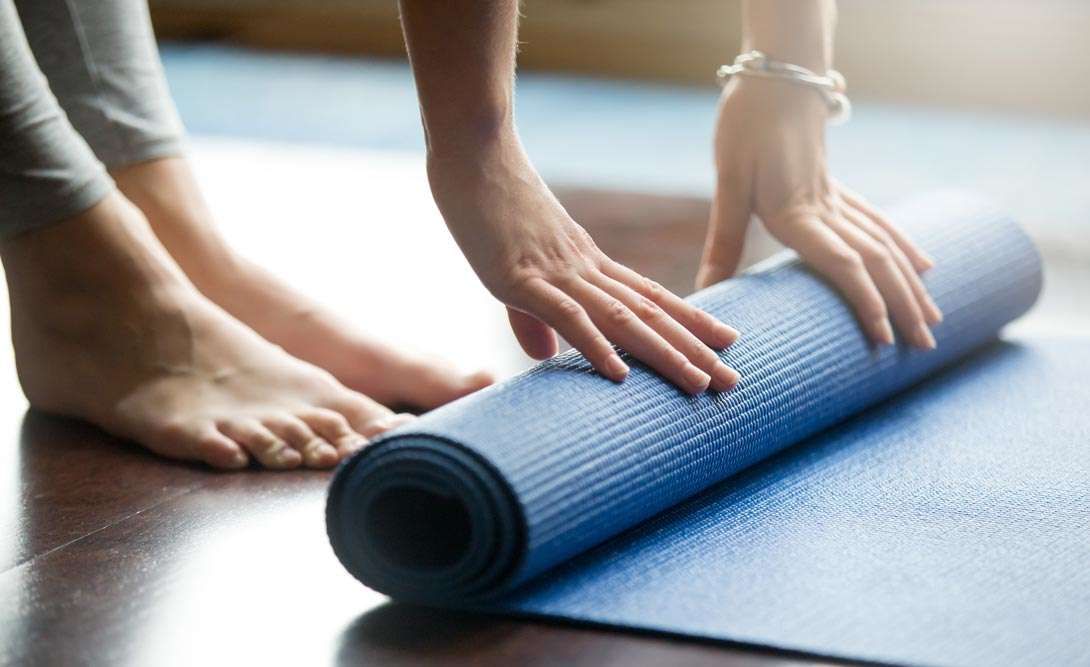
Your first step is just choosing to start. Pick a class. Roll out a mat. Show up. That’s it. You’re doing it!
Essential Gear: Your Yoga Mat
While you can do yoga without a mat, especially on carpet or grass, a yoga mat makes a big difference. It is probably the only piece of gear you really need when you start.
Why a Yoga Mat Matters
A yoga mat does a few key things:
- Grip: Yoga poses can make your hands and feet sweaty. A mat helps you not slip. This keeps you safe. It helps you feel steady in poses.
- Cushion: The mat adds a little padding between you and the floor. This is nicer for your knees, hands, and hips, especially on hard floors.
- Personal Space: When you practice in a group, your mat shows your spot. It’s your little island for your practice.
- Connection: Having a mat can make it feel more like “practice time.” Rolling it out can help you switch your mindset.
Picking Your First Mat
You don’t need the most expensive mat when you are starting.
- Basic Mats Are Fine: Many stores sell simple, affordable yoga mats. These are usually around 3-5mm thick. They are perfectly good for a beginner.
- Thickness: Thicker mats (6mm or more) offer more cushion. This can be good if you have sensitive knees. Thinner mats can make you feel more connected to the ground. Most beginner mats are a good middle ground.
- Material: Most basic mats are made of PVC. They work well. Some people prefer mats made from rubber or other natural materials. These can be more expensive but might be more grippy or eco-friendly.
- Price: You can find beginner mats for $20-$40. This is a good price range to start. If you stick with yoga, you might want to upgrade later.
Don’t spend too much time worrying about the perfect mat. Just get one that feels okay and fits your budget. The important thing is to have something to practice on.
Interpreting Different Yoga Paths for Newbies
There are many styles of yoga. This can feel confusing at first! But some styles are better for people just starting out. These styles move slower or focus on the basics.
Types of Yoga for Beginners
Here are a few types of yoga that are often good for people new to the practice:
- Hatha Yoga: This is a classic style. It’s usually slow-paced. You hold poses for a few breaths. Hatha yoga focuses on basic poses and breathing. It’s great for learning the foundations. It’s not usually a flowing style. You do one pose, then rest, then do the next.
- Vinyasa Yoga: This style links movement with breath. You move from one pose to the next more smoothly, like a dance. It can be faster than Hatha. But many studios offer “Slow Flow Vinyasa” or “Beginner Vinyasa.” These are excellent for newbies. They teach you how to connect breath and movement.
- Restorative Yoga: This is very gentle. It’s all about relaxing. You use props like blankets, bolsters, and blocks to support your body completely in poses. You hold poses for a long time (5-10 minutes or more). The goal is deep rest and healing. This is wonderful for reducing stress and feeling calm. It’s great if you feel tired, stressed, or are recovering from something.
- Iyengar Yoga: This style focuses a lot on correct alignment. It uses props like blocks, straps, chairs, and blankets often. The teacher gives very clear instructions on how to get into each pose safely and correctly. The pace is slow. This style is excellent for learning how to do poses right. It’s good if you want to build strength and flexibility safely.
Choosing Your First Style:
If you’re not sure, try a Hatha class or a gentle Vinyasa flow. Restorative is great if you need deep rest. Iyengar is good if you like precise instructions. Don’t be afraid to try a few different styles if you can. See what feels best in your body and mind. Most studios have class descriptions that tell you the style and level (like “Beginner” or “Level 1”).
Learning Simple Shapes: Beginner Yoga Poses
You don’t need to twist yourself into a pretzel to do yoga! There are many simple, gentle poses that are perfect for beginners. These poses build strength, flexibility, and balance. They are the building blocks for other poses later on.
Gentle Shapes to Start With
Here are some common beginner yoga poses. Try them slowly. Focus on your breath. Don’t push too hard.
-
Mountain Pose (Tadasana): This is a standing pose. It looks simple, but it’s important for learning how to stand tall and grounded.
- Stand with your feet together or hip-width apart.
- Spread your toes. Feel your weight in your feet.
- Straighten your legs, but don’t lock your knees.
- Lift your chest. Roll your shoulders back and down.
- Let your arms hang by your sides.
- Look straight ahead. Breathe deeply. Feel strong like a mountain.
-
Child’s Pose (Balasana): This is a resting pose. It’s great to do anytime you feel tired or need a break.
- Start on your hands and knees.
- Bring your big toes to touch.
- Open your knees wide (or keep them closer if that feels better).
- Send your hips back towards your heels.
- Lower your upper body down between your thighs.
- Rest your forehead on the mat.
- Reach your arms forward or bring them back along your sides.
- Breathe into your back body. Let go of any tension.
-
Downward-Facing Dog (Adho Mukha Shvanasana): This pose stretches your whole body. It might feel challenging at first, but it gets easier.
- Start on your hands and knees.
- Place your hands shoulder-width apart. Spread your fingers wide.
- Place your knees under your hips.
- Tuck your toes under.
- Lift your hips up and back. Make your body like an upside-down V shape.
- Keep a bend in your knees if your hamstrings (back of your thighs) feel tight.
- Press your hands into the mat. Let your head hang heavy.
- Press your heels towards the floor (they don’t have to touch).
- Breathe here. Feel the stretch in your legs and back.
-
Cat-Cow Pose (Marjaryasana to Bitilasana): This is a gentle warm-up for your spine. It’s done on your hands and knees.
- Start on your hands and knees. Hands under shoulders, knees under hips.
- On your inhale (breath in): Drop your belly down, lift your chest and tailbone up. Look up slightly (Cow pose).
- On your exhale (breath out): Round your spine towards the ceiling. Tuck your chin to your chest. Pull your belly button in (Cat pose).
- Move slowly between these two poses with your breath. Do this several times.
-
Warrior II (Virabhadrasana II): This is a standing pose that builds strength in your legs and opens your hips.
- Step your feet wide apart. Turn your right foot out 90 degrees. Turn your left foot in slightly.
- Line up your front heel with the middle of your back foot.
- Bend your front knee. Keep the knee over your ankle. Your thigh should be close to parallel to the floor.
- Keep your back leg straight and strong.
- Lift your arms out to the sides, level with your shoulders. Palms face down.
- Look over your front hand.
- Keep your chest open. Shoulders relaxed.
- Hold and breathe. Repeat on the other side.
-
Triangle Pose (Trikonasana): This pose stretches the sides of your body and your legs.
- Start with feet wide apart, like in Warrior II.
- Turn your right foot out 90 degrees. Turn your left foot in slightly.
- Straighten both legs.
- Reach your right arm forward over your right leg.
- Tilt your body over your right leg. Let your right hand rest on your shin, ankle, or a block (or the floor if you can reach easily).
- Lift your left arm straight up towards the ceiling.
- Look up at your left hand, forward, or down.
- Feel the stretch along your left side. Keep your chest open.
- Hold and breathe. Repeat on the other side.
-
Corpse Pose (Savasana): This is the final resting pose. It’s very important for letting your body and mind take in the benefits of your practice.
- Lie flat on your back.
- Let your legs fall open slightly.
- Let your arms rest by your sides, palms facing up.
- Close your eyes.
- Let your whole body feel heavy on the floor.
- Try to relax every part of you, from your toes to your head.
- Just breathe naturally. Let your thoughts come and go without holding onto them.
- Stay here for at least 5-10 minutes.
When trying these poses, focus on how your body feels. Don’t worry about how they look. It’s okay if you wobble. It’s okay if you need to rest. Yoga is a practice, not a performance.
Building a Gentle Flow: Easy Yoga Sequence
Once you know a few basic poses, you can put them together. This creates an easy yoga sequence. A sequence is just a series of poses done one after another. Doing poses in a flow helps your body warm up and move more fluidly.
Putting Poses Together
You can start very simply. For example, a gentle sequence might look like this:
- Start in Child’s Pose for a few breaths to settle in.
- Move to Cat-Cow Pose, doing 5-10 rounds with your breath to warm your spine.
- Transition to Downward-Facing Dog. Stay here for 5 breaths. Keep knees bent if needed.
- Walk your feet slowly towards your hands to come to a standing position. Rest in a gentle Forward Fold.
- Slowly roll up to stand in Mountain Pose. Take a few deep breaths.
- Maybe try Warrior II on one side, then the other.
- Try Triangle Pose on one side, then the other.
- Come back to standing in Mountain Pose.
- Return to your mat and finish by lying down in Corpse Pose for at least 5 minutes.
This is just one example of an easy yoga sequence. You can mix and match the beginner poses you learned. Start with just 3-4 poses. Move slowly from one to the next. The key is to try and link your movement to your breath.
Designing Your Own Simple Flow:
- Start Easy: Begin with warm-up poses like Cat-Cow or gentle stretches on your back.
- Add Standing: Include simple standing poses like Mountain Pose, Warrior II, or Triangle.
- Include a Downward Dog: This pose helps stretch and strengthen. Take breaks in Child’s Pose if needed.
- Cool Down: Finish with seated stretches or lying poses.
- Always Rest: End your practice in Corpse Pose (Savasana).
- Keep it Short: A 10-20 minute sequence is great when you start.
Remember, your home practice doesn’t need to be perfect. It just needs to feel good in your body. You can find many ideas for an easy yoga sequence online too, especially through online yoga classes.
Fathoming Practice at Home or in a Studio
When you start yoga, you have choices about where to practice. Both studios and practicing at home have good points.
How to Practice Yoga at Home
Practicing at home is very flexible. You can do it anytime you want. You can wear what you like. You can go at your own pace.
- Finding Space and Time: Choose a time when you won’t be interrupted. Find a quiet corner in your home. Roll out your yoga mat. That’s your yoga space.
- Using Online Resources: Online yoga classes are perfect for home practice.
- YouTube: Lots of free videos. Search for “beginner yoga,” “gentle yoga,” “yoga for flexibility,” “yoga for stress.” Look for teachers you like.
- Yoga Apps: Many apps offer guided practices. Some are free, some cost money. They often have plans for beginners.
- Subscription Sites: Websites offer many classes for a monthly fee. They often have structured beginner programs.
- Live Online Classes: Some studios offer classes through video calls. You can see the teacher and sometimes they can see you.
- Staying Motivated: This can be harder at home. Try to set a regular time. Put it in your calendar. Don’t expect to be perfect. Some days you might only do 10 minutes. That’s okay! Celebrate showing up.
The Studio Experience
Going to a yoga studio offers a different feel.
- Teacher Guidance: In a studio class, a teacher is there in person. They can see everyone. They can offer adjustments to your pose. They can make sure you are doing things safely. This direct feedback is very helpful for beginners.
- Community Feel: Practicing with others can be motivating. You are all there for the same reason. The energy in a studio can feel special. You might meet new people.
- Props Availability: Studios usually have lots of props like blocks, straps, blankets, and bolsters. You can use these to make poses easier or more comfortable. You don’t need to buy them yourself.
Which is Right for You?
Think about what you need:
- If you want flexibility and cost savings, or feel shy, try online yoga classes at home.
- If you want direct help from a teacher, like being in a group, and have local options, try a first yoga class at a studio.
Many people do both! They go to a studio sometimes and practice at home too. Start with what feels easiest for you right now. The most important thing is just to start practicing.
Practical Hints: Yoga Tips for Beginners
Starting yoga is a journey. There will be days when it feels good and days when it feels hard. Here are some simple tips to help you enjoy your first steps and keep going. These are important yoga tips for beginners.
Simple Advice to Get Going
- Listen to Your Body: This is the most important rule in yoga. Your body will tell you what feels good and what doesn’t. Yoga should not cause sharp pain. Mild stretching or muscle work is okay. If something hurts, back off. Try a simpler version of the pose. Or rest in Child’s Pose. Your body is different every day. Respect that.
- Don’t Compare Yourself: In a class (or watching online), you might see others doing poses you can’t do. That’s okay! Everyone is on their own path. Yoga is about your body and your breath today. It’s not about being better than anyone else. Focus on yourself.
- Consistency Over Perfection: It’s better to do 15 minutes of yoga a few times a week than one long class once a month. Short, regular practice builds strength and flexibility faster. It also helps make yoga a habit. Don’t wait for the “perfect” time or feeling. Just do a little bit often.
- Breathe! Your breath is your guide in yoga. Try to breathe in and out through your nose. Make your breaths smooth and steady. If a pose makes your breath short or choppy, you are probably pushing too hard. Use your breath to help you relax into poses.
- Props Are Your Friends: Blocks, straps, and blankets are not for people who aren’t good at yoga. They are tools for everyone! They help you find the right shape for your body. They can make poses more comfortable and safe. Don’t hesitate to use them, especially in beginner yoga poses.
- Be Patient: You won’t be able to touch your toes overnight. Building strength and flexibility takes time. Getting comfortable with poses takes time. Don’t get frustrated. Enjoy the process. Every time you practice, you are making progress, even if you can’t see it yet.
- Stay Hydrated: Drink water before and after your practice, especially if you are doing a more active style.
- Try Different Teachers/Styles: If you don’t like your first class or teacher, try another one! There are many ways to teach and practice yoga. Find a style and a teacher that you connect with.
Remember why you started. Maybe you wanted to feel less stressed. Maybe you wanted to feel stronger. Keep that reason in mind. It can help you keep going.
Keeping the Practice Going
Starting is a big step. Keeping going is the next one. Making yoga a regular part of your life brings the biggest yoga benefits over time.
Making Yoga a Habit
- Start Small: Don’t aim for an hour every day. Aim for 15-20 minutes, 2-3 times a week. Once that feels easy, you can add more time or days.
- Schedule It: Treat your yoga time like an appointment. Put it in your calendar. This makes it harder to skip.
- Find a Buddy: If you know someone else interested, plan to do online classes together or go to a studio class. It can be easier to stay on track with someone else.
- Notice the Changes: Pay attention to how you feel after yoga. Do you feel calmer? Less stiff? More energetic? Remembering these good feelings can motivate you to practice again.
- Be Kind to Yourself: Some days you might miss your planned yoga time. That’s okay! Don’t give up. Just try again the next day. Yoga is about practice, not perfection.
Starting yoga from scratch is totally possible and very rewarding. You just need to take that first step. Find a beginner class, roll out a mat, and breathe. The path to calm begins right there.
Questions People Often Ask (FAQ)
Here are answers to some common questions about starting yoga:
-
Is yoga hard for beginners?
Not at all! There are many gentle yoga for beginners classes and poses designed just for people starting out. You don’t need to be flexible or strong. You just start where you are. -
How long should my first yoga practice be?
You can start with just 10-15 minutes. Even a short practice can make you feel better. As you feel more comfortable, you can practice for 20, 30, or even 60 minutes. -
What if I’m not flexible?
Perfect! Yoga helps you become more flexible. You don’t need flexibility to start. Poses can be changed to fit your body. Use props like blocks and straps. Everyone starts somewhere. -
Do I need special clothes for yoga?
No. Just wear comfortable clothes that you can move freely in. Stretchy pants or shorts and a t-shirt or tank top are fine. Most people practice barefoot. -
Can I lose weight by doing yoga?
Yoga can be part of a healthy lifestyle that helps with weight management. More active styles burn more calories. But yoga also helps with stress and body awareness, which can support healthy choices overall. -
How often should I do yoga?
Even practicing once a week can offer benefits. To see more changes in strength and flexibility, aim for 2-3 times a week. Doing a little bit each day (like 15-20 minutes) is also very effective. Find a rhythm that works for you. -
What if I have an injury or health problem?
Talk to your doctor before starting any new exercise, including yoga. If you join a class, tell the teacher about any issues. They can suggest changes to poses to keep you safe. Gentle styles like Restorative or Hatha might be good to start with. -
Is it okay to use online yoga classes instead of a studio?
Yes! Online yoga classes are a great way to start, especially if you prefer practicing at home or have a busy schedule. There are many high-quality videos available for beginners. -
What is the most important thing to focus on when I start?
Focus on your breath. Try to breathe deeply and smoothly through your nose. Also, listen to your body and don’t push yourself into pain. Be kind and patient with yourself.
Starting yoga is a personal journey. Be open to trying new things. Be kind to yourself. And enjoy the feeling of calm you can unlock, one breath and one pose at a time.