
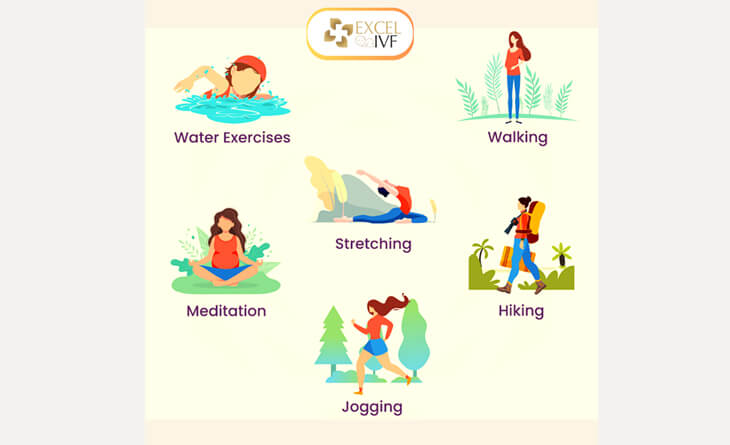
Image Source: excelivf.com
How Long After Egg Retrieval Can You Exercise Safely?
So, you’ve had your egg retrieval. That’s a big step! A common question is, “How long after egg retrieval can you exercise?” The direct answer is: You need to rest completely for at least 24 hours after the procedure, and you should avoid strenuous exercise for at least 1-2 weeks, or until your doctor tells you it is safe. The exact timing depends on your individual IVF recovery timeline, how you feel, and especially how your ovaries are recovering. Listen to your body and follow your clinic’s specific post egg retrieval exercise restrictions.
Getting exercise is usually a good thing for your health. But right after egg retrieval, your body needs time to heal. Thinking about when you can start moving again is normal. It’s important to return to exercise carefully. This post will go into detail about when and how to safely start resuming normal activities after egg retrieval, including exercise. We will talk about the risks and what signs to look for.
What Happens Right After Egg Retrieval
Egg retrieval is a medical procedure. Doctors use a needle to collect eggs from your ovaries. Your ovaries are stimulated with medicine before this. This makes them grow bigger than usual. After the eggs are taken out, your ovaries are still large. They might also have small fluid sacs where the eggs were.
It’s common to feel certain symptoms after egg retrieval. You might feel:
- Cramping, like period pain
- Bloating or fullness in your belly
- Slight spotting (light bleeding)
- Tiredness or fatigue
- Mild nausea from the anesthesia
These feelings are normal signs that your body is recovering. Your body needs rest to help the ovaries shrink back to their normal size and for the small needle pokes to heal.
Why Taking It Easy First is Crucial
Your ovaries are enlarged after egg retrieval. Think of them like swollen grapes instead of small almonds. This swelling makes them heavy. It also makes them more likely to twist. This twisting is called Ovarian Torsion.
Ovarian Torsion is a serious problem. If an ovary twists, it cuts off its own blood supply. This causes sudden, severe pain. It needs urgent medical help. In some cases, surgery is needed to untwist the ovary. If it’s not fixed quickly, the ovary can be damaged or even lost.
Strenuous exercise increases the risk of Ovarian Torsion. Activities like running, jumping, heavy lifting, or exercises that involve twisting your body can make an enlarged ovary twist on its stalk. This is why post egg retrieval exercise restrictions are put in place. They are there to protect you and your ovaries.
The Initial Healing Period: Days 0 to 3
The first few days after egg retrieval are for important recovery. This is the start of your IVF recovery timeline. Your clinic will likely tell you to take it easy.
- Day 0 (The day of retrieval): You should go straight home and rest. Do not do any physical activity beyond walking slowly around your house. Do not lift anything heavy. Avoid bending and twisting.
- Day 1 and 2: Continue to rest. You can move around your house. Gentle, very slow walking for a few minutes is usually okay if you feel up to it. But listen to your body. If you feel pain or discomfort, stop.
During these first few days, you might feel the most bloating after egg retrieval and exercise of any kind can make it worse. Even light activity might feel uncomfortable. This bloating is often due to the fluid used during stimulation and the procedure itself. Rest helps your body process and reduce this fluid.
This period is also when the risk of Ovarian Hyperstimulation Syndrome (OHSS) is highest. We will talk more about OHSS soon. But if you have symptoms of OHSS (like severe bloating, nausea, vomiting, or trouble breathing), any exercise, even light, is absolutely not recommended. Ovarian Hyperstimulation Syndrome (OHSS) exercise needs specific medical guidance, but generally means no exercise until symptoms are gone.
Gentle Activity Introduction: Days 3 to 7
As you move past the first few days, you might start to feel a little better. The worst of the cramping and bloating might start to ease for some people. This is when you might be able to introduce gentle exercise after IVF.
What counts as gentle exercise?
- Slow Walking: Start with short walks, maybe 10-15 minutes. Walk at a slow, easy pace. This is not a time for power walking or trying to get your heart rate up high.
- Light Stretching: Gentle, slow stretches. Avoid deep twists or stretches that put pressure on your belly area. Gentle yoga without twists or inversions might be okay, but check with your doctor first.
- Restorative Movement: Think simple movements. Moving your arms and legs gently while sitting or lying down.
The goal of activity during this week is to help with blood flow and prevent stiffness. It is not to burn calories, build muscle, or train. It’s about very light movement.
- Listen to your body, listen to your body, listen to your body. This is the most important rule. If any movement causes pain, sharp or dull, stop immediately.
- Do not do any exercise that makes you bounce, jump, twist, or strain your core muscles.
- Heavy lifting is still out. Do not lift anything heavier than a gallon of milk.
The safety of exercise after egg retrieval in this phase is about being extremely cautious. Your ovaries are still likely enlarged.
Progressing Towards Normal: Week 1 to 2
Some people feel much better by the end of the first week. Others may still feel bloated or tired. Your IVF recovery timeline is unique. If you feel well and your doctor says it’s okay, you might be able to gradually increase your activity.
- Walking: You can try walking for longer periods or at a slightly faster pace. But still avoid running or jogging.
- Light Cycling: Riding a stationary bike at a low resistance might be okay, but avoid standing up on the pedals or cycling fast. The bouncing motion can still be risky.
- Light Strength Training (No Core): You might be cleared for very light weights for upper body only. Avoid any exercises that work your abdominal muscles directly or put strain on your core. This includes planks, sit-ups, crunches, and heavy lifting.
Resuming normal activities after egg retrieval is a slow process. Don’t rush it. Your ovaries need time to shrink back fully. This can take several weeks, sometimes up to 4-6 weeks, especially if you had a high number of eggs retrieved or developed OHSS.
During this time, pay close attention to your symptoms after egg retrieval. If bloating returns or gets worse with activity, or if you have any pain, stop and rest. This means your body is not ready for that level of activity yet.
When Can You Exercise More Intensely? Week 2 Onwards
This is the phase where you might start thinking about more typical workouts like jogging, gym classes, or sports. For most people, intense exercise is not safe until at least two weeks after egg retrieval, and often longer.
Running after egg retrieval is usually not recommended for at least 2-4 weeks, sometimes longer. Running causes bouncing and impact. This can put stress on your enlarged ovaries and increase the risk of torsion. It’s best to wait until your doctor confirms your ovaries have returned to a safe size.
How do you know your ovaries are a safe size? Your doctor might do a quick ultrasound at a follow-up appointment. They can see how large your ovaries are. Based on this, they can give you clear advice on when you can return to more vigorous exercise.
Factors affecting when you can return to intense exercise include:
- How many eggs were retrieved: More eggs usually means more stimulation and larger ovaries.
- Whether you developed OHSS: If you had OHSS, your recovery will take longer, and exercise restrictions will be stricter and longer.
- How quickly your bloating and other symptoms after egg retrieval go away.
- Your individual healing speed.
Even after two weeks, re-introduce intense exercise slowly. Don’t go straight back to your pre-IVF routine. Start with shorter, less intense versions of your workouts. See how your body feels. If you experience pain, heavy feeling in your pelvis, or worsening bloating, stop.
The recovery after IVF procedure includes the physical healing of your reproductive organs. Full recovery means your ovaries are back to their normal size. This is when the risk of torsion from exercise becomes very low.
Deciphering Ovarian Hyperstimulation Syndrome (OHSS)
It’s important to understand OHSS because it significantly impacts when you can exercise. OHSS is a reaction to the fertility drugs used to stimulate your ovaries. It causes the ovaries to swell even more and fluid to leak into your belly and sometimes chest.
Symptoms of OHSS can range from mild to severe:
- Mild OHSS: Bloating, mild pain, nausea.
- Moderate OHSS: Worse pain and bloating, vomiting, diarrhea.
- Severe OHSS: Severe pain, major bloating, rapid weight gain, trouble breathing, reduced urination, blood clots.
If you develop any level of OHSS, Ovarian Hyperstimulation Syndrome (OHSS) exercise is generally off-limits. Even mild OHSS means your ovaries are quite large and sensitive. Exercise increases the risk of torsion and can make your symptoms worse.
If you have OHSS, your doctor will monitor you closely. They will tell you when it is safe to start light activity again, and later, more regular exercise. This won’t happen until your symptoms improve and ultrasounds show your ovaries are shrinking. This can take several weeks or even longer for severe OHSS.
Recognizing Warning Signs During Exercise
As you start to introduce activity back into your routine, it’s vital to know when to stop. Your body gives you signals. Pay attention to them.
Stop exercising immediately if you feel:
- Sudden, severe pain in your lower belly or pelvis. This could be a sign of Ovarian Torsion.
- Worsening pain that was mild before starting exercise.
- Increased bloating or feeling like your belly is getting bigger or tighter.
- Sharp or stabbing pain.
- Nausea or vomiting that wasn’t there before or gets worse.
- Feeling lightheaded or dizzy.
- Trouble breathing.
These are not normal exercise sensations after egg retrieval. They could mean you are doing too much, or there is a problem like torsion or worsening OHSS. If you have any of these symptoms, stop what you are doing and contact your fertility clinic or doctor right away. Do not try to push through the pain. Your safety of exercise after egg retrieval depends on reacting quickly to these signs.
Factors Affecting Your Recovery Time
Everyone heals differently. Several things can influence how long it takes you to recover and when you can safely exercise:
- How many eggs were retrieved: More eggs mean your ovaries were highly stimulated and will likely be larger. This generally requires a longer recovery period and stricter post egg retrieval exercise restrictions.
- If you had OHSS: As discussed, OHSS means a longer and more cautious IVF recovery timeline, with significant limits on exercise.
- Your general health: How fit and healthy you were before the procedure can sometimes affect recovery, though the main factor is ovarian size.
- Your symptoms: If you have significant symptoms after egg retrieval like bad bloating or pain, you’ll need more time before exercising.
- Your doctor’s specific advice: Your doctor knows your specific case. They will have the best guidance based on ultrasound findings and how you are feeling. Always follow their instructions.
There is no one-size-fits-all answer. Comparing your recovery to someone else’s isn’t helpful. Focus on your own body and your doctor’s advice.
Listening to Your Body: Your Best Guide
We’ve said it before, but it’s worth repeating. Your body is the best guide during the recovery after IVF procedure.
- Rest when you feel tired. Fatigue is a real symptom.
- Stop if something hurts. Pain is your body telling you something is wrong or not ready.
- Don’t try to be a hero. This is not the time to test your limits or push through discomfort.
- Be patient. Recovery takes time. Forcing exercise too soon can cause problems and actually delay your overall recovery.
Think of this time as a period of rest and gentle care for your body after a medical procedure. You’ve done a lot to get to this point. Give your body the rest it needs to heal property.
Table: General Exercise Guide After Egg Retrieval
Here is a general guide. Always confirm with your doctor for your specific situation.
| Time After Retrieval | Recommended Activity | Activities to AVOID | Key Considerations |
|---|---|---|---|
| Day 0 – Day 2 | Complete rest, slow walking around house | Strenuous exercise, lifting > 10 lbs, twisting, bending, running, jumping, swimming | Focus on rest, manage symptoms after egg retrieval. High risk of torsion. |
| Day 3 – Day 7 | Slow, short walks (10-20 mins) | Moderate/Strenuous exercise, lifting > 10 lbs, twisting, bending, running, jumping, swimming | Introduce very gentle movement. Listen to body. Still risk of torsion. Avoid core work. |
| Week 1 – 2 | Increased walking, light stationary bike | Running, jumping, high-impact aerobics, heavy lifting, deep twists, core exercises | Gradually increase activity if feeling well. Still moderate risk until ovaries shrink. |
| Week 2 – 4 | Gradual return to moderate activity | High-impact exercise, contact sports, significant core work (until cleared) | May introduce jogging if cleared by doctor based on ovary size. Slow progression. |
| Week 4+ | Resuming most normal activities | Contact sports (if not cleared) | Most people can return to pre-IVF exercise if ovaries are normal size and cleared. |
Note: This table is a general guide. Your doctor’s instructions take priority. The presence of OHSS significantly changes this timeline, requiring longer rest periods.
Consulting Your Fertility Doctor
This cannot be stressed enough: Talk to your fertility doctor or nurse before resuming any exercise beyond light walking.
They know your medical history. They know how many follicles you had, how many eggs were retrieved, and if there were any concerns during the procedure. They can also check if your ovaries are still enlarged.
Ask them specifically:
- “When can I start gentle walking?”
- “When might I be able to do more moderate exercise like cycling or light jogging?”
- “When can I go back to intense workouts or my sport?”
- “Based on my retrieval, are my ovaries still enlarged? For how long might they stay enlarged?”
Getting personalized advice is crucial for your safety of exercise after egg retrieval and ensuring a smooth recovery after IVF procedure. Don’t rely solely on general guidelines found online.
The Mental Side of Recovery
Physical recovery is one part. Emotional and mental recovery is another. Fertility treatments can be stressful. You might feel impatient to get back to your routine, including exercise. Exercise is a stress reliever for many people.
It’s okay to feel frustrated by the limitations. Find other ways to manage stress during this time. Gentle activities like reading, meditation, listening to music, or spending time with supportive people can help. Focus on nurturing yourself. This recovery period is just as important for your mind as it is for your body.
Preparing for Potential Exercise Restrictions
Knowing about the potential restrictions before your egg retrieval can help you prepare mentally. Understand that you will likely need to take a break from your usual workouts. Plan for alternative ways to spend your time and manage stress. This can make the post egg retrieval exercise restrictions feel less frustrating when they happen.
Remember why these restrictions are in place: to protect your health and your ovaries. Prioritizing this protection is part of caring for yourself during the IVF process.
Long-Term View on Recovery and Exercise
Safely navigating exercise after egg retrieval is part of the larger IVF recovery timeline. A smooth physical recovery sets the stage for the next steps in your fertility journey, whether that’s a fresh embryo transfer soon after or a frozen embryo transfer later.
Pushing too hard too soon is not worth the risk of complications like ovarian torsion. Be patient, be kind to yourself, and trust the process. Your body has been through a lot. Giving it the time and care it needs is an investment in your overall well-being and the success of your fertility journey.
FAQ: Common Questions About Exercise After Egg Retrieval
h4. How long do I have to wait to exercise after egg retrieval?
You must rest completely for at least 24 hours. Avoid strenuous exercise for at least 1-2 weeks. The exact time depends on your body, how you feel, and your doctor’s advice.
h4. Can I walk after egg retrieval?
Yes, after the first 1-2 days of full rest, you can usually start with very short, slow walks if you feel okay. Increase walking gradually and stop if you have pain.
h4. Is jogging or running safe after egg retrieval?
Generally, no. Running after egg retrieval is usually not recommended for at least 2-4 weeks or until your doctor says your ovaries are back to normal size. The bouncing motion is risky.
h4. Can I do yoga or pilates after egg retrieval?
Avoid these in the first 1-2 weeks. When you resume, stick to very gentle forms. Avoid twists, inversions, and core work. Get clearance from your doctor first.
h4. What types of exercise are safe after egg retrieval?
Very gentle activities like slow walking are safest initially. As you recover and get doctor clearance, you might slowly add light stationary cycling or very light upper body weights, avoiding your core.
h4. Why can’t I do strenuous exercise after egg retrieval?
Your ovaries are enlarged and at risk of twisting (torsion). Strenuous activity, especially with bouncing, twisting, or core work, increases this risk.
h4. Does exercise make bloating after egg retrieval worse?
Sometimes, yes. Exercise, even light activity, can increase blood flow and potentially make bloating after egg retrieval and exercise feel worse or last longer for some people. Listen to your body.
h4. How long do my ovaries stay enlarged after egg retrieval?
This varies greatly. They can start shrinking after a few days but may remain enlarged for several weeks, especially if you had many eggs retrieved or developed OHSS. An ultrasound can confirm their size.
h4. What is OHSS and how does it affect exercise?
OHSS is Ovarian Hyperstimulation Syndrome. It makes your ovaries much larger and can cause fluid buildup. If you have OHSS, exercise is highly restricted or forbidden until your symptoms clear up and your ovaries shrink. This is because the risk of torsion is much higher. Ovarian Hyperstimulation Syndrome (OHSS) exercise must be guided by your doctor.
h4. When can I lift heavy things again?
Avoid lifting anything heavier than about 10 pounds (a gallon of milk) for at least 1-2 weeks, and longer if you have pain or significant bloating. Listen to your body and get doctor clearance before heavy lifting.
h4. How do I know when I’m ready for more activity?
You should have minimal to no pain or bloating. You should feel your energy returning. Most importantly, your doctor should give you clearance, ideally after confirming your ovaries are shrinking or back to normal size.
h4. Is swimming safe after egg retrieval?
Avoid swimming or sitting in baths/hot tubs for at least a few days or until your clinic says it’s okay. This is to reduce the risk of infection where the needle was inserted. Once cleared for water, gentle swimming might be a lower-impact option than running, but still be cautious of twisting motions. Discuss this with your doctor.
h4. What are the signs I did too much exercise?
Worsening pain, new sharp pain, increased bloating, nausea, dizziness, or trouble breathing are signs you should stop and contact your doctor.
h4. Does exercise impact embryo implantation if I have a fresh transfer?
Strenuous exercise is typically avoided around the time of a fresh transfer as well. Gentle walking is usually encouraged, but check with your clinic for their specific guidance regarding activity after transfer.
Conclusion
The time it takes to safely return to exercise after egg retrieval is different for everyone. The key is to rest completely for the first day or two. Then, slowly introduce very gentle movement like walking. Avoid strenuous activities, heavy lifting, and movements that twist or bounce your body for at least 1-2 weeks, or much longer if you had many eggs retrieved or developed OHSS. Your ovaries need time to shrink back to normal size to avoid the serious risk of twisting. Always listen carefully to your body. Pain means stop. Get clearance from your fertility doctor before returning to more intense workouts. Prioritizing rest and cautious recovery helps ensure your safety and supports your overall healing process.