
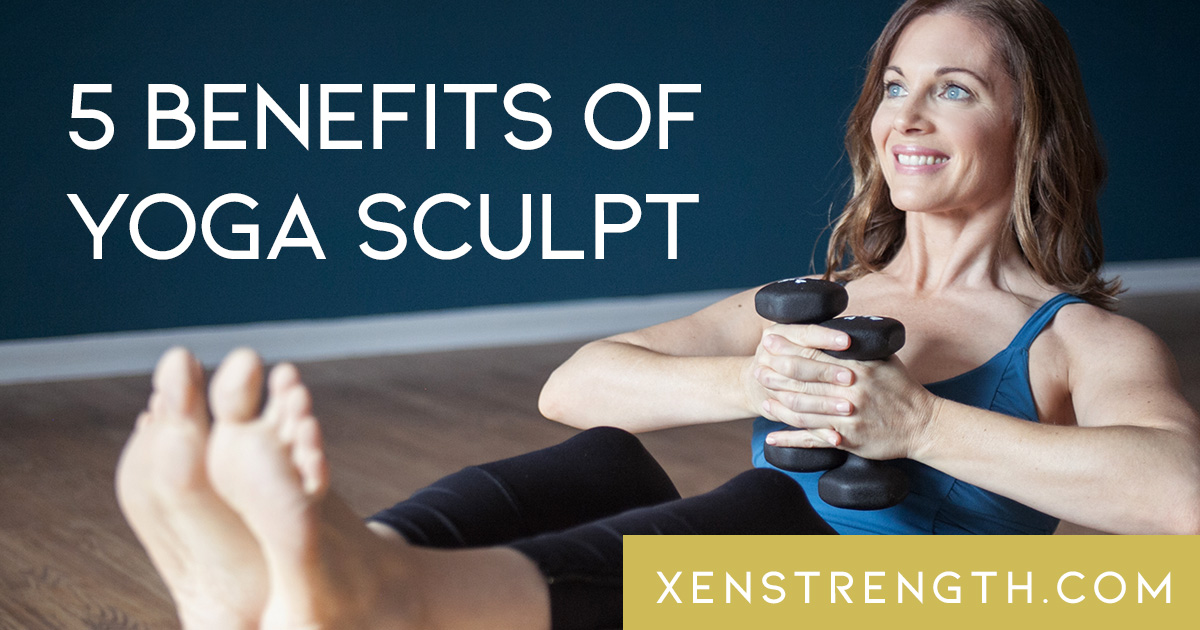
Image Source: xenstrength.com
The Truth: How Many Calories Does Yoga Sculpt Burn?
So, how many calories does Yoga Sculpt burn? The simple truth is there’s no single number that fits everyone. It changes a lot depending on you and the class. Most people can expect to burn somewhere between 350 and 600 calories in a typical hour-long Yoga Sculpt class. But remember, this is just an estimate. Many things affect the final count, like how much you weigh, how hard you push yourself, how long the class is, and even how hot the room is. It’s a high-energy workout that mixes yoga moves, weights, and cardio, which is why it burns more calories than slower forms of yoga.
What Exactly is Yoga Sculpt?
Yoga Sculpt is a fitness class that takes traditional yoga and adds strength training and cardio. Think of it as Vinyasa yoga but with dumbbells and sometimes upbeat music and extra cardio bursts like jumping jacks or burpees. It keeps the flow of yoga but challenges your muscles more and gets your heart rate up higher than regular yoga. It’s designed to build strength, improve flexibility, and offer a good cardio workout all at once.
Deciphering Calorie Burn Basics
Our bodies need energy for everything we do, even just sitting or sleeping. This energy is measured in calories. We get calories from food. We burn calories through our basic body functions and through physical activity.
Your body burns calories in three main ways:
* Resting Metabolic Rate (RMR): This is the energy your body uses just to stay alive at rest – breathing, pumping blood, keeping organs working. This is the biggest part of your daily calorie burn. We can also call this your metabolic rate and calorie burn.
* Thermic Effect of Food (TEF): Your body uses energy to digest the food you eat. This is a small part of your total burn.
* Exercise Activity Thermogenesis (EAT): This is the energy you use when you move your body during planned exercise like Yoga Sculpt. This part can change a lot based on how active you are.
When we talk about how many calories a workout burns, we are mostly talking about EAT.
Interpreting How Exercise Burns Calories
Different types of exercise burn calories in different ways and at different rates. How many calories burned per hour exercise can range a lot. A slow walk burns fewer calories per hour than running fast. Lifting weights burns calories during the exercise and can also help you burn more calories at rest later because muscle tissue burns more calories than fat tissue.
Exercises that get your heart rate up high burn a lot of calories while you are doing them. Exercises that build muscle help your body burn more calories all the time, even when you’re not working out. Yoga Sculpt does a bit of both.
Fathoming Yoga Sculpt’s Calorie Engines
Yoga Sculpt is like a calorie-burning machine because it uses several different engines at once. It combines three main types of exercise:
- Yoga Poses: Holding poses, moving through flows (like Sun Salutations), and balancing all use muscles. Your body works to stabilize itself and maintain positions. This burns calories. A slower yoga class might burn fewer calories, but the flow in Sculpt is often faster.
- Weights (Yoga with Weights Calories Burned): Adding dumbbells to yoga poses makes your muscles work much harder. Squatting while holding weights, doing bicep curls in Warrior II, or lifting weights during core work significantly increases the energy needed compared to doing the same moves without weights. More weight means more effort and more calories burned.
- Cardio Bursts: Many Yoga Sculpt classes include short periods of high-intensity cardio exercises. Think burpees, jumping jacks, mountain climbers, or high knees. These bursts really pump up your heart rate fast. High-intensity training burns a lot of calories quickly. It can also create an “afterburn effect” (called EPOC or Excess Post-exercise Oxygen Consumption), where your body keeps burning calories at a higher rate for hours after you stop exercising as it recovers.
This mix of strength, cardio, and flow is what makes the Yoga Sculpt workout intensity higher than traditional yoga and boosts its calorie burn potential.
Exploring Yoga Sculpt Workout Intensity
The intensity of a workout is key to how many calories you burn. Yoga Sculpt is known for being intense for several reasons:
- Pace: Classes often move quickly from one pose or exercise to the next. Less rest means your heart rate stays elevated.
- Combination: You might do a yoga pose, then add weights, then switch quickly to a cardio move. This constant change and combination of effort levels is demanding.
- Muscle Work: Using weights works your muscles hard. When large muscle groups (like legs and back) are working intensely, they need a lot of energy.
- Heart Rate: The mix of strength work and cardio makes your heart work hard to pump blood. Keeping your heart rate elevated burns a lot of calories.
- Heat: Some studios teach Sculpt in a heated room. Exercising in heat makes your body work even harder to cool itself down. This can increase the calorie burn slightly, but it also means you sweat more and need to stay hydrated. The added challenge also boosts the Yoga Sculpt workout intensity.
Because of these factors, a Yoga Sculpt class often feels much harder and more demanding than a non-heated Vinyasa flow class. This higher effort translates directly to a higher calorie burn during the workout.
Unpacking Factors Influencing Exercise Calorie Burn
As mentioned earlier, the calorie burn isn’t the same for everyone in the same class. Several personal factors influence exercise calorie burn:
Your Body Weight
A heavier person will burn more calories doing the same exercise for the same amount of time as a lighter person. Why? Because a heavier body needs more energy to move and support itself against gravity. Imagine carrying an extra backpack during the whole class – that extra weight makes your body work harder.
- If you weigh 150 pounds and do Yoga Sculpt for an hour, you’ll burn a certain amount.
- If you weigh 200 pounds and do the exact same class, you will likely burn more calories.
This is one of the biggest factors influencing exercise calorie burn.
How Hard You Work (Intensity)
This is maybe the most important factor you can control during the class. How hard are you pushing yourself?
- Are you lifting the heaviest weights you can safely manage?
- Are you putting full effort into the cardio bursts?
- Are you holding the poses with strong, engaged muscles?
- Are you taking short breaks or pushing through?
Working harder means your muscles need more oxygen and energy, which means burning more calories. If you just go through the motions, your calorie burn will be much lower than if you really challenge yourself. The Yoga Sculpt workout intensity you bring is key.
How Long You Work Out (Duration)
This is simple: the longer you do an activity, the more calories you burn (assuming the intensity stays the same). A 60-minute Yoga Sculpt class will burn roughly twice as many calories as a 30-minute class if you work at the same intensity. Most Yoga Sculpt classes are around 60 minutes, sometimes 75 minutes, giving you a solid block of time to keep that calorie burn high.
Your Fitness Level
Someone who is new to exercise or new to Yoga Sculpt might find the class very challenging and burn a lot of calories relative to their effort level. As you get fitter, your body becomes more efficient. It might take slightly less energy to do the same pose or lift the same weight.
However, fitter people can usually maintain a higher intensity for longer. So, while they might be more efficient at a specific task, they can often push harder and last longer in the class, leading to a higher total calorie burn over the hour. Getting fitter also builds more muscle, which boosts your metabolic rate and calorie burn overall, even outside of class.
Metabolic Rate and Individual Differences
Everyone’s body is a little different. Your metabolic rate (how many calories your body burns at rest) is influenced by age, sex, genetics, and body composition (how much muscle vs. fat you have). People with more muscle generally have a higher resting metabolic rate.
While you can’t change your age or genetics, building muscle through classes like Yoga Sculpt can help increase your metabolic rate over time. This means you burn more calories all day, every day, not just during your workout. This contributes to the overall calorie burn picture and makes Yoga Sculpt for weight loss effective over time.
Room Temperature
Yoga Sculpt is often taught in a heated room (like 90-95°F or 32-35°C). Exercising in heat adds another layer of stress on your body. Your body uses energy to try and cool itself down through sweating. This can slightly increase the calorie burn compared to the same class in a normal room temperature. However, the heat is more about the added physical challenge and flexibility benefits than a huge boost in calorie burn. Be careful in heated classes and make sure you stay hydrated.
These are the main factors influencing exercise calorie burn. They are why any single number for “calories burned” is just an average.
Considering CorePower Yoga Sculpt Calorie Count
CorePower Yoga is a very popular studio chain, and they offer a well-known version of Yoga Sculpt. People often ask specifically about the CorePower Yoga Sculpt calorie count. Because CorePower classes are structured and heated, the workout intensity is often consistently high.
Estimates for calories burned in a CorePower Yoga Sculpt class often fall within the 400-600 calorie range for a 60-minute class. Some people, especially larger individuals or those pushing very hard, might burn more. Others, if they take more breaks or use lighter weights, might burn less.
CorePower itself, or fitness trackers used in their classes, might provide calorie estimates. However, it’s important to treat any fitness activity calorie calculator or tracker number as an estimate. Wearable devices use formulas based on heart rate, movement, and your personal data (like weight and age) to guess your calorie burn. They are not perfectly accurate but can give you a general idea and help you see how your effort level changes the burn.
The specific CorePower Yoga Sculpt calorie count will still vary based on all the factors discussed above, even if the class format is consistent.
Grasping Yoga Sculpt for Weight Loss
Is Yoga Sculpt good for weight loss? Yes, it absolutely can be. Weight loss happens when you burn more calories than you consume over time – creating a calorie deficit.
Yoga Sculpt helps with weight loss in several ways:
- High Calorie Burn During Class: As we’ve established, the workout intensity leads to a significant number of calories burned per hour exercise. Doing this class regularly helps contribute to your daily or weekly calorie deficit.
- Building Muscle: The strength training part of Yoga Sculpt helps build lean muscle mass. More muscle increases your metabolic rate and calorie burn at rest. This means you burn more calories 24/7, not just when you’re working out.
- Improving Fitness: As you get fitter, you can handle more intense or longer workouts, allowing you to burn even more calories over time.
- Stress Reduction: Yoga, including Yoga Sculpt, can help reduce stress. Lower stress levels can positively impact hormones that affect appetite and fat storage, potentially making weight management easier.
- Mind-Body Connection: Yoga encourages you to be more aware of your body and how you feel. This awareness can sometimes lead to healthier eating choices and a better relationship with your body.
For Yoga Sculpt for weight loss to be most effective, it needs to be combined with healthy eating habits. You cannot out-exercise a poor diet. But as part of a healthy lifestyle that includes balanced nutrition, Yoga Sculpt is a very powerful tool for burning calories and building strength, both of which are crucial for losing weight and keeping it off.
Contrasting Yoga vs Strength Training Calories
How does Yoga Sculpt’s calorie burn compare to traditional yoga or pure strength training?
- Vinyasa Yoga Calorie Burn: A typical Vinyasa flow class (without weights or cardio bursts) is usually less intense than Sculpt. The calorie burn per hour for Vinyasa yoga might range from 250 to 400 calories, depending on the flow speed and difficulty. It focuses more on flexibility, balance, and endurance through holding poses and smooth transitions.
- Benefit: Good for flexibility, balance, core strength, mind-body connection. Moderate calorie burn during.
- Strength Training Calories: Lifting weights focuses on building muscle. The calories burned during a strength training session can vary a lot depending on the exercises, the weight lifted, and rest periods. It might be similar to or slightly higher than Vinyasa yoga (e.g., 300-500 calories per hour for a circuit-style workout).
- Benefit: Builds significant muscle mass, greatly increases resting metabolic rate, improves strength and power. Has a good “afterburn” effect.
- Yoga Sculpt: By combining Vinyasa flow with weights and cardio, Yoga Sculpt often achieves a higher calorie burn during the class than either pure Vinyasa or possibly even pure strength training for the same duration, especially if the cardio bursts are intense. It also provides some of the muscle-building benefits of strength training, contributing to the metabolic rate and calorie burn over time.
- Benefit: Combines flexibility, balance, strength, and cardio. Higher calorie burn during workout compared to traditional yoga. Helps build muscle for metabolic boost.
Think of it this way:
* Vinyasa is like steady-state moderate cardio with some bodyweight strength.
* Strength Training is focused on building power and muscle.
* Yoga Sculpt is more like high-intensity interval training (HIIT) mixed with strength and yoga flow.
This makes Yoga Sculpt a highly efficient workout if you’re looking to maximize calorie burn and build full-body strength in one session.
Using a Fitness Activity Calorie Calculator
Many websites and apps offer a fitness activity calorie calculator. You usually enter your body weight, the activity (like “yoga” or “strength training”), and how long you did it. It then gives you an estimated calorie burn.
- How they work: These calculators use standard metabolic equations and averages. They might have a general category for “vigorous yoga” or “circuit training” which is the closest match for Yoga Sculpt. They take your weight and plug it into a formula that uses a MET (Metabolic Equivalent of Task) value for the activity. A MET value is a number representing the energy cost of a physical activity. Sitting quietly has a MET value of 1. High-intensity activities have higher MET values.
- Limitations: These calculators provide estimates. They don’t know:
- Your exact personal metabolic rate and calorie burn.
- How hard you specifically worked in the class.
- The exact mix of yoga, weights, and cardio in the class you took (as Sculpt classes can vary slightly).
- The room temperature.
Using a fitness activity calorie calculator can give you a ballpark figure. For a more personal estimate, using a heart rate monitor or a fitness tracker that measures heart rate and movement is better, but even these are not 100% accurate. They still use formulas, but they include your real-time effort data (heart rate).
The best way to use these tools is to track your trends. If your tracker says you burned 500 calories in one Sculpt class and 400 in another, it likely means you worked harder in the first class. Focus on how your effort changes the number, rather than treating the number itself as perfectly precise.
Summing It Up
Yoga Sculpt is a dynamic, challenging workout that combines the flexibility and flow of yoga with the muscle-building power of weights and the calorie-burning boost of cardio. While the exact number of calories you burn will vary based on your body and how hard you work, it generally offers a higher calorie burn than traditional yoga due to its increased Yoga Sculpt workout intensity.
You can typically expect to burn 350-600 calories or potentially more in an hour-long class. This makes it a very effective exercise for burning calories and building muscle, which are both important for managing weight and improving overall fitness.
Remember that factors influencing exercise calorie burn like your body weight, the intensity you bring, and the class duration all play a big role. Classes like CorePower Yoga Sculpt often provide a consistently high level of intensity.
Don’t get too hung up on the precise CorePower Yoga Sculpt calorie count or fitness activity calorie calculator numbers. Instead, focus on the effort you’re putting in, how your body feels, and the overall benefits you get – stronger muscles, better endurance, improved flexibility, and a powerful workout that can contribute significantly to your health goals, including Yoga Sculpt for weight loss. Consistency is always more important than hitting a specific calorie number in one class.
Frequently Asked Questions
h4 Is Yoga Sculpt good for weight loss?
Yes, Yoga Sculpt can be very effective for weight loss. It burns a significant number of calories during the workout due to its mix of yoga, weights, and cardio. It also helps build muscle, which increases the calories your body burns even at rest. To lose weight, combine regular Yoga Sculpt classes with healthy eating.
h4 Is Yoga Sculpt harder than regular Vinyasa yoga?
Generally, yes, Yoga Sculpt is considered more challenging than regular Vinyasa yoga. The added weights and cardio bursts increase the workout intensity significantly compared to Vinyasa, which focuses more on flowing smoothly between poses using bodyweight.
h4 Do the weights in Yoga Sculpt really help you burn more calories?
Absolutely. Adding weights makes your muscles work much harder during poses. When your muscles work harder, they need more energy (calories). Using weights also helps build muscle mass over time, and muscle tissue burns more calories at rest than fat tissue, further boosting your metabolic rate and calorie burn. This directly affects Yoga with weights calories burned.
h4 How accurate are fitness trackers for measuring Yoga Sculpt calories?
Fitness trackers can give you a helpful estimate of calories burned during Yoga Sculpt, but they are not perfectly accurate. They use data like your heart rate, movement, age, and weight in formulas to guess your calorie burn. The exact mix of movements and your personal metabolic response aren’t measured precisely. Use them to see trends in your effort and calorie burn, rather than taking the number as an exact figure. A fitness activity calorie calculator online has similar limitations.
h4 Does the heat in a heated Yoga Sculpt class burn extra calories?
Yes, exercising in a heated room makes your body work harder to stay cool, which can slightly increase the number of calories burned. However, the increase is usually not dramatic. The main benefits of heat in yoga are often related to flexibility and the feeling of a deeper sweat, rather than a huge boost in calorie burn.
h4 How often should I do Yoga Sculpt to see results?
Doing Yoga Sculpt 2-4 times per week is a good goal for most people to see improvements in strength, fitness, and calorie burn potential. Make sure to also include rest days or mix in other types of exercise. Listen to your body and avoid overtraining.