
Starting a CrossFit gym can cost a lot or a little, depending on many things. You can expect to pay anywhere from $50,000 to over $250,000 just to open the doors. This includes everything from paying the CrossFit affiliate fees to buying all the gym equipment and setting up your space. The final number changes based on your location, the size of your gym, and how much you renovate.
Opening a fitness studio, especially one tied to a known brand like CrossFit, needs careful planning and money. This guide will break down the costs involved, both to start and to keep running. It will help you make a good business plan for gym success.
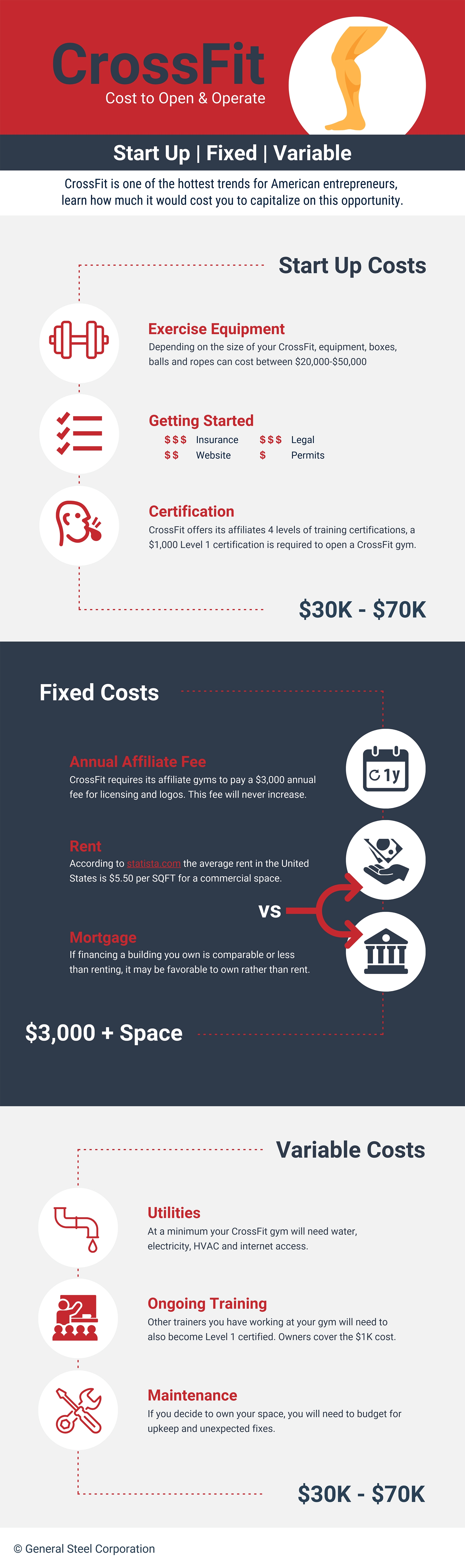
Image Source: gensteel.com
Figuring Out Startup Expenses
The first step is knowing how much money you need before anyone even walks through the door. These are the big, one-time costs that get your business going. These fitness business startup expenses make up a large part of your first costs.
Affiliate Fees for CrossFit
To call your gym “CrossFit,” you must become an official affiliate. This means paying a yearly fee to CrossFit HQ. This fee is a must-have cost.
- Current Fee: As of late 2023 / early 2024, the annual CrossFit affiliate fee is $4,500 USD per year.
- How It Works: You pay this fee each year to keep your name linked with CrossFit.
- What You Get: Being an affiliate lets you use the CrossFit name and logo. It connects you to a worldwide brand and community.
While $4,500 might seem small compared to other costs, it’s a fixed cost you must plan for every year.
Finding a Place to Train: Commercial Real Estate for Gym
Where you put your gym is a huge deal and a huge cost. You need enough space for workouts, equipment, maybe showers or changing rooms, and a place for people to hang out before or after class. Finding commercial real estate for gym use means thinking about location, size, and the shape of the building.
Rent or Buy?
- Renting/Leasing: Most new gyms rent their space. This means lower upfront costs than buying. You’ll pay a security deposit and the first month’s rent. Leases usually last several years (3-10 years). Rent costs change a lot based on where you are. A spot in a busy city center costs much more than a place in the suburbs.
- Buying: Buying a building costs a lot upfront but can be an investment. It might require a large down payment and a commercial mortgage.
Preparing the Space: Gym Renovation Budget
Most buildings are not ready to be a gym right away. You might need to:
- Tear down walls to make an open workout area.
- Put in special flooring (like rubber mats).
- Add or fix bathrooms and changing rooms.
- Improve lighting and ventilation.
- Paint and make the space look good.
- Build a front desk area.
The gym renovation budget can range from a few thousand dollars for simple fixes to tens of thousands or even over $100,000 for big changes. It depends on the building’s condition and what you want to do. Getting quotes from contractors is key here.
Getting the Right Tools: Gym Equipment List and Cost
CrossFit needs specific gear. This is another big startup cost. A basic gym equipment list and cost will include bars, weights, pull-up rigs, rings, rowers, bikes, and more. The cost depends on if you buy new or used, and the quality of the equipment.
Essential Equipment
- Barbells: Different types (men’s, women’s, technique bars).
- Plates: Bumper plates are needed for dropping weights safely. You need lots of different weights.
- Kettlebells: Various sizes.
- Dumbbells: Various sizes.
- Pull-up Rig: This is often a large, central piece. It can be wall-mounted or free-standing.
- Gymnastics Rings: Needed for ring dips, muscle-ups, etc.
- Rowing Machines: Concept2 is the standard. These are expensive.
- Assault Bikes or Echo Bikes: Also a big cost per unit.
- Plyo Boxes: For jumping. Different heights.
- Jump Ropes: Speed ropes.
- Medicine Balls: Various weights.
- Sandbags or Wall Balls:
- Ab Mats:
- Benches: For presses, etc.
- Storage: Racks for plates, bars, kettlebells, etc.
- Flooring: Rubber mats to protect the floor and equipment. This can be very costly for a large space.
Estimating Equipment Costs
- Basic Setup (Small Gym): $20,000 – $50,000+
- Medium to Large Gym: $50,000 – $150,000+
Buying quality equipment lasts longer, but costs more upfront. Buying used gear can save money, but check its condition carefully. Leasing equipment is another choice to spread out the cost, but you pay more over time.
Getting Certified: Cost of CrossFit Coaching Certifications
You need coaches to teach classes. At least one person, usually the owner, needs the CrossFit Level 1 (CF-L1) certification to affiliate. Any coach teaching classes should also have their CF-L1.
- CF-L1 Seminar: Costs about $1,000 USD per person.
- Higher Levels (L2, L3, L4): These cost more but show a coach has more experience and knowledge. L2 is often another $1,000+.
- Other Certs: Coaches might get extra training in specific areas like gymnastics, weightlifting, or mobility. These add to the cost of CrossFit coaching certifications for your team.
Plan to spend money on training for yourself and any coaches you hire before opening.
Legal and Business Setup
Before you can open, you need to handle legal steps.
- Business Name Registration: Cost varies by location.
- Legal Structure: Setting up as an LLC, S-Corp, etc., involves legal fees.
- Business Licenses and Permits: Local and state rules vary.
- Lawyer Fees: To review leases, agreements, etc.
- Accountant Fees: To set up your books.
These costs might be a few hundred to a few thousand dollars.
Getting the Word Out: Initial Marketing
You need to tell people you are opening.
- Signage: A sign for your building is key.
- Website Setup: People need to find info online.
- Social Media Ads: Running ads before opening day.
- Local Advertising: Flyers, community events.
- Grand Opening Event: Costs for food, drinks, marketing.
Initial marketing costs can range from a few thousand dollars to over $10,000 depending on how big you go.
Software and Technology
Running a gym needs technology.
- Membership Management Software: To sign people up, book classes, collect payments (like Wodify, Pike13, Mindbody). This is often a monthly fee, but setting it up might have a cost.
- Website Hosting:
- Payment Processing Fees: Takes a small cut of each payment.
- Computers, Tablets: For checking people in, managing music.
- Sound System: Good music is important in CrossFit.
Initial setup might cost $500 to $3,000+, plus ongoing monthly fees.
Cash on Hand: Contingency Fund
It’s smart to have extra money saved for unexpected costs or slow starts. Many experts suggest having 3-6 months of operating costs saved. This can be a large amount but is very important for making it through the first year.
Table: Sample Startup Cost Breakdown (Estimates)
| Cost Category | Low End Estimate | High End Estimate | Notes |
|---|---|---|---|
| CrossFit Affiliate Fee (1st year) | $4,500 | $4,500 | Required annual fee |
| Rent Deposit & First Month | $5,000 | $30,000+ | Varies greatly by location and size |
| Gym Renovation Budget | $10,000 | $100,000+ | Depends on space needs and condition |
| Gym Equipment List and Cost | $20,000 | $150,000+ | New vs. Used, Size of Gym |
| Cost of CrossFit Coaching Certs | $1,000 | $5,000+ | For owner + initial coaches |
| Legal & Business Setup | $500 | $3,000 | Licenses, permits, lawyer/accountant fees |
| Initial Marketing | $2,000 | $10,000 | Signage, website, ads |
| Software/Technology Setup | $500 | $3,000 | Membership software setup, hardware |
| Subtotal Startup Costs | $43,500 | $305,500+ | Does not include contingency fund |
| Recommended Contingency (3 months) | $15,000 | $60,000+ | Based on estimated operating costs |
| Total Estimated Startup Cost | $58,500 | $365,500+ | Including a small contingency fund |
These numbers are just estimates. Your actual costs can be higher or lower.
Accounting for Ongoing Operating Costs of a Gym
Once your gym is open, you have bills to pay every month or year. These are the operating costs of a gym. Planning for these is just as important as planning for startup costs.
Monthly Rent or Mortgage
This will likely be your biggest ongoing cost if you rent. If you bought, it’s your monthly mortgage payment, property taxes, and maybe building insurance.
- Estimate: $2,000 to $15,000+ per month, depending on location and size.
Utilities
You need electricity for lights and music, heating and cooling, water, and internet.
- Estimate: $500 to $2,500+ per month, varies with size of space and usage.
Payroll for Staff
Unless you plan to do everything yourself (not recommended as you grow), you’ll pay coaches, maybe an admin person, or cleaning staff.
- Coaches: Can be paid hourly, per class, or a salary. Pay rates depend on location, experience, and certifications (like higher level CrossFit certs).
- Admin/Other Staff: Hourly wage or salary.
- Estimate: $2,000 to $10,000+ per month initially, growing as you hire more people or pay coaches more as membership grows.
CrossFit Affiliate Fee (Annual)
Remember the $4,500? You pay this every year to keep your affiliation active.
- Estimate: $375 per month (if you set aside $4,500/12 each month).
Gym Insurance Cost
You need insurance to protect your business from accidents, injuries, property damage, etc. This is a critical part of your operating costs of a gym.
- Types of Insurance: General liability, professional liability (for coaching), property insurance, potentially workers’ compensation if you have employees.
- Estimate: $150 to $500+ per month, depending on coverage, location, and size. Getting quotes from different insurance companies is wise.
Marketing and Advertising (Ongoing)
You need to keep attracting new members.
- Online Ads: Google, Facebook, Instagram.
- Local Events: Sponsoring, running free trial classes.
- Website Maintenance:
- Promotions: Running special offers.
- Estimate: $200 to $1,000+ per month.
Software Subscriptions
Your membership software, website hosting, and any other online tools have monthly or yearly fees.
- Estimate: $100 to $500+ per month.
Equipment Maintenance and Replacement
Bars get old, rowers need service, flooring gets worn. You need a plan and budget for fixing and replacing gear.
- Maintenance: Oiling machines, cleaning. Small costs.
- Replacement: Buying new bars or machines when old ones break or wear out. This can be a large but irregular cost. Setting aside a small amount each month helps.
- Estimate: $50 to $500+ per month (can be higher in years you replace big items).
Supplies
Things like chalk, cleaning supplies, toilet paper, paper towels, first aid supplies.
- Estimate: $50 to $200+ per month.
Continuing Education for Coaches
Keeping coaches updated with new certifications or workshops improves coaching quality but costs money (cost of CrossFit coaching certifications or other training).
- Estimate: $50 to $300+ per month (depends on how often you invest in staff training).
Table: Sample Monthly Operating Cost Breakdown (Estimates)
| Cost Category | Low End Estimate | High End Estimate | Notes |
|---|---|---|---|
| Rent/Mortgage | $2,000 | $15,000+ | Major variable cost |
| Utilities | $500 | $2,500+ | Electricity, water, internet |
| Payroll (Coaches/Staff) | $2,000 | $10,000+ | Starts lower, grows with membership/staff |
| CrossFit Affiliate Fee (Prorated) | $375 | $375 | $4,500 / 12 months |
| Gym Insurance Cost | $150 | $500+ | Needs quotes based on coverage |
| Marketing (Ongoing) | $200 | $1,000+ | Attracting new members |
| Software Subscriptions | $100 | $500+ | Membership software, etc. |
| Equipment Maint. & Replacement | $50 | $500+ | Set aside funds |
| Supplies | $50 | $200+ | Chalk, cleaning, etc. |
| Coach Continuing Education | $50 | $300+ | Investing in staff training |
| Total Estimated Monthly Costs | $5,475 | $30,875+ | Your actual costs will vary |
These are monthly estimates. Some costs are annual (like the affiliate fee) but are shown here as a monthly average.
Getting the Money: Funding a Fitness Studio
Now you know the costs, how do you get the money? Funding a fitness studio can be done in several ways. Most gym owners use a mix of these.
Personal Savings
Using your own money is common. It shows you believe in your business and reduces the need for loans. However, risking your own savings is a big decision.
Loans
- SBA Loans: The U.S. Small Business Administration (SBA) doesn’t lend money directly but guarantees parts of loans made by approved lenders. This makes banks more willing to lend to small businesses. SBA loans often have good terms and lower down payments.
- Bank Loans: Traditional bank loans require a solid business plan for gym funding and often demand collateral (assets you own that the bank can take if you don’t pay back the loan).
- Equipment Financing: You can get specific loans to buy gym equipment. The equipment itself often serves as the collateral.
- Line of Credit: Good for covering short-term needs or unexpected costs once you are operating.
Investors
Finding people who want to put money into your gym in return for a share of the business or profits. This can bring in needed funds and sometimes helpful experience, but you give up some ownership and control.
Friends and Family
Borrowing money from people you know. Be very clear about terms and treat it professionally to avoid damaging relationships.
Crowdfunding
Using online platforms to ask many people for small amounts of money. This can also help build early buzz for your gym.
Rolling Future Revenue Agreements (Merchant Cash Advances)
Less common for startups, but some companies will give you cash now in exchange for a percentage of your future sales. High cost, use with caution.
Most gyms need a combination of personal funds and a loan to cover the initial startup costs.
Creating a Roadmap: Business Plan for Gym Success
Before you ask for money or even start looking for locations, write a detailed business plan for gym operations. This plan forces you to think through everything and proves to lenders or investors that you have a solid idea.
Key Parts of Your Business Plan
- Executive Summary: A short overview of your gym concept, costs, and goals.
- Company Description: What is your gym? What’s special about it?
- Market Analysis: Who are your potential members? Who are your competitors (other CrossFit gyms, regular gyms, boutique studios)? How will you stand out?
- Organization & Management: Who is in charge? What are their roles?
- Service Line: What classes and services will you offer? CrossFit classes, open gym, personal training, nutrition coaching?
- Marketing & Sales Strategy: How will you get members? Pricing structure?
- Financial Projections: THIS is where you put your cost estimates.
- Startup Costs (detailed breakdown)
- Operating Costs (monthly estimates for the first 1-3 years)
- Revenue Projections (how many members will you have? What will they pay?)
- Break-Even Analysis (when will your income cover your costs?)
- Cash Flow Statement (showing money coming in and going out)
- Funding Request: If seeking loans or investment, clearly state how much you need and how you’ll use it.
- Appendix: Resumes of owners/key staff, market research data, letters of intent for leases, etc.
A strong business plan for gym funding shows you’ve done your homework and makes you look professional to potential funders.
Ways to Save Money When Starting
Starting a gym is expensive, but there are ways to cut costs.
- Buy Used Equipment: Search for used gear from gyms that are closing or upgrading. Make sure it’s in good shape.
- Phase Equipment Purchases: You don’t need every piece of gear on day one. Start with essentials and add more as membership grows and you have more money.
- DIY on Renovations (Carefully): If you have skills, do some non-specialized renovation work yourself (like painting or basic setup). Don’t DIY things that require licensed professionals (electrical, plumbing, major structural changes).
- Negotiate Your Lease: Work with the landlord on rent price, terms, or even ask for a period of free rent at the start.
- Start Smaller: A smaller space costs less to rent, renovate, and equip. You can always move to a bigger space later.
- Be Smart with Marketing: Focus on low-cost or free marketing first, like social media, local partnerships, and free trial classes. Word-of-mouth is powerful in the CrossFit community.
- Lease Equipment: Instead of buying outright, lease expensive items like rowers or bikes to spread out the cost. Be aware this often costs more over time.
Saving money upfront can reduce the amount you need to borrow or invest, lowering your risk.
Summarizing Estimated Totals
Based on the breakdowns, let’s look at the ranges again for starting a CrossFit gym.
Table: Estimated Total Cost Range
| Cost Type | Low End Estimate | High End Estimate |
|---|---|---|
| Startup Costs | $43,500 | $305,500+ |
| Contingency Fund | $15,000 | $60,000+ |
| Total Range | $58,500 | $365,500+ |
This range is wide because costs like rent, renovation, and equipment vary so much.
You need to figure out where you will likely fall in this range based on your specific plans:
- Location: High-cost city or lower-cost town?
- Size: Big space or smaller?
- Condition of Space: Ready to go or needs major work (gym renovation budget)?
- Equipment: New or used (gym equipment list and cost)?
- Personal Funds: How much of your own money can you use?
Beyond the startup costs, remember the ongoing operating costs of a gym, which can be $5,000 to $30,000+ per month. Your revenue needs to cover these costs and hopefully provide profit.
Wrapping Up the Costs
Opening a CrossFit gym is a big effort and a big cost. It needs careful planning, especially around money. Knowing the fitness business startup expenses and the ongoing operating costs of a gym is the first step.
The key costs include:
- The required CrossFit affiliate fees.
- Finding and setting up your space (commercial real estate for gym and gym renovation budget).
- Buying all the necessary gear (gym equipment list and cost).
- Paying for certifications for yourself and coaches (cost of CrossFit coaching certifications).
- Handling legal steps and insurance (gym insurance cost).
- Marketing your gym.
- Having cash ready for monthly bills (operating costs of a gym) until you have enough members.
Creating a solid business plan for gym operations is essential for getting funding a fitness studio and guiding your decisions. While the costs are high, with careful planning, smart choices, and hard work, owning a successful CrossFit gym is possible. Focus on building a strong community and providing great coaching, and the business can thrive.
Frequently Asked Questions (FAQ)
Q: Is the CrossFit affiliate fee a one-time cost?
A: No, the CrossFit affiliate fee is an annual cost. You pay $4,500 USD each year to keep your gym officially affiliated with CrossFit and use their name and logo.
Q: Can I start a CrossFit gym without much money?
A: Starting a CrossFit gym requires significant funds for things like space, equipment, and fees. While you can save money by buying used equipment or doing simple renovations, it’s difficult to start one for less than $50,000 total startup costs, and often much more. Having enough money, including a buffer for ongoing costs, is critical.
Q: How long does it take to make money back?
A: Making back your initial investment takes time. Many gyms take 1-3 years or longer to become truly profitable. This depends on your membership numbers, pricing, and how well you manage your operating costs of a gym. A strong business plan for gym finances with realistic projections is very important here.
Q: Do I need a special certification to open a CrossFit gym?
A: Yes, at least one owner or head coach must hold the CrossFit Level 1 (CF-L1) Trainer Certificate to apply for affiliation. Any coaches teaching classes should also have this certification (cost of CrossFit coaching certifications). Higher level certifications (L2, L3, L4) are recommended for coaches as they gain experience.
Q: How important is location for a CrossFit gym?
A: Location is very important. You need a space that is big enough, accessible to your target members, has good parking, and fits the “box” style of a CrossFit gym. The cost of commercial real estate for gym space varies hugely by location, making it a major cost factor.
Q: What is the biggest ongoing cost?
A: For most CrossFit gyms, the biggest ongoing operating costs are rent (or mortgage) and payroll for coaches and staff. These two items usually make up the largest portion of monthly expenses.