
Can you start yoga today? Yes! Anyone can begin yoga. It does not matter how old you are, how fit you are, or how flexible you are right now. Yoga is for absolute beginners. You do not need fancy clothes or special skills to start. This guide will show you the easy first steps.
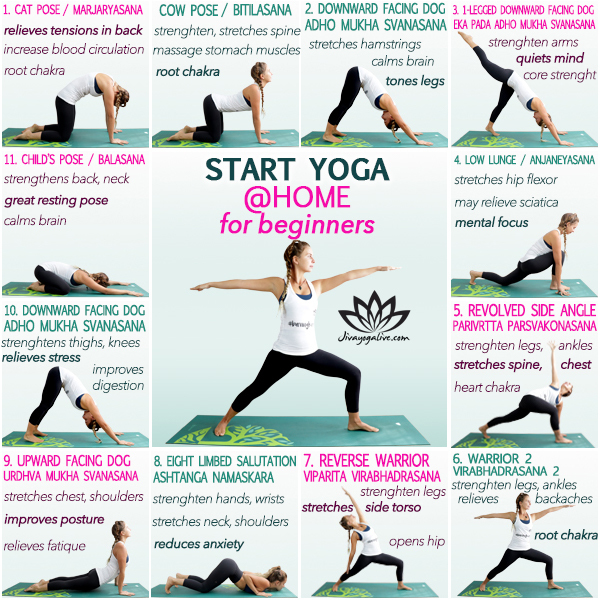
Image Source: jivayogalive.com
Grasping What Yoga Is
Yoga is an old practice. It comes from India. People have done it for thousands of years. It is more than just stretching. It is about moving your body and breathing. It also helps calm your mind.
Think of yoga as a way to connect. You connect your body and your breath. You connect your mind and your body. It is a gentle way to exercise. It is also a way to feel peaceful.
Yoga uses different parts:
- Poses: These are shapes you make with your body. Like standing, sitting, or lying down. They are called asanas.
- Breathing: Paying attention to how you breathe. Making breath calm and deep. This is called pranayama.
- Quiet Time: Sometimes just sitting or lying still. Letting your mind rest. This can be called meditation.
Yoga is not a competition. You do not need to touch your toes. You just need to move your body gently. You breathe. You listen to yourself. It is your own journey.
Why Yoga Helps You
Many people start yoga for different reasons. Maybe they want to be stronger. Maybe they want to feel less stressed. Benefits of beginner yoga are many. Even simple moves help a lot.
Here are some ways yoga can help you:
- Your Body Feels Better:
- More Flexible: Your muscles stretch. You can move easier.
- Stronger Muscles: Holding poses builds strength.
- Better Balance: Standing on one leg gets easier.
- Less Pain: Gentle movement can ease back pain or stiff joints.
- Your Mind Feels Better:
- Less Stress: Focusing on breath calms nerves.
- More Peaceful: Quiet time helps clear your head.
- Better Sleep: A calm body and mind rest easier.
- More Focus: Learning to stay present helps concentration.
Even gentle yoga gives these benefits. You do not need to push hard. Just showing up and trying helps.
What You Need to Start
You do not need much to begin. The most important thing is you.
H4 Your Space
Find a place where you have room to move. It should be quiet if possible. A living room corner or a spare bedroom works. Make sure the floor is not too hard.
H4 Your Gear
- Clothes: Wear clothes you can move in. Loose pants or shorts are good. A t-shirt or tank top is fine. Make sure nothing is too tight. Your clothes should let you stretch.
- Yoga Mat: A yoga mat for beginners is very helpful.
- It gives you cushion. This protects your knees and joints on a hard floor.
- It stops you from slipping. This makes poses safer.
- It marks your space. You know where to put your hands and feet.
You can find simple, low-cost mats. You do not need an expensive one to start. Any mat is better than no mat when you are learning.
- Props (Optional): Blocks and straps can help.
- Blocks: You can put them under your hands or sit on them. They make reaching easier.
- Straps: These help you hold onto your foot or leg if you cannot reach.
You do not need props on day one. But know they are there to help you later. They make poses easier, not harder.
Picking How to Start: Home or Class?
You have two main ways to begin yoga: at home or in a class. Both are good for yoga for absolute beginners.
H4 Home Yoga for Beginners
Starting at home is easy. You can do it anytime. You do not need to go anywhere.
Pros of Home Yoga:
- You choose the time. Morning, noon, or night.
- You choose how long. Five minutes or thirty minutes.
- You are in your own space. No one is watching. You can feel free.
- It can be free! Many online videos are free.
- You can pause or stop anytime.
Cons of Home Yoga:
- You have to motivate yourself. No teacher is telling you what to do.
- You might do a pose wrong. No one is there to check your shape.
- It can feel lonely sometimes.
How to Start Home Yoga:
- Find a simple video online. Search for “easy yoga routine” or “gentle yoga for beginners”.
- Use an app. Many apps have beginner plans.
- Just try a few simple poses you learn here.
H4 Yoga Class for Beginners
Going to a class is another way. You go to a studio or gym. A teacher guides you.
Pros of a Yoga Class:
- A teacher shows you the poses. They can help you fix your shape. This helps you do it right and stay safe.
- It is easier to stay motivated. You have a set time to go.
- You are with other people. This can feel nice.
- You use the studio’s props. You do not need to buy them.
Cons of a Yoga Class:
- You have to go somewhere at a set time.
- Classes cost money.
- You might feel shy at first.
- Some classes might move too fast (choose a beginner class!).
How to Find a Class:
- Look for classes called “yoga class for beginners“.
- Ask about “gentle yoga” or “slow flow” classes.
- Call the studio. Ask if the class is okay for someone who has never done yoga.
- Read about first yoga class tips before you go.
Both ways are good ways to start. Pick what feels best for you right now. You can always change later. Many people do both!
Beginner Yoga Poses: Your First Shapes
Let us look at some simple poses. These are good for your very first tries. Do them slowly. Breathe the whole time. Never do anything that hurts. A little stretch is okay. Sharp pain is not okay.
Here is a list of easy shapes:
- Mountain Pose (Tadasana): Stand tall.
- Chair Pose (Utkatasana): Like sitting on a chair.
- Downward-Facing Dog (Adho Mukha Svanasana): Like an upside-down V.
- Child’s Pose (Balasana): Rest pose.
- Cat-Cow Pose (Marjaryasana to Bitilasana): On hands and knees, moving your back.
- Cobra Pose (Bhujangasana): Lie on belly, lift chest.
- Warrior II (Virabhadrasana II): Stand with legs wide, arms out.
- Tree Pose (Vrksasana): Stand on one leg.
- Corpse Pose (Savasana): Lie flat on your back.
Let’s learn how to do a few of these. These are basic and gentle.
H5 Mountain Pose (Tadasana)
This pose looks simple, but it is important. It helps you feel grounded.
- Stand with your feet together. Or feet hip-width apart.
- Press your feet down into the ground. Feel steady.
- Stand up tall. Straighten your legs and back. Do not be stiff.
- Let your arms hang by your sides. Palms face forward.
- Lift your chest a little. Shoulders back and down.
- Look straight ahead.
- Breathe calmly. Feel tall and strong like a mountain.
Hold for 5-10 breaths.
H5 Child’s Pose (Balasana)
This is a rest pose. You can do it anytime you feel tired.
- Start on your hands and knees.
- Bring your big toes together. Spread your knees wide or keep them together. Wider knees give more space for your belly.
- Sit your hips back onto your heels.
- Walk your hands forward on the mat. Lay your chest down between your thighs.
- Rest your forehead on the mat.
- Let your arms stay forward or bring them back by your sides.
- Breathe deeply. Let your body sink down. Feel calm.
Stay here as long as you like. Many minutes is okay.
H5 Cat-Cow Pose (Marjaryasana to Bitilasana)
This moves your spine gently. It feels good for your back.
- Start on your hands and knees. Make sure your hands are under your shoulders. Your knees are under your hips.
- Your back is flat like a table. This is your starting spot.
- Cat Pose (Marjaryasana): Breathe out. Pull your belly in. Round your back up towards the ceiling. Let your head drop down.
- Cow Pose (Bitilasana): Breathe in. Drop your belly down towards the floor. Lift your chest and your tailbone up. Look slightly forward.
- Move between Cat and Cow. Round your back as you breathe out. Arch your back as you breathe in.
- Do this slowly. Match your breath with your movement.
Repeat 5-10 times. Feel your back moving.
H5 Downward-Facing Dog (Adho Mukha Svanasana)
This pose stretches your whole body. It might feel hard at first. It gets easier.
- Start on your hands and knees. Hands under shoulders, knees under hips.
- Tuck your toes under.
- Breathe out. Push your hands into the mat. Lift your hips up and back.
- Your body makes a shape like an upside-down V.
- Your hands are flat. Your fingers spread wide.
- Your feet are about hip-width apart. Your heels move towards the floor (they do not need to touch!).
- You can bend your knees a lot. This helps your back stay straight.
- Let your head hang down. Look back towards your feet.
- Feel a stretch in your legs and back. Breathe.
Hold for 5-10 breaths. To come out, bend your knees and come back to hands and knees. Or step your feet forward to your hands.
H5 Cobra Pose (Bhujangasana)
This pose opens your chest. It is a gentle backbend.
- Lie on your belly on the mat.
- Put your hands flat on the mat under your shoulders. Fingers point forward.
- Keep your legs together or slightly apart. Press the tops of your feet down.
- Breathe in. Press your hands down lightly. Lift your head and chest off the mat.
- Only lift up a little bit. Use your back muscles more than your hands.
- Keep your elbows close to your body. Your shoulders stay down.
- Look slightly forward. Do not crunch your neck.
- Feel a gentle stretch in your chest and belly. Breathe.
Hold for 3-5 breaths. Breathe out and lower back down slowly.
H5 Corpse Pose (Savasana)
This is the final rest pose. It is very important.
- Lie flat on your back. Let your legs stretch out. Let your feet fall open to the sides.
- Let your arms rest by your sides. Palms face up.
- Close your eyes gently.
- Let your body relax completely. No need to hold anything.
- Let your breath be soft and natural.
- Just lie still. Let your body rest after the poses. Let your mind be calm.
Stay here for 5-10 minutes. When ready to finish, wiggle fingers and toes. Gently hug knees to chest. Roll onto your side for a moment. Then slowly sit up.
Basic Yoga Sequence for Beginners
You can put simple poses together. This makes an easy yoga routine. Here is one idea. Do it slowly. Rest in Child’s Pose anytime.
- Start in Mountain Pose (Tadasana). Stand tall. Breathe for a few moments.
- Move to Cat-Cow Pose. Do 5-10 rounds. Warm up your spine.
- Move to Downward-Facing Dog. Stay for 5 breaths. Bend knees a lot if needed.
- Come back to hands and knees.
- Lower onto your belly for Cobra Pose. Do 3-5 breaths. Repeat Cobra 2-3 times if you like.
- Push back to Child’s Pose. Rest for 5-10 breaths.
- Slowly come back to sitting.
- Finish by lying on your back in Corpse Pose (Savasana). Rest for 5-10 minutes.
This is a simple start. It moves your body in different ways. It includes rest.
You can change this. Do poses you like more often. Skip poses that feel too hard today. This is your practice.
First Yoga Class Tips
If you go to a studio class, here are some tips:
- Arrive Early: Get there 10-15 minutes before it starts. Find a spot. Get your mat ready. Talk to the teacher if you feel nervous. Tell them you are new.
- Stay Near the Middle/Back: You can see what others are doing. You can follow the teacher easily. No need to be in the front row.
- Listen to Your Body: The teacher will show poses. Do what feels right for your body. If a pose hurts, do a simpler version or rest in Child’s Pose. It is okay to rest!
- Do Not Worry About Others: Everyone is focused on their own mat. No one is watching you. Do not compare yourself to people who have done yoga for years.
- Breathe: The teacher will talk about breathing. Just try to breathe evenly. Do not hold your breath.
- Stay for Savasana: This last rest pose is important. Do not skip it to leave early. It helps your body and mind take in all the good work you did.
- Ask Questions (After Class): If you did not understand something, ask the teacher after class.
Most studios are welcoming. Yoga teachers want you to feel good. Let them know you are new. They can offer extra help.
Making Yoga a Habit
Starting is great. Doing it often is even better. How can you keep going?
- Start Small: Do yoga for just 10-15 minutes. It is better to do a little bit often than try for an hour once and stop.
- Set a Time: Pick a time that works for you. Maybe every morning before work. Maybe after kids are in bed. Put it in your calendar.
- Find a Style You Like: Try different classes or videos. Some are faster, some are slower. Find what feels good.
- Be Gentle with Yourself: Some days will be easier than others. Some poses will feel hard. That is okay. Just keep trying.
- Celebrate Small Wins: Feel a little stronger? Can touch your toes (or get closer!)? Notice you feel calmer? Great job!
Remember, home yoga for beginners is always an option. You can mix home practice and classes.
Addressing Common Beginner Worries
Many new people have the same thoughts:
- “I’m not flexible.” This is the most common worry! Yoga helps you become flexible. You do not need to be flexible to start. Just start as you are. The poses will help you stretch over time.
- “I’m not strong enough.” Yoga builds strength! Holding poses works your muscles. Start with gentle yoga. You will get stronger.
- “I don’t know the names.” The pose names (like Tadasana) are in an old language (Sanskrit). You do not need to know them! The teacher or video will show you the shape. You will learn names over time if you want to.
- “I feel silly.” This is normal in the beginning. Everyone feels a bit unsure when trying something new. Just focus on yourself. The feeling goes away fast.
- “I can’t clear my mind.” This is okay! Yoga is not about having a perfectly empty mind. It is about noticing your thoughts without getting lost in them. Just breathe. It helps quiet the mental noise over time.
A Look at Different Gentle Yoga Styles
Yoga has many styles. For beginners, some are better than others.
- Hatha Yoga: Often slower pace. Holds poses for a few breaths. Good for learning the basic yoga sequence and poses.
- Vinyasa Yoga: Links poses together with breath. Can be faster, but many studios offer slow or gentle Vinyasa classes.
- Restorative Yoga: Uses props (like blankets, bolsters, blocks) to support your body completely. You hold poses for a long time with no effort. Very relaxing. Excellent for yoga for absolute beginners who want to release stress and tension.
- Yin Yoga: Holds poses for a long time (3-5 minutes or more). Focuses on stretching deep tissues around joints. Can feel intense but is very calming. A good gentle yoga option, but can be challenging mentally due to holding poses.
For your first steps, look for classes or videos labeled “Beginner,” “Gentle,” “Slow Flow,” “Hatha,” or “Restorative.”
Making Your Own Easy Yoga Routine at Home
You do not need a video every time. Once you know a few beginner yoga poses, you can make your own simple plan.
Here is how:
- Start standing: Mountain Pose (1-2 minutes)
- Warm up spine: Cat-Cow Pose (5-10 rounds)
- Add a gentle stretch: Downward-Facing Dog (or stay on hands and knees for a gentler stretch) (1 minute)
- Open chest: Cobra Pose (2-3 times, holding each for 3-5 breaths)
- Rest: Child’s Pose (1-2 minutes)
- Final rest: Corpse Pose (Savasana) (5-10 minutes)
This is just an idea! You can add other poses as you learn them. Keep it short and simple when you are starting. Doing this basic yoga sequence even a few times a week helps a lot.
What to Expect in a Beginner Yoga Class
A yoga class for beginners is made for new people.
- The teacher will explain things clearly.
- They will show you how to get into poses safely.
- They will often suggest using props (blocks, straps) to make poses easier.
- The pace will be slower than other classes.
- There will be time for rest (like Child’s Pose or Savasana).
- You will likely see people of all ages and body types.
Do not feel pressure to do everything perfectly. Just follow along as best you can. Listen to the teacher’s words. Watch their body. Most importantly, listen to your own body.
Yoga Mat for Beginners: Choosing One
You do not need the most expensive mat. But a good beginner mat helps.
What to look for:
- Thickness: 1/4 inch (6mm) is a good start. It gives padding for knees and joints. Very thin mats (like 1/8 inch) are lighter but offer less cushion. Thicker mats (like 1/2 inch) are very soft but can make standing poses feel wobbly. 1/4 inch is a nice middle ground.
- Stickiness: You want a mat that is not slippery. This helps you hold poses without sliding. Mats made of PVC or rubber are often sticky. Read reviews if you buy online.
- Cost: Beginner mats can range from $20 to $50. You do not need to spend more than that for your first mat.
- Material: PVC is common and sticky. Rubber is more eco-friendly but can have a smell. TPE is another option, lighter than rubber. Try to pick one that you feel good about using.
You can find yoga mat for beginners at sports stores, big shops, or online.
Ready to Take the Easy First Steps?
You have the tools now. You know what yoga is a little bit. You know why it helps. You know what you need (not much!). You have learned some simple poses and a basic yoga sequence. You have tips for starting at home or in a class.
The hardest part is just starting. Roll out your yoga mat for beginners. Put on some comfy clothes. Find a quiet spot. Try one pose. Breathe. Then try another.
Do not worry about doing it perfectly. Just move your body kindly. Breathe calmly. Give yourself this time.
Every time you step onto your mat, you are doing great things for your body and mind.
Yoga is a path, not a finish line. Your first step is the most important one.
Are you ready? You are ready.
Go start your easy yoga routine today.
FAQ: Questions New Yogis Ask
Here are some common questions people have when they are new to yoga.
H4 Do I need to be able to touch my toes?
No, not at all! Flexibility is something you gain from yoga. You start as you are. The poses will gently help you stretch more over time.
H4 How often should I do yoga?
Even a little bit helps. Trying for 1-3 times a week is a great goal for yoga for absolute beginners. Even 15-20 minutes per session is good. Find a rhythm that works for you.
H4 What if I can’t do a pose?
This happens to everyone! Yoga is not about doing poses perfectly. It is about trying and listening to your body. The teacher will offer easier options. At home, you can pause a video or switch to Child’s Pose. It is always okay to rest or modify.
H4 Is yoga a religion?
No. Yoga is a practice for the body and mind. It comes from a place with rich history and spiritual ideas, but you can practice yoga no matter what you believe. It is about self-care and well-being.
H4 What is the best time of day to do yoga?
The best time is the time that works for you. Some people like morning to feel ready for the day. Others like evening to relax before sleep. Try different times and see what feels best.
H4 Can I eat before yoga?
It is best not to eat a heavy meal right before yoga, especially poses where you bend forward or twist. A light snack an hour or two before is usually fine.
H4 What if I have a health problem or injury?
Talk to your doctor first. Tell your yoga teacher about any health issues before class starts. They can suggest poses to avoid or change for you. Always listen to your body and be extra careful. Gentle yoga is often a safe way to start, but check with a health expert.
This is your first step. Enjoy the journey!