
Yoga handstand, known as Adho Mukha Vrksasana, is a fun and strong yoga pose. Many people want to try it. This guide shows you how to do a handstand in yoga now, step by step. You will learn how to get ready, use a wall, and build strength.
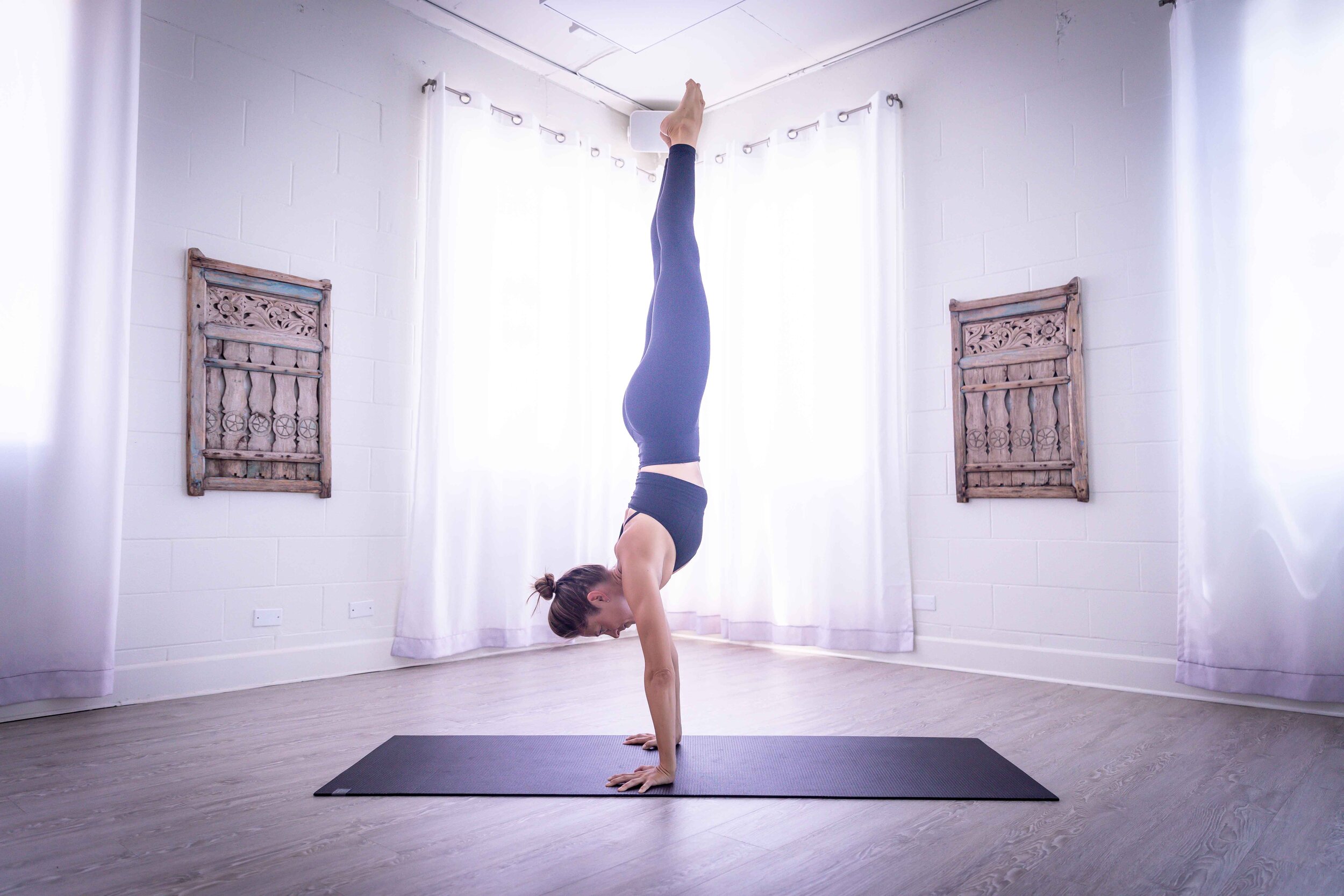
Image Source: images.squarespace-cdn.com
Grasping Handstand Yoga
What is Adho Mukha Vrksasana?
This is the yoga name for handstand. It means “Downward-Facing Tree Pose”. In this pose, your body is straight up and down, like a tree, with your hands on the ground. Your feet point to the sky. It is one of many yoga inversion poses. An inversion is any pose where your head is lower than your heart.
Why try yoga inversion poses?
Going upside down has many good points.
* It helps blood flow in your body.
* It makes your arms and shoulders strong.
* It helps you balance better.
* It can make you feel happy and brave.
* It is a fun challenge!
Trying inversions like handstand is a goal for many people in yoga.
Are you ready for handstand yoga?
Learning a handstand takes time and work. It is not for everyone right away. You should have some yoga practice before trying it. You need strength in your arms, shoulders, and middle body. You also need to not be afraid of being upside down.
If you have neck problems, back problems, or high blood pressure, talk to a doctor first. If you are pregnant, ask your doctor or a yoga teacher.
This guide is a beginner handstand yoga tutorial. We start with simple steps.
Handstand Yoga Preparation – Building Your Base
You cannot just jump into a handstand. Your body needs to be ready. This part helps you build the strength and feel needed for the pose. This is your handstand yoga preparation.
Getting your body ready
Getting ready means making your body strong and flexible. You need strong arms to hold you up. Your shoulders need to be open to stack over your wrists. Your middle body, called the core, needs to be very strong to keep your body straight.
Yoga poses for handstand strength
Yoga has many poses that help you get strong for handstand. Do these poses often. They build the muscles you need.
Poses for Arm and Shoulder Strength:
* Downward-Facing Dog (Adho Mukha Svanasana): This pose looks like an upside-down ‘V’. Your hands and feet are on the ground. Push the floor away with your hands. Feel the strength in your arms and shoulders. This pose helps you get used to putting weight on your hands.
* Plank Pose: Start on your hands and knees. Walk your feet back until your body is a straight line from head to heels. Your hands are under your shoulders. Keep your body strong and flat. This builds arm, shoulder, and core strength.
* Chaturanga (Low Plank): From Plank, bend your elbows straight back, close to your body. Lower yourself halfway down. Keep your body straight. This builds big arm and shoulder strength. It is hard, so take your time with it. You can do it on your knees first.
* Dolphin Pose: This is like Downward Dog, but you are on your forearms. Your hands are on the ground or together. Push the floor away with your forearms. This opens your shoulders and makes them strong. It also helps with the shape of your shoulders in handstand.
Poses for Core Strength:
* Boat Pose (Paripurna Navasana): Sit on the floor. Lift your feet off the ground. You can keep your knees bent or make your legs straight. Lean back a little, keeping your back straight. Your body looks like a ‘V’. Feel your belly muscles working hard.
* Plank Variations: Try lifting one leg in Plank. Or try Side Plank. These make your core work even harder to stay balanced.
* Forearm Plank: Like Plank, but on your forearms. Keep your body straight. Hold it for a long time. This is great for the deep core muscles.
* Leg Lifts: Lie on your back. Keep your legs straight or slightly bent. Slowly lift your legs up to the sky. Slowly lower them back down, but do not let them touch the floor. Repeat many times. This works the lower belly.
Poses for Body Awareness and Balance:
* Tree Pose (Vrksasana): Stand on one leg. Put the foot of the other leg on your ankle, calf, or upper leg (not on the knee). Put your hands together in front of your chest or over your head. Find a spot to look at that does not move. This helps you find balance and focus. This is good practice for balancing when upside down.
* Warrior III (Virabhadrasana III): Stand on one leg. Lean your body forward and lift the other leg straight back behind you. Your body makes a ‘T’ shape. Keep your standing leg strong and straight. Keep your core tight. This builds balance and leg strength.
Do these poses often. They are important for your handstand journey. They make up the yoga poses for handstand strength you need.
Core strength for handstand yoga – Why it’s key
Think of your body like a building. Your core is the base. If the base is weak, the building will fall. In handstand, if your core is weak, your legs and hips will flop around. You need a strong core to keep your body in a straight line from hands to feet.
A strong core helps you:
* Hold the straight shape.
* Control your legs.
* Balance without falling over.
* Move slowly and safely.
So, spend time working on your core muscles. It is not just about big muscles. It is also about the deep ones that hold you together. Core strength for handstand yoga is maybe the most important part after shoulder strength.
Warm-up exercises
Before you try any handstand work, always warm up your body. Cold muscles can get hurt.
* Move your wrists in circles both ways.
* Open and close your hands.
* Do arm circles forward and back.
* Stretch your shoulders by bringing one arm across your chest.
* Do some Sun Salutations to warm up your whole body.
A good warm-up gets your blood moving. It makes your muscles ready to work hard. It also helps you feel ready in your mind.
Learning Handstand Yoga Step By Step – The Tutorial
Okay, your body is getting stronger. You have been doing the preparation poses. Now it is time to start going upside down. We will use a wall first. This is part of your beginner handstand yoga tutorial. It is the safest way to start.
Finding the right spot
Choose a wall that is clear. Make sure there is nothing behind you or to the sides. You need space to move your legs. A bare wall is best. Make sure the floor is not slippery. Use a yoga mat against the wall for your hands.
Setting up your hands and shoulders (Yoga handstand alignment)
How you place your hands is very important. This sets up your yoga handstand alignment.
1. Place your hands: Put your hands on the mat about shoulder-width apart. Spread your fingers wide like starfish. Press down through all your fingers and the base of your hand. Do not just put weight on your wrists.
2. Turn your hands: Turn your fingers to point slightly towards the wall. This can help some people with shoulder room. Or keep them pointing straight ahead. Try both ways to see what feels best.
3. Check your wrists: Your wrists should be flat on the floor. They should be right under your shoulders when you are in the pose.
4. Set your shoulders: Think about pushing the floor away from you. This makes your shoulders strong and active. Do not let your shoulders sink down near your ears. Lift them up towards your hips. Keep this active push the whole time.
Getting this setup right is key for safety and balance. It is the base for your Adho Mukha Vrksasana steps.
Entry methods (Wall handstand yoga first)
Using a wall is the best way to learn. It catches you if you start to fall. There are two main ways to get into wall handstand yoga: L-shape and kick-ups. Start with L-shape.
Adho Mukha Vrksasana steps with the wall
This is the L-shape method. It is slower and helps you feel the pose safely.
Steps for L-Shape Handstand:
1. Start near the wall: Sit on the floor with your side against the wall. Stretch your legs out in front of you. Note where your hips are. This is roughly how far your hands should be from the wall.
2. Get into Downward Dog: Turn around. Get into Downward Dog pose with your heels touching the wall. Your hands are on the mat the distance you measured from the wall. Adjust your hands so they are shoulder-width apart and pointing slightly towards the wall or straight forward.
3. Walk your feet up the wall: Lift one foot and place it on the wall. Then lift the other foot and place it on the wall. Your knees can be bent at first.
4. Walk your hands back: Slowly walk your hands back towards the wall. As you do this, walk your feet higher up the wall. Keep your hands active, pushing the floor away.
5. Find the L-shape: Keep walking your hands back and feet up until your hips are right over your shoulders and wrists. Your body makes an ‘L’ shape with the wall. Your legs are straight along the wall, and your body is straight up and down.
6. Hold the pose: Hold this L-shape. Focus on your yoga handstand alignment. Keep your core strong. Pull your belly button in towards your spine. Push the floor away with your hands. Your shoulders should be stacked over your wrists. Your hips over your shoulders. Your legs straight out from your hips.
7. Stay and breathe: Stay here for a few breaths. Feel what it is like to be upside down. Get used to the feeling.
8. Come down: Slowly walk your feet back down the wall. Walk your hands forward back into Downward Dog. Rest.
This L-shape helps you build strength and get used to being upside down safely. It also helps you find the feeling of stacking your body parts on top of each other. This stacking is important for balance later. Do this many times before trying to kick up.
Steps for Kick-Up Handstand (with the wall):
This method is faster but can feel scary at first. Do this only after you are good at the L-shape.
1. Set up your hands: Place your hands about 6-10 inches away from the wall. Use the same hand setup as before (shoulder-width, fingers spread, pressing down). Push the floor away to make your shoulders strong.
2. Get ready to kick: Come into a standing split shape with one leg up in the air. Your other leg is on the ground closer to your hands. Bend the knee of the leg on the ground.
3. Light kick: Give a light hop or kick off the front foot. Send your back leg up towards the wall. The leg on the ground follows.
4. Find the wall: Try to land softly on the wall with one or both feet. Do not kick hard at first. Just try to get your hips over your shoulders. Let your feet find the wall.
5. Adjust: Once your feet are on the wall, try to straighten your body. Pull your belly in. Push the floor away. Try to find that straight line. Your body should be straight up and down, with your feet resting lightly on the wall.
6. Hold and breathe: Hold the pose with your feet on the wall. Focus on keeping your body straight. Breathe calmly.
7. Come down: Bend your knees and softly step one foot back down to the floor, then the other. Or you can try to float one leg down slowly.
8. Rest: Go into Child’s Pose or Downward Dog to rest.
It is okay if you do not get it on the first try! Or the tenth try! Kicking up takes practice. You might land hard on the wall sometimes. That is why you start with a light kick. The goal is control, not power. Keep practicing the kick-up gently until you can get your hips over your hands and land softly on the wall.
Working away from the wall (Inversion yoga tips)
Once you feel safe and strong using the wall, you can start trying to balance without it. This is a big step! Here are some inversion yoga tips for trying it:
- Use less wall: Try coming into the L-shape or kick-up, but only let your toes touch the wall very lightly. See if you can lift one toe away for a second. Then the other.
- Find your center: In handstand, your balance point is over your hands. You need to stack everything up – wrists, shoulders, hips, legs, feet. Think of drawing a straight line from your hands to your feet.
- Use your fingers: Your fingers are like brakes and gas pedals. If you feel like you are falling towards your back, press your fingertips down harder. If you feel like you are falling towards your front (towards a somersault), press the base of your hand down more. Practice small shifts in weight in your hands.
- Keep your core strong: This is vital! A strong core keeps your body straight and easier to balance. If your core is loose, your body will bend like a banana, and you will fall.
- Look at one spot: Look down at a spot on the floor between your hands. Do not move your head. This helps with balance.
- Breathe: It is easy to hold your breath when you are upside down. Try to breathe calmly and evenly.
- Try Tuck Handstand: Instead of kicking up with straight legs, try kicking up with bent knees (like a ball). It is easier to control your balance when your body is smaller. Once your hips are over your shoulders, you can slowly try to straighten your legs.
- Have a spotter: Ask a friend or a yoga teacher to stand next to you. They can help you find balance or stop you from falling. A spotter makes you feel safer.
- Fall safely: Know how to come down. If you are falling forward, tuck your chin to your chest and roll out of it. This is like a simple forward roll. Practice this on the floor first. If you are falling back towards the wall, just let your feet land softly.
Trying handstand away from the wall takes courage and practice. Do not be sad if you fall. Everyone falls! It is part of learning. The more you practice falling safely, the less scary it is.
Refining Your Handstand
Once you can get into the pose, with or without the wall, you want to hold it steadily. This is where refining comes in.
Holding the pose
To hold the pose, you need active engagement in your whole body.
* Hands: Press down firmly through all fingers.
* Arms: Keep your arms straight and strong. Push the floor away actively.
* Shoulders: Stack your shoulders over your wrists. Keep them lifted towards your hips. Do not let them sink.
* Core: Pull your belly button in. Tighten your stomach muscles. Keep your core strong and engaged.
* Legs: Keep your legs straight (unless you are in a tuck shape). Point your toes to the sky. Keep your legs active, like you are reaching for the ceiling.
* Body Line: Think of your body as one straight line from your hands to your feet. This is your yoga handstand alignment. Try to avoid a big curve in your back (banana shape) or broken hips.
Common mistakes and how to fix them
Many people make the same mistakes when learning handstand. It is normal! Here are some and how to fix them:
| Mistake | How it looks | Why it happens | How to Fix It |
|---|---|---|---|
| Bent Elbows | Arms are not straight, look like they might snap | Lack of arm/shoulder strength | Do more Plank, Chaturanga, Downward Dog. Focus on pushing floor away. |
| Shoulders Sink | Neck looks short, shoulders near ears | Shoulders are passive, not lifting | Actively push floor away. Practice Dolphin pose and pushing from forearms. |
| Banana Back | Big curve in the lower back, hips forward | Weak core, hips not stacked over shoulders | Strengthen core (Plank, Boat Pose). Practice L-shape handstand for alignment. |
| Floppy Legs | Legs are bent, or moving around a lot | Weak core, legs not engaged, not reaching up | Tighten core. Actively point toes and reach legs to the sky. |
| Wrong Hand Placement | Hands too close/far from wall, or not shoulder-width | Not measuring, rushing setup | Measure hand distance from wall for L-shape. Always check hand width. |
| Looking Around | Head moves or looks forward | Losing focus, curiosity | Look at one spot on the floor between hands. Keep head still. |
| Kicking Too Hard | Banging into the wall | Trying to muscle up, not using control | Start with L-shape. Practice light hops or tuck entries towards wall. |
| Fear of Falling | Freezing up, not trying | Natural fear of being upside down | Practice falling safely (tucking and rolling). Use a spotter. Practice wall work a lot. |
Yoga handstand alignment tips revisited
Good alignment makes handstand feel lighter and easier to hold.
* Stacking: Hands -> Wrists -> Shoulders -> Hips -> Legs -> Feet should be in one line.
* Active Shoulders: Always push the ground away. Lift your shoulders up, like you are shrugging to your ears but keeping your neck long.
* Tight Core: Pull your lowest ribs and belly button in. Imagine you are zipping up a tight jacket from your hips to your ribs.
* Straight Legs (if not in tuck): Straighten your knees and point your toes. Reach your feet up, up, up! This helps lift your hips.
* Neutral Head: Look between your hands. Keep your neck long, not craning it forward.
Practice finding this alignment against the wall first. It teaches your body where to be.
Falling safely
Learning to fall is just as important as learning to go up. If you fall backward towards your back (the way you came up), just relax and step down with one foot, then the other. If you fall forward towards a somersault, tuck your chin to your chest. Let your body go round. You can roll onto your back. Practice this roll on the floor from kneeling first. Get comfortable with the feeling of going over. This makes trying handstand much less scary.
Beyond the Basic Handstand
You can hold a handstand against the wall. Maybe you can even balance for a second or two away from the wall. What next?
How to come down
Coming down safely and with control is part of the pose.
* From the wall: Slowly walk your feet down the wall. Walk your hands forward back to Downward Dog.
* From free balance: Gently let one leg float down to the floor. It is like stepping out of the pose one leg at a time. Or, if you feel yourself falling, use the safe falling method (roll forward or step back).
* Through splits: You can also come down by letting one leg come down slowly while the other stays up, ending in a standing split. This takes more control.
Avoid dropping down heavily. Try to come down smoothly.
Rest poses
After being upside down, it is good to do poses that help your body reset.
* Child’s Pose (Balasana): Kneel on the floor. Sit back on your heels. Lower your forehead to the floor. Rest your arms beside your body or stretched forward. This is a calming pose.
* Downward-Facing Dog: This pose helps lengthen your spine and gives your arms a different kind of stretch.
* Dolphin Pose: Good for stretching shoulders gently after handstand.
* Forward Fold (Uttanasana): Standing or sitting, bend forward from your hips. Let your head hang heavy. This helps blood flow back to your lower body and stretches your back.
Resting helps your body recover.
Practice tips and how often to practice
- Be patient: Handstand takes time. Do not get upset if it does not happen fast.
- Be consistent: Try to practice a little bit several times a week. Maybe 10-15 minutes each time.
- Listen to your body: If your wrists or shoulders hurt, stop. Rest. Do preparation poses instead.
- Mix it up: Do not just try kicking up. Spend time on preparation poses, wall work, and core strength.
- Find joy: Have fun with it! Celebrate small wins, like holding L-shape longer or feeling lighter when you kick up.
- Use videos: Watch good yoga teachers show the pose and the steps.
Practicing often, even for short times, is better than practicing rarely for long times.
Benefits of Handstand Yoga in Detail
We talked a little about why you might try inversions. Let’s look closer at the specific benefits of handstand yoga.
Physical benefits
- Increases upper body strength: Holding your body weight builds serious strength in your arms, shoulders, and back muscles. Yoga poses for handstand strength like Plank and Chaturanga build this.
- Builds core strength: As we talked about, a strong core is vital. Handstand makes you use your core deeply to stay straight and balanced. This improves your overall core strength for handstand yoga and other activities.
- Improves balance: Constantly finding and holding your center of gravity when upside down trains your balance in a powerful way. This skill transfers to other activities.
- Boosts circulation: Being upside down helps blood flow from your feet and legs back to your heart and brain. This can feel refreshing.
- Strengthens bones: Weight-bearing poses like handstand can help make your bones stronger over time, which is good for bone health.
- Stretches and opens shoulders: Getting into the right alignment helps open the front of your shoulders and chest. Dolphin pose and Downward Dog also help with this.
Mental benefits
- Increases confidence: Learning a challenging pose like handstand gives you a big boost in confidence. You learn that you can do hard things if you practice.
- Develops focus and concentration: Handstand needs your full attention. You learn to quiet your mind and focus on your body and breath.
- Reduces stress and anxiety: For some people, inversions can be calming. They shift your perspective and require you to be fully present.
- Changes perspective: Seeing the world upside down can literally change how you see things. It can help you look at challenges from a new point of view.
- Builds body awareness: You learn exactly where your body parts are in space and how they need to be stacked. This improves your sense of proprioception.
- It’s fun! Learning new skills and being playful in your yoga practice is good for your spirit.
Exploring yoga inversion poses like handstand offers many rewards for both your body and mind.
FAQ Section
Is handstand safe for everyone?
No, not everyone should do handstand. If you have high blood pressure, heart problems, eye problems (like glaucoma), neck or spine injuries, or are pregnant, ask a doctor first. Start slowly and carefully.
How long does it take to learn handstand?
It is different for everyone! Some people learn in a few months, others in a few years. It depends on your body, your practice, and how often you work on it. Be patient with yourself.
I am afraid to fall. What should I do?
This is very normal! Practice near a wall always at first. Learn the safe way to roll out if you fall forward. Having a spotter can also help you feel much safer. Practice falling safely so it feels less scary.
My wrists hurt when I do handstand. Why?
This could be because your wrists are not warm enough, not strong enough, or you are putting too much weight just on the wrist joint. Make sure you are spreading your fingers wide and pressing down through the base of your fingers and hand, not just the wrist. Warm up your wrists well before practice. Build wrist strength with poses like Plank. If pain continues, see a doctor or physical therapist.
Do I need a lot of arm strength?
Yes, arm and shoulder strength are important. But core strength and good alignment are even more important. A strong core helps you stack your body so your arms do not have to work as hard. Practice yoga poses for handstand strength often.
Can I learn handstand if I am not a yoga person?
Yes, but yoga poses help build the needed strength, flexibility, and body awareness. This guide uses yoga terms like Adho Mukha Vrksasana steps, but the principles of building strength, using the wall, and finding alignment are useful for anyone learning handstand.
What if I have tight shoulders?
Tight shoulders make it hard to stack your shoulders over your wrists. Practice poses that open the shoulders, like Dolphin pose, Downward Dog, and puppy pose. Work on shoulder flexibility slowly and gently.
Conclusion
Learning how to do a handstand in yoga, Adho Mukha Vrksasana, is a journey. It takes practice, strength, patience, and bravery. Start with simple steps, build your handstand yoga preparation, and use the wall (wall handstand yoga) as your friend. Focus on yoga poses for handstand strength and getting your yoga handstand alignment right. Build core strength for handstand yoga – it is truly important. Use these inversion yoga tips and this beginner handstand yoga tutorial as your map. Celebrate every step, no matter how small. Falling is part of learning. Get back up and try again. You can do it! Have fun with the process of going upside down.