
Downward Dog is a core yoga pose. It’s a key part of many yoga classes. You make your body look like an upside-down V. Your hands and feet are on the ground. Your hips lift up high. It can feel tough when you first try it, but anyone can learn it. You can use simple changes to make it work for you. This pose does a lot for you. It stretches your whole body. It makes you stronger. And it can help you feel more peaceful inside. This pose is also called Adho Mukha Svanasana in Sanskrit.
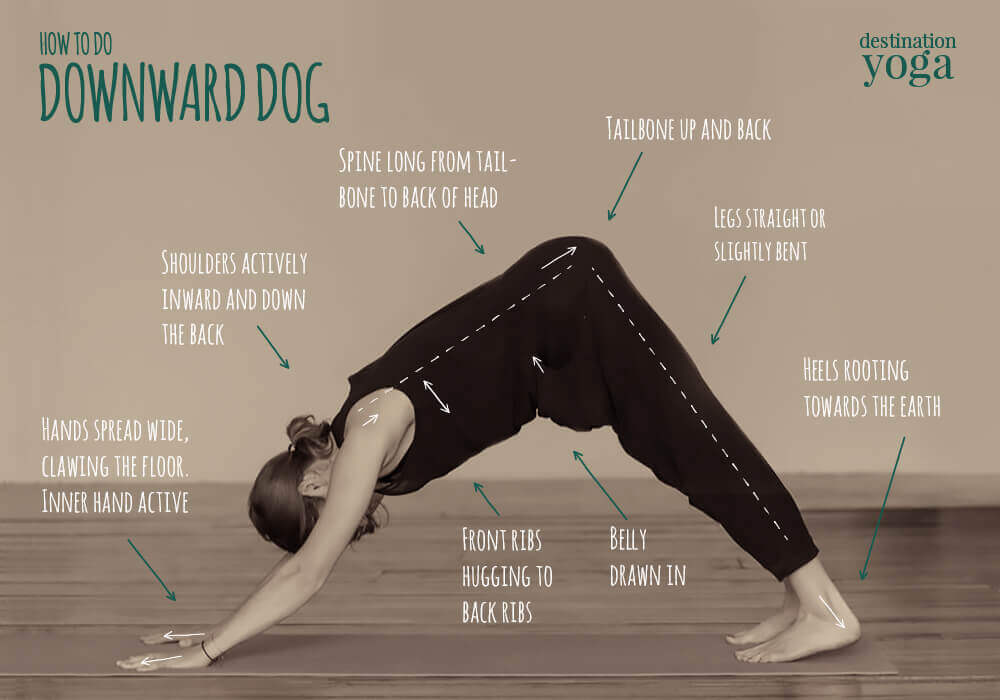
Image Source: destinationyoga.co.uk
Comprehending the Yoga Pose Downward Dog
The Yoga pose Downward Dog is famous for good reason. It asks a lot from your body. But it gives a lot back, too. Think of it as a stretch and a strength builder all in one. Your hands push down. Your feet push down. Your hips reach up to the sky. Your spine gets long. It’s a resting pose in faster yoga styles. But it’s also a strong pose that works many muscles. Learning to do it right is key. It keeps you safe. It helps you get all the Downward Facing Dog benefits. Let’s look at how to get into it step by step. We will also cover how to make sure your body is in the right place. This is known as Downward Dog alignment.
Downward Dog Pose Instructions: Step by Step
Getting into Downward Dog might seem hard at first. But if you follow these steps, it will become easier. Take your time. Listen to your body.
Step 1: Start on Your Hands and Knees
- Begin on your hands and knees.
- Put your hands flat on the mat.
- Place them right under your shoulders.
- Spread your fingers wide. Press down through all your fingers and your palms.
- Your knees should be under your hips.
Step 2: Set Your Hands
- Your hands are very important in this pose.
- Point your middle fingers straight ahead.
- Press down firmly with the pads of your fingers. Especially the thumb and index finger side. This helps protect your wrists.
- Your hands should be about shoulder-width apart. Maybe a little wider if that feels better.
Step 3: Set Your Feet
- Curl your toes under.
- Make sure your feet are about hip-width apart. You can guess or measure with two fists between your feet.
Step 4: Lift Your Hips
- Breathe out.
- Push into your hands and feet.
- Lift your knees off the floor.
- Send your hips up and back towards the sky.
Step 5: Find Your Shape
- This is where you start to make the V shape.
- Think of your hips as the highest point.
- Your body should look like an upside-down V.
- Keep your knees bent a lot at first. This is okay! It helps you make your back long.
- Press your heels down towards the mat. They might not touch. That’s fine.
Step 6: Lengthen Your Spine
- This is very important for good Downward Dog alignment.
- Imagine someone is gently pulling your hips up and back.
- Let your head hang freely. Don’t hold tension in your neck.
- Look back towards your feet or your belly.
- Keep a slight bend in your elbows. Don’t lock them.
Step 7: Engage Your Legs
- If your back is long, you can start to work on straightening your legs a little.
- Keep a micro-bend in your knees. Don’t lock them straight.
- Lift the front of your thighs. Push the backs of your thighs back.
- Reach your heels down.
Step 8: Hold the Pose
- Stay here for 5 to 10 breaths. Or longer if it feels good.
- Keep breathing deeply.
- Check your body: hands pushing, hips lifting, spine long, neck relaxed.
Step 9: Come Out Safely
- To come out, breathe in.
- Gently bend your knees.
- Lower your knees back to the mat.
- Rest in Child’s Pose (Balasana). This is a good counter pose.
These Downward Dog pose instructions give you the basic shape. Now let’s look closer at making sure your body is in the right place.
Downward Dog Alignment: Placing Your Body Right
Getting the alignment right is key for safety and getting the full benefits of Downward Dog. It helps you use the right muscles. It protects your joints. Here’s a closer look at each part of your body in Downward Dog.
Hands and Arms in Downward Dog
- Hands: Your hands are your base. Spread your fingers wide like stars. Press down through the area between your thumb and index finger. This takes pressure off your wrists. Imagine you are trying to grip the mat with your fingertips. Hands are shoulder-width apart.
- Arms: Keep your arms straight but soft. Do not lock your elbows. A tiny bend is good. Rotate your arms. Imagine turning the inside of your elbows towards each other. But keep your hands straight. This helps your shoulder blades sit better.
- Shoulders: Move your shoulders away from your ears. This creates space for your neck. Don’t let your shoulders slouch or round forward too much.
Spine and Back in Downward Dog
- Spine: The main goal is a long, straight spine. Avoid rounding your back. If your back rounds, bend your knees more. This is the fastest way to straighten your spine. Think of reaching your tailbone up towards the sky.
- Back: Your upper back should feel broad. Avoid letting your shoulder blades pinch together. Allow them to spread slightly. Your chest can move gently towards your thighs, but keep the spine long.
- Neck: Let your head hang heavy. Your neck is a long part of your spine. Don’t tuck your chin hard or lift your head to look forward. Look back towards your feet or belly. This keeps your neck in line with your spine.
Hips and Legs in Downward Dog
- Hips: Hips lift high and reach back. This is the peak of the V shape. Push your hips away from your hands.
- Legs: Start with bent knees. This is fine, especially for Beginner Downward Dog. As your hamstrings stretch, you can work towards straighter legs. But always keep a micro-bend in your knees. Never lock them straight. This protects your knee joints.
- Feet: Feet are about hip-width apart. Toes point straight ahead. Heels press down towards the mat. They might not touch. That is very common. Do not force your heels down if it causes your back to round. A long spine is more important than straight legs or heels touching the floor.
Grasping the Downward Facing Dog Benefits
Doing Downward Dog offers so many good things for your body and mind. Here are some key Downward Facing Dog benefits:
- Full Body Stretch: It stretches the back of your body. This includes hamstrings, calves, and ankles. It also stretches your spine, shoulders, and arms.
- Strengthens Your Body: Downward Dog makes your arms, shoulders, back, and legs stronger. It’s a weight-bearing pose for your upper body.
- Lengthens the Spine: It helps to decompress your spine. This can feel very good, especially if you sit a lot. A long spine helps with posture.
- Increases Flexibility: Regular practice improves flexibility in your hamstrings, calves, and shoulders.
- Improves Circulation: Being upside down (even a little) helps blood flow to your brain. This can help you feel more alert and energized.
- Calms the Mind: Like many yoga poses, focusing on your breath in Downward Dog can help reduce stress and calm the nervous system.
- Builds Bone Density: As a weight-bearing pose, it can help make your bones stronger over time. This is good for preventing bone loss.
- Prepares for Other Poses: It’s a base pose. It prepares your body for other poses that need strength in arms and legs or a long spine.
Think of Downward Dog as a mini-break that also works you hard. You stretch tired legs. You build strength in arms and shoulders. You let your head hang low. This can help you feel calmer.
Beginner Downward Dog: Starting Out
If you are new to yoga, Downward Dog might feel hard. Your legs might feel very tight. Your wrists might feel weak. Your shoulders might feel stiff. This is normal. Everyone starts somewhere. Beginner Downward Dog is all about making the pose work for your body right now.
- Focus on Your Back First: Forget about straight legs or heels on the floor. The most important thing is a long, flat back.
- Bend Your Knees A Lot: This is the best friend of a beginner. Bending your knees lets you lift your hips higher and straighten your back. You can keep your belly close to your thighs.
- Pedal Your Feet: Bend one knee, then the other. It’s like walking in place. This gently stretches your hamstrings and calves.
- Use Props: Blocks under your hands can give you more space. This is a great Downward Dog modification for beginners.
- Don’t Stay Too Long: Start by holding the pose for just a few breaths (3-5). Build up over time.
- Rest When Needed: Child’s Pose is always there for you. Come down, rest, and try again.
Be patient with yourself. Your body will open up over time. The Downward Dog pose instructions will feel easier with practice.
Downward Dog Modifications: Making it Your Own
Yoga is for everyone. Downward Dog can be changed to fit different bodies and needs. These Downward Dog modifications help you find comfort and safety in the pose.
- Bent Knees: The most common and helpful modification. Keep your knees bent deeply to lengthen your spine. This is great for tight hamstrings.
- Blocks Under Hands: Place yoga blocks under your hands, flat side down. This brings the floor closer to you. It reduces the angle at your shoulders and wrists. Great for stiff shoulders or tight chest.
- Hands on a Chair or Wall: If getting to the floor is hard, do Downward Dog with your hands on a chair seat or a wall. Your body will be at an angle. This gives you the stretch and length benefits with less weight on your wrists and shoulders.
- Wider Hands or Feet: Sometimes, just moving your hands a little wider or your feet a little wider helps you find more space and stability. Experiment!
- Blanket Under Wrists: If your wrists feel sore, place a rolled-up blanket or mat under the heels of your hands. This slightly changes the angle and can ease discomfort.
- One Leg Down, One Leg Up (Gentle Pedal): As mentioned for beginners, gently bending and straightening one leg at a time can be a nice modification to ease into the stretch.
Using Downward Dog modifications is not “cheating.” It is smart yoga practice. It means you are listening to your body and giving it what it needs.
Common Downward Dog Mistakes and How to Fix Them
Even with good Downward Dog pose instructions, people often make small errors in alignment. Knowing Common Downward Dog mistakes helps you spot them in your own practice. Here are some common ones and how to fix them:
| Mistake | What it Looks Like | Why it’s a Problem | How to Fix It |
|---|---|---|---|
| Rounded Back | Spine looks like a curve or hump. | Puts stress on spine; limits length. | Bend your knees more! Focus on lifting hips high. Imagine tailbone reaching up. |
| Locked Knees | Legs are pushed completely straight, sometimes hyperextended. | Jams knee joint; shifts weight forward. | Keep a micro-bend in your knees. Lift the front of your thighs. Straighten from the hip, not the knee. |
| Hands Too Close/Far | Hands right under shoulders (too close) or way out front (too far). | Wrong weight distribution; wrist/shoulder strain. | Start from Tabletop. Hands under shoulders. Then lift up. Adjust slightly if needed. Should feel balanced. |
| Hands Turned Out | Fingers not pointing straight ahead. | Twists wrist; poor shoulder alignment. | Point middle fingers straight ahead. Press down firmly through thumb/index finger base. |
| Shoulders Near Ears | Neck looks short; shoulders hunched up. | Creates neck tension; limits spine length. | Press hands firmly down. Imagine pushing the floor away. Move shoulders down your back, away from ears. |
| Weight Forward | Feeling all the weight in your hands and wrists. | Strains wrists; doesn’t engage legs/core. | Press hips back more. Bend knees more if needed to shift weight back. Push floor away with hands AND feet. |
| Feet Too Wide/Narrow | Feet wider than hips or touching. | Impacts hip alignment; reduces stability. | Feet hip-width apart. Imagine two fists between them. |
| Head Drooping Hard | Neck completely loose, head falling heavily. | Can strain neck muscles. | Let head hang, but keep a sense of length. Imagine a gentle pull from the crown of your head towards your hands. |
| Looking Forward | Lifting head to look between hands. | Strains neck; loses spinal alignment. | Look back towards your feet or belly. Let your head be heavy and in line with your spine. |
Checking these points will greatly improve your Downward Dog alignment. It’s like fine-tuning the pose.
Downward Dog Variations: Trying New Things
Once you feel comfortable with the basic Yoga pose Downward Dog, you can try some variations. These add different challenges or focus on certain areas.
- Three-Legged Dog (Tri Pada Adho Mukha Svanasana): From Downward Dog, lift one leg straight back and up. Keep your hips level or gently open them. This strengthens the standing leg and hip.
- Dolphin Pose: This is like Downward Dog, but you are on your forearms instead of your hands. Your elbows are on the ground, shoulder-width apart. This builds strength in the shoulders and upper back. It’s also a good prep for arm balances or inversions.
- Puppy Pose (Anahatasana): Not exactly a variation, but often used in sequences. It’s like the top half of Downward Dog. Your hips are over your knees, and your chest melts towards the floor with arms extended. Good for stretching the spine and shoulders without weight on the legs.
- Downward Dog with Heel Lifts: While in Downward Dog, lift both heels high, then lower them. Repeat. This warms up the ankles and calves.
- Downward Dog with Bent Knees (Deep Bend): This is also a modification, but you can use it as a variation focusing more on lengthening the spine and stretching the side body.
These Downward Dog variations add layers to your practice. They help you explore the pose in new ways.
Yoga Sequences Including Downward Dog
Downward Dog is a key pose in many yoga sequences. It shows up often. It serves different purposes depending on the style of yoga and the flow.
- Sun Salutations: In Vinyasa or flow yoga, Downward Dog is a central pose in Sun Salutations (Surya Namaskar). You often move from Plank to Chaturanga (low push-up) to Upward Dog, and then push back to Downward Dog. It links poses together.
- Transition Pose: It’s often used to move from standing poses to floor poses, or vice versa. You might step forward from Downward Dog to a forward bend or lunge.
- Resting Pose (in Vinyasa): In a fast-paced class, Downward Dog can be a place to catch your breath. Even though it’s active, it allows you to slow down compared to the poses around it.
- Warm-up: Sometimes, Downward Dog is used early in a class to warm up the body, especially the hamstrings and shoulders.
- Cool-down/Stretching: Near the end of a practice, Downward Dog can be held longer to deepen the stretches.
Knowing how Downward Dog fits into Yoga sequences including Downward Dog helps you understand its purpose in a class. It’s often the home base you return to.
Maintaining Practice: Tips for Better Downward Dog
Doing Downward Dog correctly and safely is a journey. Here are some tips to help you keep improving:
- Practice Regularly: Like anything, the more you do it, the easier it gets. Try to include Downward Dog in your practice a few times a week.
- Warm Up: Your body will feel much better in Downward Dog if you are warmed up first. Simple movements like cat-cow, wrist circles, and gentle forward folds can help.
- Listen to Your Body: Never push into pain. If something hurts, ease up, try a modification, or come out of the pose.
- Focus on Breath: Use your breath to help you in the pose. Inhale to find length, exhale to perhaps deepen the stretch (without forcing).
- Check Your Alignment: Even after you’ve done it many times, take a moment in the pose to check your hands, shoulders, back, and legs.
- Use a Mirror (Sometimes): Seeing your shape can help you understand the alignment cues. But don’t become focused on how it looks; focus on how it feels.
- Be Patient: Some days it will feel great, other days it will feel hard. That’s normal. Your flexibility and strength change day to day.
By using the Downward Dog pose instructions, focusing on Downward Dog alignment, using Downward Dog modifications when needed, and being aware of Common Downward Dog mistakes, you will build a safe and strong practice. Enjoy the many Downward Facing Dog benefits!
Common Questions About Downward Dog
What if my heels don’t touch the floor?
This is very common and totally fine! Forcing your heels down often causes your back to round, which is not the goal. Focus on a long spine and lifted hips. Let your heels move towards the floor naturally over time as your hamstrings and calves get more flexible. Bending your knees will help keep your back long.
My wrists hurt in Downward Dog. What can I do?
Wrist pain is common. Make sure you are spreading your fingers wide and pressing down firmly through the pads of your fingers, especially the base of your thumb and index finger. This helps take weight off the heel of your hand. You can also try placing a rolled-up blanket or mat under the heels of your hands to change the angle. Using blocks under your hands is another excellent modification. Warm up your wrists with gentle circles before the pose.
How far apart should my hands and feet be?
A good way to measure is to start in Plank pose. Your hands should be under your shoulders. Then lift your hips straight up and back. This is usually a good starting point. Your feet are usually hip-width apart. Don’t make the pose too short (hands and feet close together) or too long (hands and feet far apart), as this can make alignment harder.
Is Downward Dog a resting pose?
In dynamic yoga styles like Vinyasa, yes, it is often used as a place to pause and breathe between more challenging poses. However, it is an active pose that requires strength and effort. For beginners or those with very tight bodies, it might feel more like a challenging pose than a rest. The feeling changes as you practice more.
Can Downward Dog help with back pain?
For some types of back pain, yes, the spinal lengthening in Downward Dog can be helpful. It can help create space between the vertebrae. However, if you have an acute back injury or specific back condition, you should talk to a doctor or a qualified yoga therapist before doing Downward Dog. Make sure your back is truly long and not rounded, which can put strain on the spine. Bending your knees deeply is crucial if you have back issues.
How long should I hold Downward Dog?
Start with 3-5 breaths. As you get stronger and more comfortable, you can hold it longer, maybe 10-15 breaths or even more. Listen to your body. If you feel tired or notice your alignment falling apart, it’s time to rest.
Should I look at my hands or feet?
For proper neck alignment, it’s best to look back towards your feet or your belly. This keeps your neck in line with your spine. Looking forward between your hands strains your neck and can pull your upper back out of alignment.
Learning Downward Dog is a rewarding part of yoga. It’s a pose you will return to again and again. By focusing on correct alignment and listening to your body, you can enjoy the many physical and mental benefits of this powerful pose. Keep practicing, be patient, and have fun with it!