
Yoga is more than just stretching. It’s a path for mind and body. Many people who love yoga want to share it. They want to help others. This often means becoming a certified yoga instructor. Getting a yoga certification shows you have the right training. It proves you know how to guide others safely. People get certified for many reasons. Some want to teach in studios. Others want to teach friends or family. Some just want to learn more about yoga for themselves. Whatever your reason, getting certified is a big step. It takes time and effort. But it can also be very rewarding. This guide will walk you through the process.
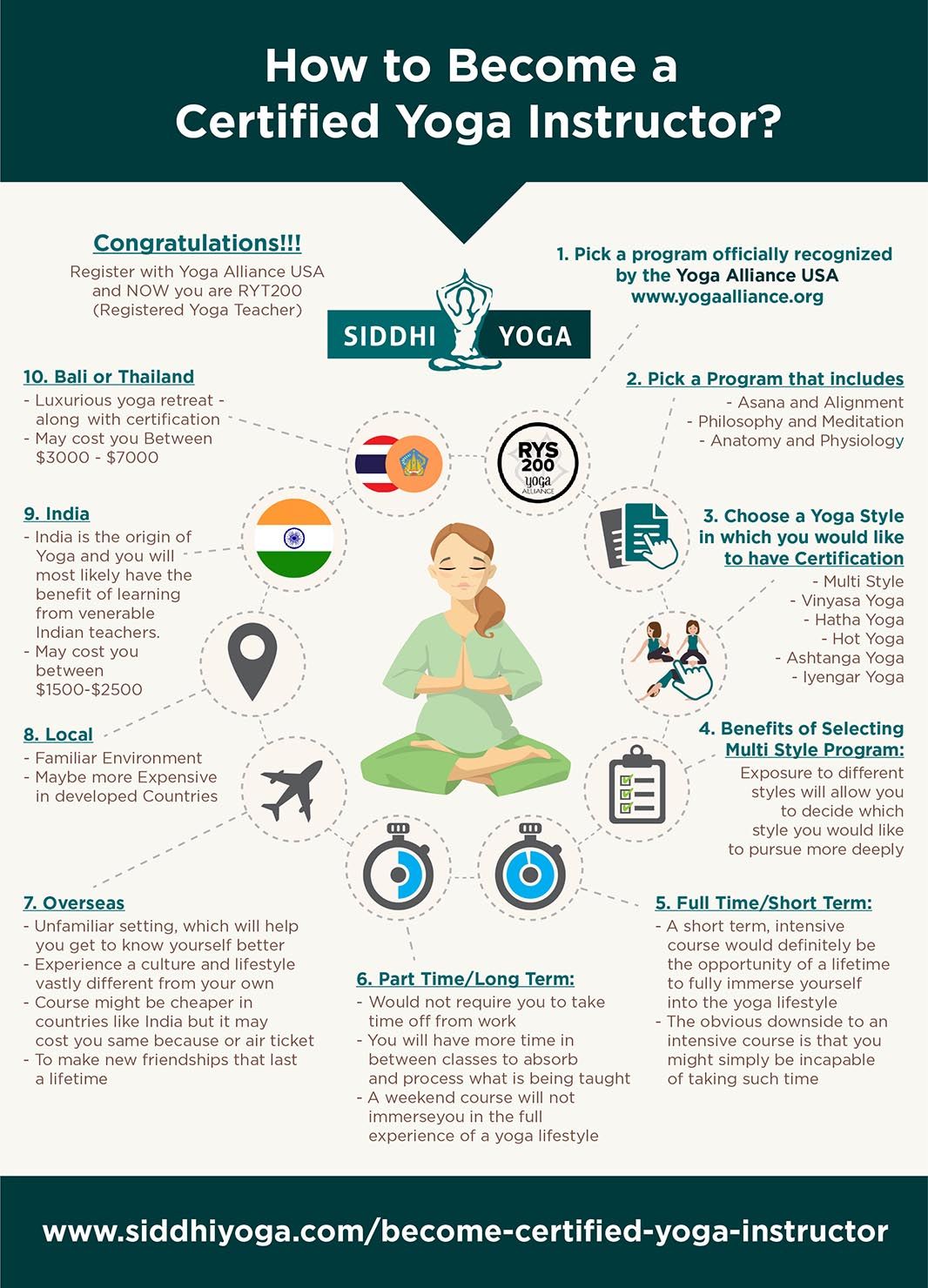
Image Source: www.siddhiyoga.com
What Does Yoga Certification Mean?
Many people ask, “What does it mean to be certified in yoga?” Becoming a certified yoga instructor means you have finished a special training program. This program teaches you about yoga. It covers poses, breathing, and more. It also teaches you how to teach others. There is no single, required certification body in the world. But one group is very popular in the West. This is the Yoga Alliance. A Yoga Alliance certification is widely recognized. It means a school meets certain standards. Finishing a program at a registered school lets you register with Yoga Alliance. This gives you an RYT status. RYT stands for Registered Yoga Teacher. The most common starting level is RYT 200. This means you finished a 200-hour training.
Why People Seek Yoga Certification
Why do people want to become a certified yoga instructor? There are many good reasons.
- To Teach Others: The main reason is to share yoga. You can teach in studios, gyms, or online. You can teach private classes.
- Deepen Your Own Practice: Training goes beyond regular classes. You learn yoga’s roots, its old texts, and its deep ideas. This makes your own practice much stronger.
- Personal Growth: Teacher training can challenge you. It helps you learn about yourself. It can build your confidence.
- Career Change: For some, it’s a path to a new job. Yoga teaching can be a full-time or part-time job.
- Build Community: Training programs connect you with others who love yoga. You meet like-minded people.
- Understand the Body: You learn about anatomy. This helps you and your students stay safe. You learn how poses affect the body.
Getting certified is an investment. It takes time and money. But for many, the rewards are great.
Finding the Right Training Program
Choosing a yoga teacher training program is a big decision. There are many options. Not all programs are the same.
Types of Yoga Teacher Training Programs
Programs usually have a certain number of hours. The most common start is the 200-hour level.
- RYT 200 Hour Training: This is the standard entry point. It covers the basics you need to teach. It includes poses, breathing, teaching methods, anatomy, and yoga ideas. This training lets you register as an RYT 200 with Yoga Alliance.
- RYT 300 Hour Training: You do this after your 200-hour training. It goes deeper into yoga topics. It might focus on certain styles or skills.
- RYT 500 Hour Training: You get this by finishing a 200-hour program and a 300-hour program. Or you can finish a single 500-hour program. An RYT 500 is a more advanced teacher.
Beyond these hour levels, programs can focus on different yoga styles. Examples include Hatha, Vinyasa, Ashtanga, Yin, Restorative, or Kids Yoga. Think about what style you want to teach.
Grasping Yoga School Accreditation
What makes a school “accredited” or “registered”? In the yoga world, this often points to Yoga Alliance registration. Yoga Alliance is a non-profit group. It sets standards for yoga schools (Registered Yoga Schools, or RYS) and teachers (Registered Yoga Teachers, or RYT).
- Yoga Alliance Certification: Schools register with Yoga Alliance by showing they meet certain rules. These rules cover curriculum, teacher experience, and hours. Finishing a training at a Registered Yoga School (RYS) is key if you want to become an RYT.
- Yoga School Accreditation: The term “accreditation” is sometimes used more broadly. Some schools might have other types of business accreditation. But for teacher training, Yoga Alliance registration is the most recognized standard, especially in North America. When looking for programs, check if the school is an RYS.
Choosing a registered school is important if you want the RYT title. However, some great schools exist that choose not to register. Their training can still be excellent. Think about your goals. Do you need the RYT title for jobs? Many studios prefer or require teachers to be RYT.
Program Formats
Yoga teacher training programs come in different formats:
- Intensive: These are fast-paced. They might last 2-4 weeks. You live at the training site or focus on it fully every day. This is great if you have time off work.
- Part-Time/Modular: These spread out over several months. Classes might be on weekends or evenings. This works well if you need to keep your job or daily life going.
- Online Yoga Certification: Yes, you can now get certified online. Many schools started offering online training during the pandemic. Yoga Alliance has allowed RYS schools to offer online programs, though rules can change. An online yoga certification offers flexibility. You can learn from anywhere.
Each format has pros and cons. Intensives are immersive but demanding. Part-time is flexible but takes longer. Online is convenient but requires self-discipline. Think about your lifestyle and learning style.
The Yoga Training Journey
What do you actually do in a yoga teacher training program? It’s more than just practicing poses. Yoga teacher training requirements cover many areas.
Core Subjects
Most 200-hour programs cover these main topics:
- Techniques, Training, and Practice: This includes learning poses (asanas), breathing (pranayama), and meditation. You practice them deeply. You learn how to do them right and safely.
- Teaching Methodology: How do you teach a class? You learn how to sequence poses. You learn how to give instructions. You learn how to manage a group. You learn how to help students adjust poses (adjustments and assists).
- Anatomy and Physiology: You study the body. How do muscles and bones work in poses? What about body systems? This helps you teach safely and understand why poses feel the way they do.
- Yoga Philosophy, Lifestyle, and Ethics: You learn about yoga’s history. You study old texts like the Yoga Sutras. You learn yoga ethics. How does yoga fit into your life? This part is very important for understanding the full path of yoga.
- Practicum: You practice teaching! You might teach parts of a class. You might teach a full class to your fellow students or teachers. You get feedback to help you improve.
This mix of topics helps you become a well-rounded teacher. You need to know the poses, but also how to share them and why they matter.
Time Commitment
A 200-hour training means you spend about 200 hours on these subjects. How this time is spread out depends on the format.
- Intensive: 200 hours in 2-4 weeks means long days. Often 8-10 hours per day, 6 days a week.
- Part-Time: 200 hours over 3-12 months means shorter sessions. Maybe weekends only (like Friday evening, all day Saturday and Sunday) or weekday evenings.
- Online: Hours are tracked differently. There might be live video calls and hours you spend watching videos or doing homework on your own time.
Be ready for the time commitment. It’s a significant part of your life while you are in training.
Yoga Alliance and RYT Status Explained
Many people aim for Yoga Alliance certification. Let’s look closer at what this means.
What is Yoga Alliance?
Yoga Alliance is a non-profit group. It was started in 1999. Its goal is to set standards for yoga training. It keeps a public online directory. This directory lists registered schools (RYS) and registered teachers (RYT).
Becoming a Registered Yoga Teacher (RYT)
To become an RYT:
- You must finish a training program at a school registered with Yoga Alliance (an RYS).
- The training must meet the minimum hour requirements (like 200 hours for RYT 200).
- You apply and register with Yoga Alliance on their website.
- You pay a fee (application fee and yearly renewal).
Why register with Yoga Alliance?
- Recognition: Many studios look for RYT status. It shows you trained at a school that meets known standards.
- Visibility: You are listed in their online directory. People looking for teachers can find you.
- Community & Resources: Yoga Alliance offers resources, workshops, and sometimes insurance options for members.
- Continuing Education: To keep your RYT status, you need to do Continuing Education (CE) hours every few years. This helps you keep learning.
RYT 200 vs. RYT 500
- RYT 200: Requires finishing a 200-hour RYS program. This is the basic level for teaching public classes.
- RYT 500: Requires finishing a 200-hour RYS program and a 300-hour RYS program (500 hours total) OR finishing a single 500-hour RYS program. It also requires 100 hours of teaching experience after finishing the 200-hour training. This level shows advanced training.
Some teachers get more specialized certifications after their RYT. Like Registered Children’s Yoga Teacher (RCYT) or Registered Prenatal Yoga Teacher (RPYT). These require specific training hours in those areas plus teaching experience.
Is RYT status required to teach yoga? No. You can teach yoga without registering with Yoga Alliance. But it is the most common path for people who want to teach widely. It adds a layer of trust and recognition.
The Cost of Becoming Certified
What is the yoga teacher training cost? This is a big question for many people. The cost can vary a lot.
What Influences the Cost?
- Location: Training in a big city or a popular retreat spot might cost more. Training in smaller towns or online might be cheaper.
- School Reputation: Well-known schools or those with famous teachers might charge more.
- Format: Intensive retreats often cost more upfront. This is because they may include food and lodging. Part-time local programs cost less per month but add up over time.
- Inclusions: Does the price cover books? Special workshops? A yoga mat? Travel? Food? Check what is included.
- RYT Level: A 200-hour training costs less than a 300-hour or 500-hour training.
Price Ranges
Generally, a 200-hour yoga teacher training cost can range from $1,500 to $4,000 or more in the US.
- Budget-Friendly: Online yoga certification or local smaller studios might be on the lower end ($1,500 – $2,500).
- Mid-Range: Most studio-based or part-time programs fall here ($2,500 – $3,500).
- Higher-End: Intensive retreats, trainings with famous teachers, or programs in expensive locations can be $4,000+. If travel, food, and lodging are included, the total can be much higher ($5,000 – $8,000+).
Important Note: The cost is for the training itself. Remember other costs:
- Books and materials.
- Travel to the training site (if not local or online).
- Food and lodging (if not included in intensive).
- Taking extra yoga classes during training (some programs require this).
- Yoga Alliance registration fees ($115 application, $65 yearly as of late 2023/early 2024 – check current fees).
- Getting insurance if you start teaching.
Paying for Training
- Payment Plans: Many schools offer monthly payment plans.
- Early Bird Discounts: Sign up early to save money.
- Scholarships: Some schools offer partial scholarships. Ask the school if they have options.
- Loans: Some people take out personal loans. Be careful with interest rates.
- Saving: Start saving early for the training you want.
Don’t choose a program only based on price. The quality of teaching and the curriculum are very important. Research different options carefully.
Online vs. In-Person Training: A Closer Look
Online yoga certification became much more common recently. Before, Yoga Alliance did not fully recognize online-only training for RYT status. This changed due to world events. Now, many RYS schools offer online options.
In-Person Training
Pros:
- Direct Contact: You are in the room with teachers and students. This allows for hands-on adjustments (when safe and wanted).
- Community: You build strong bonds with your group. Learning together in person creates a special energy.
- Immersion: You are fully focused on yoga during the training hours. Less distraction from home life.
- Real Teaching Practice: You practice teaching in front of real people and get immediate feedback.
Cons:
- Less Flexible: You must be at a certain place at certain times. Harder to fit around work or family.
- More Expensive: Often costs more due to space rental, maybe travel/lodging.
- Limited Options: You are limited to schools near you or places you can travel to.
Online Yoga Certification
Pros:
- Flexible Schedule: Learn at your own pace or join live sessions from anywhere.
- Access to Teachers: You can train with teachers all over the world, not just locally.
- Lower Cost: Often cheaper than in-person programs. No travel costs.
- Learn from Home: Train without leaving your house. Good for people with home duties or health issues.
Cons:
- Less Hands-On: Harder to learn and practice hands-on adjustments safely.
- Requires Self-Discipline: You need to manage your time and stay focused without others physically present.
- Technical Issues: Internet problems can disrupt learning.
- Different Community Feel: Connection with others is digital, not in person.
Yoga Alliance and Online Training
Yoga Alliance has temporary provisions for online training due to global circumstances. Schools registered as RYS could offer online training that counts towards RYT hours. It’s important to check Yoga Alliance’s current rules. These rules could change back in the future. Make sure the online program you choose is from an RYS that is approved to offer online training that counts towards RYT status at the time you enroll.
Which is better? It depends on you. Think about how you learn best. Think about your schedule and budget. Both formats can give you a good foundation to become a certified yoga instructor.
Choosing the Best Program for You
With so many yoga teacher training programs available, how do you pick? Finding the best yoga certification programs takes research.
Factors to Consider
- Your Goals: Why do you want to get certified? To teach a specific style? For personal growth? To teach a certain group (kids, seniors)?
- Yoga Style: What style do you practice and love? Vinyasa, Hatha, Yin? Choose a program that focuses on or includes the styles you are interested in.
- School’s Reputation: Research the school. How long have they been around? Read reviews from past students. Look at their website.
- Lead Teachers: Who is teaching the program? What is their experience? Have they been teaching for many years? Do they have higher RYT levels or special training?
- Curriculum: Does the program meet the Yoga Alliance requirements if RYT is your goal? Look at the detailed schedule. Does it cover the topics you care about? Is there enough practice teaching time?
- Location and Format: Does the location work for you? Is the intensive, part-time, or online format best for your life?
- Cost: Does the price fit your budget? Are there payment options? Remember to factor in extra costs.
- Program Dates: Do the dates fit your schedule?
- Class Size: Some people prefer small groups for more attention. Others like bigger groups. Ask about class size.
- Post-Training Support: Does the school offer anything after the training? Like help finding jobs, mentorship, or chances to assist classes?
Do Your Homework
- Talk to the School: Contact the program director. Ask questions about the curriculum, teachers, schedule, and cost.
- Read Reviews: Look for reviews online from people who completed the training.
- Visit the School (If local): If possible, visit the studio. Take a class there. See if you like the energy and teaching style.
- Talk to Graduates: Ask the school if you can talk to someone who finished the program.
- Trust Your Gut: After researching, see how you feel about the program. Does it feel like the right fit for you?
Choosing the right program is key to a good experience and a strong start as a teacher. Don’t rush this step.
Interpreting Training Requirements: What You’ll Study
Let’s look closer at the content of a typical RYT 200 hour training. Understanding these areas helps you know what to expect.
Techniques, Training, and Practice (Approx. 100 hours)
This is the largest part.
* Asanas (Poses): You learn many poses. How to do them safely. How to teach them. How to help students in poses. You learn pose names (often in Sanskrit and English). You learn how to use props like blocks and straps.
* Pranayama (Breathing): You study different breathing methods. How they affect the body and mind. How to teach simple breathing exercises.
* Meditation: You learn different ways to meditate. How to guide others in simple meditations.
* Chanting & Mantra: Some programs include learning chants or mantras.
* Other Traditional Techniques: May include mudras (hand gestures) or bandhas (energy locks).
Teaching Methodology (Approx. 25 hours)
This part focuses on how to be a teacher.
* Sequencing: How to put poses together to create a class flow. How to plan classes for different levels or goals.
* Cuing: Learning the words you use to guide students into and out of poses. Clear and simple instructions are key.
* Demonstration: How to show poses clearly.
* Observation: Learning how to watch your students. Seeing how they move and what they need.
* Assisting and Adjusting: How to help students physically in poses. This requires careful study of safety and knowing when and how to touch a student (with permission).
* Teaching Styles: Exploring different ways to teach. Finding your own voice and style.
* Business Aspects: Some programs cover basics of marketing yourself or finding teaching jobs.
Anatomy and Physiology (Approx. 20 hours)
Learning about the body is crucial for safe teaching.
* Physical Anatomy: Bones, muscles, joints. How they move in poses. Common injuries and how to avoid them.
* Subtle Anatomy: Chakras, nadis (energy channels), prana (life force). This is a less scientific but important part of yoga’s view of the body.
* Safety: How to modify poses for injuries, pregnancy, or other conditions. When not to do a pose.
Yoga Philosophy, Lifestyle, and Ethics (Approx. 30 hours)
This goes into the deeper meaning of yoga.
* History of Yoga: Where did yoga come from? Different paths of yoga.
* Yoga Texts: Studying texts like the Yoga Sutras of Patanjali, the Bhagavad Gita, or the Hatha Yoga Pradipika. Learning key concepts like the Eight Limbs of Yoga.
* Ethics for Yoga Teachers: How to act as a teacher. Student-teacher relationships. Professional conduct.
* Yoga Lifestyle: Bringing yoga ideas into daily life. Concepts like non-violence (ahimsa) or truthfulness (satya).
Practicum (Approx. 10 hours)
This is your chance to teach!
* Practice Teaching: Teaching parts of a class or full classes to your peers.
* Receiving Feedback: Getting helpful input from your teachers and fellow students.
* Giving Feedback: Learning how to give helpful feedback to others.
* Observing Others: Watching experienced teachers or your peers teach.
Total hours often add up to 200. Yoga Alliance has minimum hours for each category. Registered schools follow these rules. When comparing yoga teacher training programs, look at how many hours are spent on each topic. Does it match what you want to learn?
Fathoming Program Options: Diving Deeper
Let’s explore the variety in yoga teacher training programs beyond the basic hours and formats. The best yoga certification programs often have something special about them.
Style Specialization
While a 200-hour is foundational, many programs lean towards a specific style.
* Vinyasa: Focus on flowing from one pose to the next with breath. Programs teach creative sequencing.
* Hatha: Often focuses on holding poses longer. Programs may explore alignment deeply.
* Yin: Targets deep connective tissues. Training focuses on long holds, anatomy of fascia, and passive stretches.
* Restorative: Uses props to support the body in gentle poses. Training teaches deep relaxation techniques.
* Ashtanga: Follows a set series of poses. Training is very disciplined and structured.
* Kundalini: Focuses on energy work, chanting, and specific breath techniques.
If you are passionate about a style, find a training that centers around it. This can make your learning more focused and enjoyable.
Lineage and Tradition
Some schools follow a specific yoga lineage or tradition. This means they trace their teaching back to a certain teacher or school of thought (like Kripalu, Iyengar, or Ashtanga from Pattabhi Jois). Training in a specific lineage gives you a deep look into that tradition’s practices and philosophy.
Focus Areas
Beyond style, programs can focus on:
* Alignment-based: Heavy focus on correct body positioning in poses.
* Flow-based: More emphasis on movement and breath linking.
* Philosophy-heavy: More time spent studying ancient texts and concepts.
* Anatomy-focused: Deeper dive into how the body works.
* Therapeutic: May introduce how yoga can help with injuries or health conditions (Note: Becoming a yoga therapist is a separate, more extensive training).
Think about what aspects of yoga interest you most. Look for programs that highlight those areas.
Combining Formats
Some schools mix formats. They might have online learning for some theory parts and in-person sessions for practice teaching and hands-on skills. This can offer flexibility while keeping some benefits of in-person training.
Overseas Training
Many people travel for intensive yoga teacher training programs. Places like India, Bali, or Costa Rica are popular.
* Pros: Deep immersion, cultural experience, often beautiful locations.
* Cons: Higher cost (travel, visa), may need to adjust to different food/culture, need to take significant time off.
When looking for the best yoga certification programs, consider what ‘best’ means for you. It’s not about the most famous school, but the one that fits your needs, goals, and learning style.
What Happens After Certification?
You finished your RYT 200 hour training! Now what? Your journey as a teacher is just starting.
Getting Teaching Experience
This is crucial for becoming a better teacher.
* Teach Friends/Family: Start with people you know. It reduces pressure.
* Offer Free Classes: Teach in parks, community centers, or online for free or donation. Get practice and feedback.
* Assistant Teach: Ask experienced teachers if you can help them in class. You learn a lot by watching and assisting.
* Subbing: Offer to substitute for teachers at studios. This helps you get known.
* Finding a Job: Look for jobs at yoga studios, gyms, community centers, schools, or corporate offices. Be prepared to audition (teach a sample class).
Many new teachers don’t make a lot of money at first. It takes time to build a following or get regular teaching spots.
Continuing Education (CE)
Yoga Alliance requires RYTs to complete CE hours every three years to keep their registration active. This means taking workshops, advanced trainings, or studying related topics. CE helps you:
- Learn new skills (like teaching specific groups or styles).
- Deepen your knowledge.
- Stay inspired.
- Connect with other teachers.
Consider taking workshops on anatomy, adjustments, specific pose breakdowns, or teaching special populations.
Advanced Training (300 or 500 Hours)
Many teachers continue their education by taking a 300-hour training to reach the RYT 500 level. This allows you to study more advanced topics and refine your skills. It shows a higher level of commitment and knowledge.
Specializing
After your basic training, you might want to specialize.
* Prenatal Yoga
* Kids Yoga
* Senior/Chair Yoga
* Yoga Therapy (requires extensive training)
* Specific Anatomy or Philosophy Focus
Getting certified is the foundation. Building a teaching career takes time, practice, learning, and passion.
Frequently Asked Questions about Yoga Certification
Here are answers to common questions about how to get a yoga certification.
Q: How long does it take to become a certified yoga instructor?
A: A 200-hour training can take from 2-4 weeks (intensive) up to a year or more (part-time or online). After the training, becoming a confident teacher takes ongoing practice.
Q: Do I need to be able to do difficult yoga poses to become a teacher?
A: No. You need to understand the poses and how to teach them safely. You need to have a personal practice. You don’t need to do every pose perfectly or do advanced poses. Focus on clear teaching and safety.
Q: What are the minimum yoga teacher training requirements to start training?
A: Most 200-hour programs don’t have strict pose requirements. They often ask that you have practiced yoga regularly for at least 6 months to a year. You should have a basic knowledge and love for yoga.
Q: Is Yoga Alliance certification necessary?
A: No law says you must be Yoga Alliance registered to teach. However, many studios prefer or require it. It’s a widely recognized standard. If you plan to teach professionally, it’s highly recommended.
Q: Can I make a living as a yoga teacher?
A: It is possible, but it takes time and effort. Many yoga teachers teach part-time. Building a full-time career often means teaching many classes, offering private sessions, leading workshops, or running your own studio. The yoga teacher training cost is an investment you hope to earn back over time.
Q: Are online yoga certification programs accepted by studios?
A: This varies. During the period Yoga Alliance accepts online hours for RYT status, studios that require RYT may accept it. However, some employers might still prefer or value in-person training more. Ask studios in your area what they require.
Q: How much does RYT 500 hour training cost?
A: A 300-hour program (which you add to a 200-hour to get RYT 500) can cost roughly $2,000 to $5,000 or more, similar to a 200-hour training. A single 500-hour program might cost $4,000 to $7,000+. Costs depend on location, school, and format.
Q: How do I find the best yoga certification programs?
A: Research schools online (look at Yoga Alliance directory if RYT is a goal). Read reviews. Talk to teachers you admire about where they trained. Contact schools and ask questions. Consider your goals, budget, and schedule.
Conclusion
Getting a yoga certification is a journey. It starts with a deep interest in yoga. It moves through choosing the right training program. It involves hard work during your RYT 200 hour training (or RYT 500 hour training). It might include getting a Yoga Alliance certification. It requires facing the yoga teacher training cost. Whether you choose online yoga certification or in-person study, the goal is to learn safely and effectively.
Becoming a certified yoga instructor opens doors. It lets you share the gifts of yoga with others. It deepens your own path. By researching yoga teacher training requirements and exploring different yoga teacher training programs, you can find the perfect fit to become the best yoga teacher you can be. Good luck on your path!