
Image Source: www.mariasfarmcountrykitchen.com
Your Step-By-Step Guide On How To Practice Yoga Now
Are you wondering how to start yoga? Can anyone do yoga? Yes, anyone can start yoga right now, even if you are a complete beginner. This guide will show you how to begin your yoga journey step by step.
Why Do Yoga?
Lots of people do yoga. They find many good things come from it. What are these good things? Let’s look at some big yoga benefits.
Feeling Better in Your Body
Yoga helps your body feel good.
- It makes your muscles stronger.
- It helps you move more easily.
- It can make aches go away.
Moving More Freely
Many people want to bend and stretch better. Yoga is great for this. It helps with yoga for flexibility.
- You can reach further.
- You can bend lower.
- Your body feels less stiff.
Feeling Calmer in Your Mind
Yoga is not just for the body. It helps your mind too.
- It can make you feel less worried.
- It helps you feel peaceful inside.
- It makes it easier to handle stress.
Breathing Better
Yoga teaches you how to use your breath. This is called pranayama.
- Good breathing calms you down.
- It gives your body more energy.
- It helps you focus.
Being More Mindful
Yoga helps you notice things more. You pay attention to your body. You notice how you feel. This is a form of meditation practice.
Getting Ready to Start
Before you do any yoga poses, you need a few things. You also need to pick a place and time.
What You Need
You do not need much to start.
- A Yoga Mat: This is very helpful. A yoga mat stops you from slipping. It makes hard floors softer for your knees and hands. You can find simple mats online or in stores. Get one that feels good to you.
- Comfy Clothes: Wear clothes you can move in easily. They should not be too tight or too loose. Things like leggings, shorts, or sweatpants work well. A simple t-shirt or tank top is fine for the top.
- A Quiet Spot: Find a place where you will not be bothered. It can be in your living room. It can be a corner in your bedroom. Just make sure you have space to stretch out.
- Maybe a Blanket or Pillow: Sometimes these help make poses more comfy. A rolled blanket can support your knees. A pillow can make sitting easier.
Picking a Time
When should you practice? The best time is when you can do it.
- Some like the morning. It starts the day feeling good.
- Some like the evening. It helps let go of the day’s stress.
- Even 15-20 minutes is okay. Doing a little often is better than doing a lot sometimes.
Starting Your First Practice
Okay, you have your mat and space. You are ready for beginner yoga. Let’s start simple.
Warm Up Slowly
Just like any movement, start slow. This gets your body ready.
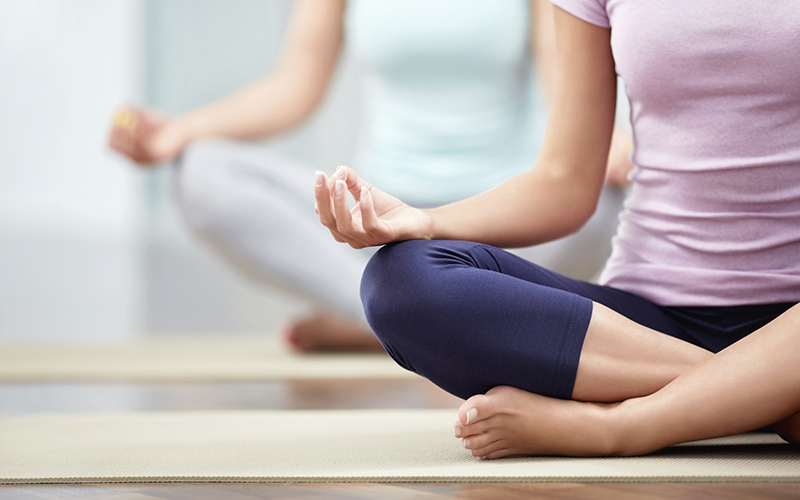
- Sit on your mat. Cross your legs if that feels okay.
- Close your eyes gently.
- Take a few slow breaths. Breathe in through your nose. Breathe out through your nose.
- Roll your shoulders up and back a few times.
- Roll your head gently side to side.
- Lift your arms up as you breathe in. Lower them as you breathe out. Do this a few times.
Simple Poses to Begin
These are some easy yoga poses to try first. They help you feel how your body moves. Do not push too hard. Just do what feels okay today.
Mountain Pose (Tadasana)
- Stand up tall. Put your feet together or a little apart.
- Let your arms hang down by your sides. Your palms face forward.
- Stand straight like a tall mountain. Feel your feet on the ground.
- Breathe here for 5-8 breaths.
Standing Forward Bend (Uttanasana – partial)
- From Mountain Pose, breathe in.
- As you breathe out, bend forward from your hips. Keep your legs mostly straight.
- Let your head hang down. Your hands can touch the floor. Or they can rest on your legs. Do not worry if you cannot touch the floor.
- Let your back relax. Let your neck relax.
- Breathe here for 3-5 breaths.
- To come up, bend your knees a little. Roll your back up slowly.
Downward-Facing Dog (Adho Mukha Svanasana)
- Start on your hands and knees. Your hands are under your shoulders. Your knees are under your hips.
- Spread your fingers wide.
- Press into your hands. Lift your hips up high.
- Make your body like an upside-down ‘V’.
- You can keep your knees bent a little. Your heels might not touch the floor. That is okay.
- Let your head relax. Look back at your feet.
- Push the floor away with your hands. Send your hips up and back.
- Breathe here for 5-8 breaths.
- To come out, lower your knees back to the floor softly.
Child’s Pose (Balasana)
- Start on your hands and knees.
- Bring your big toes to touch. Open your knees wide, or keep them closer.
- Sit your hips back onto your heels.
- Walk your hands forward on the mat.
- Rest your forehead on the mat.
- Let your arms relax forward or back by your sides.
- This pose is a resting pose. Use it any time you feel tired.
- Breathe here for as long as you like.
Simple Seated Twist
- Sit on your mat. Cross your legs if comfy.
- Sit up tall.
- Put your right hand on your left knee. Put your left hand on the floor behind you.
- As you breathe in, sit taller.
- As you breathe out, gently turn your body to the left.
- Turn your head to look over your left shoulder. Do not force the twist.
- Breathe here for 3-5 breaths.
- Come back to the middle slowly.
- Now do the other side. Put your left hand on your right knee. Put your right hand behind you. Turn gently to the right.
Corpse Pose (Savasana)
- This is the last pose. It helps your body rest and take in the good feelings from yoga.
- Lie flat on your back on your mat.
- Let your legs fall open. Your feet turn out to the sides.
- Let your arms rest by your sides. Your palms face up.
- Close your eyes gently.
- Let your whole body feel heavy on the floor.
- Try not to move. Just breathe and be still.
- Stay here for 5-10 minutes if you can.
- To finish, wiggle your fingers and toes. Gently stretch your arms over your head. Bend your knees. Roll onto your side. Push yourself up slowly to a seated spot.
Putting Poses Together: A Simple Yoga Sequence
Doing poses one after another makes a yoga sequence. Here is a simple one for beginners.
- Start sitting on your mat. Take a few slow breaths (warm up).
- Stand up for Mountain Pose (Tadasana). Stay for a few breaths.
- Bend forward gently into Standing Forward Bend (Uttanasana partial). Stay for a few breaths.
- Put hands on the floor or legs. Step or walk feet back to hands and knees.
- Push back into Downward-Facing Dog (Adho Mukha Svanasana). Stay for 5-8 breaths.
- Lower knees to the floor. Sit back into Child’s Pose (Balasana). Rest for 5-8 breaths.
- Come back up to sitting. Do the Simple Seated Twist on both sides.
- Lie down on your back for Corpse Pose (Savasana). Rest for 5-10 minutes.
This is just an idea. You can change it. Do more or less of each pose. Stay longer in poses you like. Skip ones that do not feel good.
Breathing in Yoga: Pranayama
Breathing is a big part of yoga. Pranayama means controlling your breath. It helps calm your mind and give you energy.
Simple Breath Practice
- Sit up tall. You can sit on a cushion or chair.
- Close your eyes or look softly at the floor.
- Place one hand on your belly. Place the other on your chest.
- Just breathe normally at first. Notice how your belly and chest move.
- Now, try to breathe into your belly first. Feel your belly rise like a balloon.
- Then fill your chest with air.
- Breathe out slowly. Let your chest fall first. Then let your belly fall.
- Breathe in: belly, then chest.
- Breathe out: chest, then belly.
- Do this for 5-10 breaths. This is called belly breathing. It is very calming.
Lengthening Your Breath
Once belly breathing is easy, try making your breaths longer.
- Breathe in slowly for a count of 4.
- Breathe out slowly for a count of 4.
- Keep breathing like this. Make your breath smooth. Do not hold your breath.
- You can try counting to 5 or 6 if 4 is easy.
- Do this for a few minutes.
Breathing like this helps your body relax. It tells your mind to slow down. Try it any time you feel stressed.
Quiet Time: Meditation Practice
Yoga often goes with quiet time. This is called meditation practice. It is about sitting still and being aware.
How to Start Simple Meditation
- Find a comfy seat. Sit on a chair or on the floor. Keep your back straight but soft.
- Close your eyes gently.
- Rest your hands on your knees or in your lap.
- Just breathe normally. Do not try to change your breath.
- Notice your breath. Feel the air going in and out. Notice your belly or chest moving.
- Your mind will get busy. Thoughts will come. This is normal.
- When you notice your mind wandering, just gently bring your attention back to your breath. Do not be hard on yourself. It takes practice.
- Start with 5 minutes. You can use a timer.
- When the time is up, gently open your eyes. Take a moment before you stand up.
Meditation helps you feel calmer. It helps you focus better. It is a good friend to your yoga practice.
Doing Yoga at Home
Many people start yoga at home. Yoga at home is easy and fits into your day.
Setting Up Your Space
- Find a quiet spot. Make sure you have room to move your arms and legs out.
- Keep it tidy. A clean space helps your mind feel clear.
- Maybe put a plant or a nice picture there. Make it a place you like being.
- Use your yoga mat. This helps mark your space.
Finding Guides
You do not need a teacher with you always.
- Look for videos online. There are many free yoga classes for beginners.
- Find apps on your phone or tablet. Some have step-by-step guides.
- Choose guides for beginner yoga. They will use simple words and easy poses.
Making a Routine
Try to do yoga at the same time each day or week. This helps make it a habit.
- Maybe every morning before breakfast.
- Maybe a few evenings a week after work.
- Even 15-20 minutes helps a lot.
Listening to Your Body
This is very important when doing yoga at home.
- Do not try poses that feel wrong or hurt.
- It is okay to skip a pose. It is okay to rest in Child’s Pose.
- Your body is your teacher. Listen to what it tells you.
Different Kinds of Yoga: Meeting Hatha Yoga
There are many types of yoga. One common type for beginners is Hatha yoga.
Interpreting Hatha Yoga
- “Hatha” means forceful or stubborn in an old language. But in yoga, it means joining the sun (Ha) and the moon (Tha). It is about bringing things together.
- Hatha yoga usually involves holding yoga poses for a few breaths. It is slower than some other types.
- It is great for learning the basic yoga poses. It helps you build strength and flexibility.
- Classes often include pranayama (breathing) too.
If you look for a beginner class, Hatha yoga is a great place to start. It gives you a good base for any other yoga you might try later.
Making Your Practice Stronger
Once you feel good with the basics, you can do a little more.
Trying New Poses
Look up other yoga poses that seem interesting. Try them slowly. Some to look at might be:
- Warrior II (Virabhadrasana II)
- Tree Pose (Vrksasana)
- Cobra Pose (Bhujangasana)
- Bridge Pose (Setu Bandhasana)
Remember to learn how to do them safely. Videos or books can help.
Longer Sequences
You can link more poses together. Build a longer yoga sequence.
- Start with a warm-up.
- Do standing poses.
- Do poses on the floor.
- Finish with a resting pose (Savasana).
You can find ideas for sequences online. Or make up your own! Just make sure it flows well.
Adding Breathing and Quiet Time
Give more time to pranayama and meditation practice.
- Try different breathing methods you find in beginner guides.
- Sit for 10 minutes or more for meditation.
These parts of yoga help your mind as much as poses help your body.
Thinking About Flexibility
You will likely feel more flexible as you do yoga. This is a great yoga benefit.
- Notice how your body changes over time. Can you reach further? Can you bend easier?
- Remember flexibility is not the only goal. Being strong and balanced is also key.
- Do not compare your flexibility to others. Everyone is different. Just focus on your own body. Yoga is for you.
Sticking With It
Doing yoga often is key to feeling the yoga benefits.
Be Patient
Getting good at yoga takes time. Some poses will be hard at first. That is okay!
- Celebrate small wins.
- Know that every time you practice, you are doing something good for yourself.
Be Kind to Yourself
Some days will feel easier than others. Some days you might not want to practice.
- It is okay to take a break.
- Come back to it when you are ready.
- Yoga is not about being perfect. It is about being present.
Mix It Up
Try different teachers if you use videos. Try different styles once in a while.
- Maybe try a slow Flow class after doing Hatha for a while.
- This keeps things interesting.
Record Your Journey
You can write down how you feel after practice. Note poses you like. Note things that are hard. This helps you see how far you have come.
Practicing Yoga Safely
Yoga is generally safe. But here are a few things to keep in mind.
Listen to Pain
If a pose hurts in a sharp way, stop. Do not push into pain. There is a difference between a stretch and pain. Learn to know the difference.
Use Props
Blankets, blocks, and straps are your friends. They help you get into poses without straining.
- A block can make the floor “closer” in a forward bend.
- A strap can help you reach your foot in a stretch.
- A blanket can cushion your knees.
Do Not Eat a Big Meal Before
It is best not to do yoga right after eating a lot. Wait an hour or two.
Stay Hydrated
Drink water before and after your practice.
The Journey of Yoga
Starting beginner yoga at home is simple with a yoga mat and a quiet spot. By trying simple yoga poses and a basic yoga sequence, you begin to feel the good effects. Adding pranayama and a little meditation practice helps your mind too. Hatha yoga is a great style to learn the basics. Doing yoga at home helps you build a habit. Over time, you will find more strength, more yoga for flexibility, and more calm. Enjoy the journey!
Frequently Asked Questions (FAQ)
Can I do yoga every day?
Yes, you can do yoga every day. Even a short practice (like 15-20 minutes) is good. Just listen to your body and rest if you feel tired.
What if I am not flexible?
It is okay if you are not flexible. Yoga helps you become more flexible over time. Start with simple poses and do not try to push too deep. Everyone starts somewhere! Yoga is for everyone, no matter how flexible you are now.
What is the best time of day for yoga?
The best time is the time that works for you. Some people like the morning to wake up the body. Others like the evening to relax before bed. Try different times and see what feels best. Being able to do it regularly is more important than the exact time.
Do I need special yoga clothes?
No, you do not need special clothes. Just wear clothes that let you move freely. They should not be too tight or too loose. Comfy workout clothes you already have are fine.
How long should a yoga practice be?
It can be as short as 10-15 minutes. It can be an hour or more. For beginners, 20-30 minutes is a good start. Do what fits your schedule and energy level. Even a short practice is helpful.
Is yoga a religion?
No, yoga is not a religion. People from any background can practice yoga. It is a way to exercise the body and calm the mind. Some people see it as a spiritual practice, but it does not belong to one specific religion.
What if a pose feels hard or painful?
If a pose feels hard, try a simpler version or use a prop like a block or blanket. If it feels painful (sharp pain), stop doing that pose. Listen to your body. Pain means something is not right. It is okay to skip poses that do not feel good.