
What is a yoga strap? A yoga strap is a simple but powerful tool, often made of cotton or nylon, with a buckle or loop at one end. Can I use a yoga strap? Yes, absolutely! It’s perfect for anyone who wants to stretch deeper or needs a little help reaching parts of their body. Who is a yoga strap for? It’s great for everyone – from people new to yoga and those with tight muscles to experienced yogis looking to refine poses. It helps bridge the gap between where you are now and where you want your stretch to go. Using a yoga strap can make many poses easier and safer. It helps you get a gentle stretch without straining or risking injury.
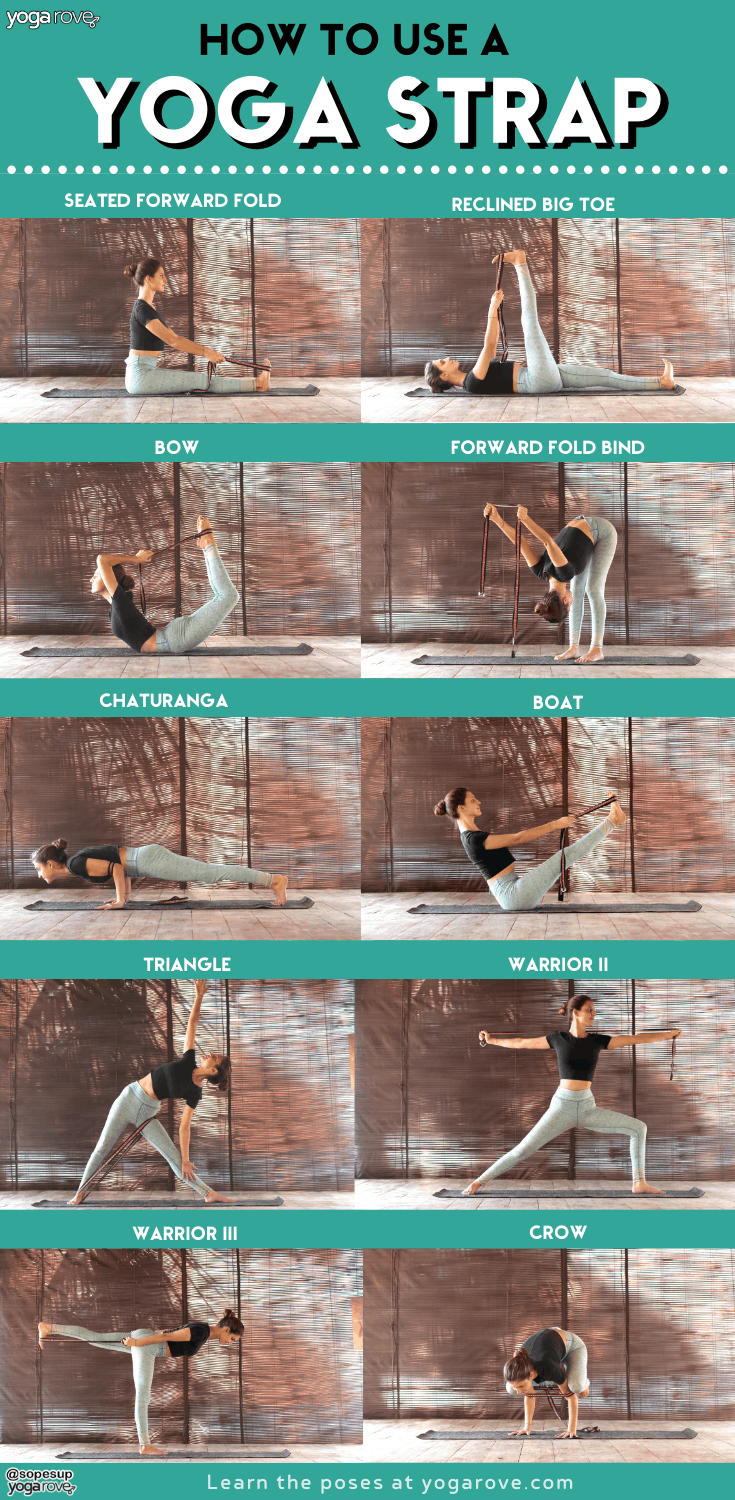
Image Source: yogarove.com
Deciphering the Yoga Strap
A yoga strap looks simple. It is a long strip of material. It usually has a buckle at one end. This buckle lets you make a loop of any size. You can also just hold the ends of the strap. The strap becomes an extension of your arms. It helps you reach your feet, your hands, or other parts of your body that feel far away. Think of it as a helpful friend that makes stretches feel more possible.
Yoga Strap Benefits: Why Use One?
There are many good reasons to add a strap to your stretching time. Using a yoga strap can change your practice. It can make poses you thought were too hard suddenly feel okay.
- Better Reach: The strap helps you touch your toes or hold onto your foot even if you can’t reach it with your hand. This is a big benefit for yoga strap for flexibility.
- Deeper Stretches: By giving you something to hold onto, the strap lets you gently pull yourself deeper into a stretch. This helps loosen tight muscles over time.
- Correct Form: A strap can help you keep the right shape in a pose. Instead of bending or rounding your back to reach, the strap lets you sit tall and stretch safely.
- Holding Poses Longer: When you use a strap, you might feel less strain. This means you can stay in a stretch longer. Holding stretches helps muscles relax and lengthen.
- Safe Practice: The strap helps you avoid overstretching or hurting yourself. It gives you control over how much you pull. This is a key part of yoga strap safety.
- Accessibility: People with injuries, tight muscles, or less mobility can do many poses using a strap. It makes yoga open to more people.
- Muscle Relaxation: By allowing for a gentle hold, the strap encourages your muscles to let go. This leads to deeper relaxation in the stretch.
These yoga strap benefits make it a valuable tool. It helps you work towards greater flexibility in a smart way.
Types of Yoga Straps
Yoga straps come in different materials and lengths. Knowing a little about them helps you pick the right one.
-
Material:
- Cotton: This is the most common type. Cotton straps are soft and feel natural. They have a good grip. They are also durable.
- Nylon: Nylon straps are smooth and strong. They might slip a little more than cotton, but they are very tough.
- Polyester: Similar to nylon, polyester is strong and smooth.
-
Length:
- 6 Feet (about 1.8 meters): This is a common length. It works well for many people and many poses.
- 8 Feet (about 2.4 meters): This length is better if you are tall or have less flexibility. It gives you more room to work with. It is good for poses where you need to wrap the strap around yourself or need a longer reach.
- 10 Feet (about 3 meters): This length is for very tall people or specific uses where a lot of length is needed.
-
Buckle:
- D-Ring Buckle: This is a popular choice. It has two rings shaped like the letter D. You thread the strap through both rings, then back through one. This makes a loop that locks tightly. It is easy to adjust.
- Plastic Cinch Buckle: Some straps have a plastic buckle that cinches down. These are lightweight but may not hold as tightly as D-rings, especially under strong pull.
For most people starting out, a cotton strap about 8 feet long with a D-ring buckle is a good choice. It gives you enough length for various yoga strap poses and the cotton provides good grip.
Here is a quick look at types of yoga straps:
| Feature | Common Type (Cotton with D-rings) | Other Options (Nylon/Polyester) |
|---|---|---|
| Material | Cotton (soft, good grip) | Nylon or Polyester (smooth, very strong) |
| Length | 6 ft or 8 ft most common | Up to 10 ft |
| Buckle | D-ring (secure, easy adjustment) | Plastic cinch (lighter, may slip) |
| Feel | Natural, a bit rough | Smooth |
| Best For | General use, holding poses steadily | When high strength needed, smooth gliding |
Mastering Yoga Strap Adjustment
Knowing how to use the buckle is key. Most straps use D-rings. Learning yoga strap adjustment is simple.
- Take one end of the strap.
- Push that end through both D-rings.
- Pull the strap through until you have a loop of the size you want.
- Now, thread the end of the strap back only through the first D-ring.
- Pull it tight.
The strap should now form a loop that holds firmly. To make the loop smaller, pull the loose end. To make it bigger, pull the strap from the looped side, near the rings. Practice this a few times. You need to be able to adjust the strap easily during your practice. This helps you get the right length for each yoga strap stretch.
Basic Ways to Hold and Use the Strap
Before trying specific poses, let’s look at how you will hold the strap.
- Holding the Ends: You can hold the loose ends of the strap in your hands. The middle of the strap goes around your foot, back, or shoulder. This is good for pulls and stretches where you control the tension directly.
- Using a Loop: Make a loop using the buckle. This loop can go around your foot, your hands, or a limb. Holding the loose end lets you pull to tighten the loop and deepen the stretch. This is great for holding stretches without needing a strong grip in your hands.
Always keep your grip relaxed. Don’t grip the strap so hard your knuckles turn white. Let the strap do the work. Focus on your breath as you stretch.
Yoga Strap Stretches and Poses
This is where the real magic happens. We will explore many yoga strap stretches and yoga strap poses. These moves use the strap to improve your flexibility. They cover different parts of the body. This section includes yoga strap exercises that focus on range of motion and stretching. We will pay special attention to common tight spots like hamstrings.
Stretches for Legs and Hamstrings
Tight hamstrings are very common. They can affect your lower back and hips. Using yoga strap for tight hamstrings is one of its best uses.
H3: Lying Hamstring Stretch
This is a classic. It gently stretches the back of your leg.
-
How to do it:
- Lie flat on your back on the floor. Keep one leg straight on the ground.
- Bend the other knee. Loop the middle of the yoga strap around the ball of this foot. Hold the ends of the strap with both hands.
- Gently straighten the leg with the strap. Keep your knee soft, not locked.
- Slowly pull the strap towards you. Pull until you feel a stretch in the back of your thigh (your hamstring).
- Keep your back flat on the floor. Try to keep the straight leg grounded.
- Hold for 30 seconds to 1 minute. Breathe deeply.
- Lower the leg slowly. Switch sides.
-
Tips: Don’t pull so hard it hurts. The stretch should feel good, not painful. Use the strap to keep your leg straight, not to yank it towards your face. This is perfect using yoga strap for tight hamstrings.
H3: Seated Forward Fold (Paschimottanasana Prep)
If you can’t reach your feet in a seated forward bend, the strap is your friend.
-
How to do it:
- Sit on the floor with your legs straight out in front of you. Flex your feet (point toes up). You can sit on a folded blanket if your hips are tight.
- Loop the strap around the balls of both feet. Hold the ends of the strap.
- Sit up tall, lengthen your spine.
- Keeping your back straight, gently hinge forward from your hips. Pull gently on the strap.
- Imagine reaching your chest towards your feet, not your head. Keep your spine long.
- Stop when you feel a stretch in your hamstrings and back.
- Hold for 30 seconds to 1 minute.
- Slowly sit back up.
-
Tips: Avoid rounding your back. The goal is a straight-back stretch. The strap lets you reach without hunching. This is a great yoga strap for flexibility move for the back of the body.
H3: Reclining Big Toe Pose (Supta Padangusthasana Prep)
This pose stretches the hamstrings and hips. The strap makes it possible even with tight legs.
-
How to do it:
- Lie on your back. Keep one leg straight on the floor.
- Bend the other knee towards your chest. Loop the strap around the ball of this foot.
- Hold both ends of the strap in the hand on the same side as the bent leg.
- Gently straighten the leg with the strap towards the ceiling. Keep the grounded leg heavy on the floor.
- Slowly start to move the raised leg out to the side, keeping it straight. Let it go only as far as it stays straight and your other hip stays on the floor.
- Hold for 30 seconds to 1 minute.
- Bring the leg back to center.
- Now, hold both strap ends in the hand opposite the raised leg. Gently pull the leg across your body slightly. Keep both shoulders on the floor. This gives a different stretch to the outer hip and IT band.
- Hold for 30 seconds.
- Bring the leg back to center and lower it. Switch sides.
-
Tips: Use the strap to support the leg’s weight. Focus on the stretch in the hamstring (when moving out) and the outer hip/side of the leg (when moving across). This is a versatile yoga strap pose for lower body flexibility.
Stretches for Shoulders and Chest
Many people have tight shoulders from sitting or computer work. A strap can open the chest and shoulders.
H3: Shoulder Stretch Behind Back
This move opens the chest and shoulders.
-
How to do it:
- Stand or sit tall.
- Hold the strap with both hands behind your back. Your hands should be wider than your shoulders.
- Gradually move your hands closer together along the strap. Find a width where you feel a stretch across your chest and shoulders.
- Keeping your arms straight (but not locked), gently lift your hands away from your lower back.
- Keep your chest open and shoulders relaxed. Avoid arching your lower back too much.
- Hold for 30 seconds.
- Lower your hands slowly.
-
Tips: Don’t force your hands too close together if it causes pain. The strap helps you find a comfortable width and slowly work towards narrower grips.
H3: Cow Face Pose Arms (Gomukhasana Arms Prep)
This pose stretches the shoulders in opposite directions. A strap helps connect your hands if they don’t reach each other.
-
How to do it:
- Sit tall.
- Take the strap in one hand. Reach that hand up towards the ceiling. Let the strap hang down your back.
- Take your other hand and reach it behind your back, palm facing out. Try to grab the strap.
- Walk your hands closer together on the strap. The top hand pulls down, the bottom hand pulls up.
- Move your hands until you feel a good stretch in both shoulders. Keep your neck relaxed and head neutral.
- Hold for 30 seconds to 1 minute.
- Release slowly. Switch which arm goes up and which goes down.
-
Tips: The strap bridges the gap. Use it to gently encourage your hands closer over time. This is a great yoga strap exercise for shoulder mobility.
Stretches for Hips and Glutes
Tight hips affect everything from walking to sitting. A strap can assist in deep hip stretches.
H3: Pigeon Pose Prep
Pigeon can be intense. Using a strap to pull your back foot closer makes it gentler and helps work on quad and hip flexor flexibility in the back leg.
-
How to do it:
- Start in a position with one knee bent in front (like the front leg of Pigeon Pose). Let the back leg extend straight behind you. You can be on your hands or forearms.
- Bend your back knee. Loop the strap around the ankle or top of the foot of the back leg.
- Hold the ends of the strap with the hand on the same side as the bent knee.
- Gently pull the strap to bring your back foot towards your glutes.
- Keep your hips level. Feel the stretch in the front of the thigh and hip flexor of the back leg.
- Hold for 30 seconds to 1 minute.
- Release slowly. Switch sides.
-
Tips: Do not twist your back. Keep your torso facing forward as much as possible. The strap helps you get the quad stretch without straining your back or hip. This is a good yoga strap pose variation.
H3: Reclining Bound Angle (Supta Baddha Konasana Prep)
This is a relaxing hip opener. A strap can help support the pose.
-
How to do it:
- Lie on your back. Bring the soles of your feet together and let your knees fall open to the sides.
- Make a large loop with your strap.
- Put the strap around your back, just above your hips.
- Bring the strap forward and loop it around your feet. The loop connects your feet to your pelvis.
- Adjust the strap so it gently supports the outer edges of your legs or knees. It shouldn’t feel like it’s forcing your knees down.
- Let your arms rest at your sides. Relax into the stretch.
- Stay here for 1-5 minutes.
- To come out, loosen the strap, bring your knees together, and roll to one side.
-
Tips: The strap offers passive support. It allows your inner thighs and hips to relax open over time. This is a very restorative yoga strap pose.
Stretches for Back and Core
Stretching the back helps with posture and ease of movement.
H3: Boat Pose Prep (Paripurna Navasana Prep)
If keeping your legs straight in Boat Pose is hard, a strap helps you find length.
-
How to do it:
- Sit tall with your knees bent and feet on the floor.
- Loop the strap around the balls of your feet.
- Hold the ends of the strap. Lean back slightly, keeping your spine straight.
- Lift your feet off the floor. You can keep your knees bent or try to straighten them as much as possible while holding the strap.
- Use the strap to help lift your chest and lengthen your spine. Avoid rounding your back.
- Hold for 15-30 seconds.
- Lower your feet.
-
Tips: The strap helps you focus on keeping a long spine and engaging your core. It is an yoga strap exercise that builds strength and flexibility together.
H3: Seated Spinal Twist Prep
Twists help the spine feel mobile. A strap can help you deepen the twist safely.
-
How to do it:
- Sit tall with legs extended or in a comfortable cross-legged position.
- Loop the strap around the foot on the side you plan to twist towards (e.g., right foot if twisting right).
- Hold the strap ends with your hands.
- Inhale and lengthen your spine.
- Exhale and gently twist towards the leg with the strap. Use the strap to help pull your chest around. Keep your back straight.
- Hold for 30 seconds.
- Untwist slowly. Repeat on the other side.
-
Tips: Twist from your torso, not just your neck. The strap gives you leverage for a deeper, controlled twist. This adds to your yoga strap poses for spinal health.
More Yoga Strap Exercises
Beyond just static stretches, you can use a strap for gentle movement yoga strap exercises to improve range of motion.
H3: Arm Circles with Strap
This warms up the shoulder joint.
-
How to do it:
- Stand or sit tall.
- Hold the strap with hands wider than shoulder-width apart.
- Keep your arms straight. Slowly lift the strap overhead, back, and down behind you as far as comfortable.
- Reverse the movement.
- Repeat 5-10 times. Adjust hand width on the strap as needed – wider is easier, narrower is harder.
-
Tips: Only go as far as you can without pain or bending your elbows. The strap keeps your arms in a fixed position relative to each other, highlighting shoulder mobility limits.
H3: Leg Lifts with Strap Support
This helps build core strength while gently stretching.
-
How to do it:
- Lie on your back. Loop the strap around one foot. Hold the strap ends with your hands.
- Keep the leg with the strap fairly straight.
- Engage your core. Slowly lift the other leg off the floor a few inches, keeping it straight.
- Lower the leg slowly.
- Repeat 10-15 times. Switch legs.
-
Tips: Use the strap to support the weight of the first leg, allowing your core to focus on lifting the second leg. Keep your lower back pressed towards the floor. This is a good yoga strap exercise for core control.
Yoga Strap for Beginners
If you are new to using a strap or new to stretching, here are key tips for yoga strap for beginners:
- Start Slow: Do not pull as hard as you can. Gentle tension is enough.
- Listen to Your Body: Stop if you feel sharp pain. A stretch should feel like a lengthen, not a tear.
- Use the Right Length: An 8-foot strap is usually best to start. It offers more options.
- Focus on Breath: Breathe deeply into the stretch. As you exhale, you might find you can go a little deeper.
- Consistency: Using the strap for just a few minutes regularly is better than one long session rarely.
- It’s a Tool, Not a Crutch: The strap helps you get into position and stretch safely. Over time, you might find you need it less for some poses.
- Watch and Learn: If possible, watch videos or take a class with a teacher who uses props.
The strap is there to help, not to make things harder. Yoga strap for beginners means using it to make poses accessible and comfortable.
Implementing Yoga Strap Safety
Safety comes first in any movement practice. Follow these yoga strap safety tips:
- Never Yank or Force: Always move slowly and gently into a stretch. Avoid sudden, strong pulls.
- Keep Joints Soft: Do not lock your knees or elbows. A slight bend protects your joints.
- Mind Your Spine: Keep your spine long and straight, especially in forward bends or twists. The strap should help you lengthen, not round your back.
- Use a Non-Slip Surface: Practice on a yoga mat or carpet to prevent slipping.
- Check Your Strap: Make sure your strap is in good condition. Look for frayed edges or damage to the buckle.
- Stay Grounded: In poses like the lying hamstring stretch, keep the leg on the floor heavy and your hips level. Don’t let the strap pull your body out of alignment.
- Breathe: Holding your breath can tense your muscles. Breathe smoothly throughout the stretch.
- Talk to a Doctor: If you have injuries or medical conditions, ask your doctor before starting new stretches.
Following these yoga strap safety guidelines helps you stretch effectively and without harm.
Yoga Strap for Flexibility: The Science Behind It
How does a simple strap actually help with flexibility? It works in a few key ways.
- Leverage and Extension: The strap gives you extra length. This allows you to hold a limb in a position that creates a stretch, even if your arms aren’t long enough or your body isn’t open enough yet. For example, reaching your foot in a forward bend. The strap lets you grab your foot and gently pull, getting the stretch in your hamstrings without straining your back.
- Reduced Strain on Other Muscles: When you use a strap, you don’t have to strain other parts of your body (like your back or neck) to reach. This lets the target muscle group relax more deeply into the stretch.
- Proprioception: The strap gives your body feedback about its position. Holding the strap provides a stable point of contact that helps you feel the stretch more clearly and understand where your body is in space. This body awareness (proprioception) is key for improving flexibility safely.
- Consistent Tension: The strap helps you apply a steady, gentle pull. Unlike trying to grab a far-away foot with your hand (which might cause you to bounce or strain), the strap allows for a sustained stretch, which is more effective for lengthening muscles over time.
Using a yoga strap for flexibility is about creating leverage and support. It allows your muscles to release tension gradually. This gentle, consistent effort leads to increased range of motion and flexibility over time.
Bringing It All Together: A Sample Strap Routine
Here is a simple routine using some of the yoga strap stretches we discussed. It is good for yoga strap for beginners but also helpful for anyone.
- Lying Hamstring Stretch: (Both legs) 2 minutes total.
- Reclining Big Toe Pose Prep: (Moving leg out to side, then across) 4 minutes total.
- Seated Forward Fold Prep: 1 minute.
- Shoulder Stretch Behind Back: 1 minute.
- Cow Face Pose Arms Prep: (Both sides) 2 minutes total.
This short routine hits major areas: hamstrings (using yoga strap for tight hamstrings), inner/outer thighs, back, and shoulders. It’s a good start for improving overall yoga strap for flexibility.
Conclusion
The yoga strap is a simple, versatile tool. It helps people of all levels reach new depths in their stretching practice. From assisting yoga strap poses to enabling key yoga strap stretches like those for tight hamstrings, the benefits are clear. Remember to focus on yoga strap safety, listen to your body, and make small, consistent efforts. Whether you are just starting out with yoga strap for beginners or looking to deepen your practice, this tool can be a valuable partner on your journey to greater flexibility and ease of movement. Pick the right types of yoga straps for you, learn the basic yoga strap adjustment, and explore the many yoga strap exercises available. Your body will thank you.
Frequently Asked Questions (FAQ)
H4: How long should I hold a stretch with a yoga strap?
Aim to hold static stretches for at least 30 seconds. You can hold longer, up to 1 minute or more, if it feels comfortable and you can breathe easily. For dynamic movements (yoga strap exercises), follow the suggested repetitions.
H4: Can using a yoga strap help with back pain?
Yes, often. Many back issues come from tight hamstrings, hips, or shoulders. Using the strap to gently stretch these areas can help improve posture and reduce strain on the back. Always practice yoga strap safety and avoid any movement that increases back pain. Consult a healthcare professional if you have chronic back pain.
H4: Is a longer or shorter strap better?
For most people and most poses, an 8-foot strap is recommended. It offers enough length for wrapping around feet, using in shoulder stretches, and provides room for beginners. A 6-foot strap works for basic stretches but can be limiting. 10-foot straps are needed less often unless you are very tall or require extra length for specific practices.
H4: Can I use a belt or towel instead of a yoga strap?
Yes, you can start with a belt or towel. They can work as a temporary substitute. However, a dedicated yoga strap is better. They are usually longer, stronger, and the D-ring buckle provides a much more secure and easy yoga strap adjustment compared to household items.
H4: How do I clean my yoga strap?
Most cotton or polyester yoga straps can be washed. Check the tag for specific instructions. Often, you can hand wash them with mild soap and water or put them in a washing machine on a gentle cycle. Air drying is best.
H4: Will using a strap make me less flexible in the long run?
No, it’s the opposite! The strap helps you stretch safely and effectively. By allowing you to maintain poses with proper form and providing consistent tension, the strap helps lengthen muscles and improve range of motion over time. It’s a tool to increase your flexibility, not decrease it.